Brand development and rebranding: when it is worth taking the step
Reasons, process and costs of rebranding: from positioning through naming and design systems to rollout – including the risks of a name change.

Brand development, rebranding, refresh: three different things
The word rebranding comes up in almost every initial conversation, but it rarely means the same thing. The distinction determines the budget, timeline and risk.
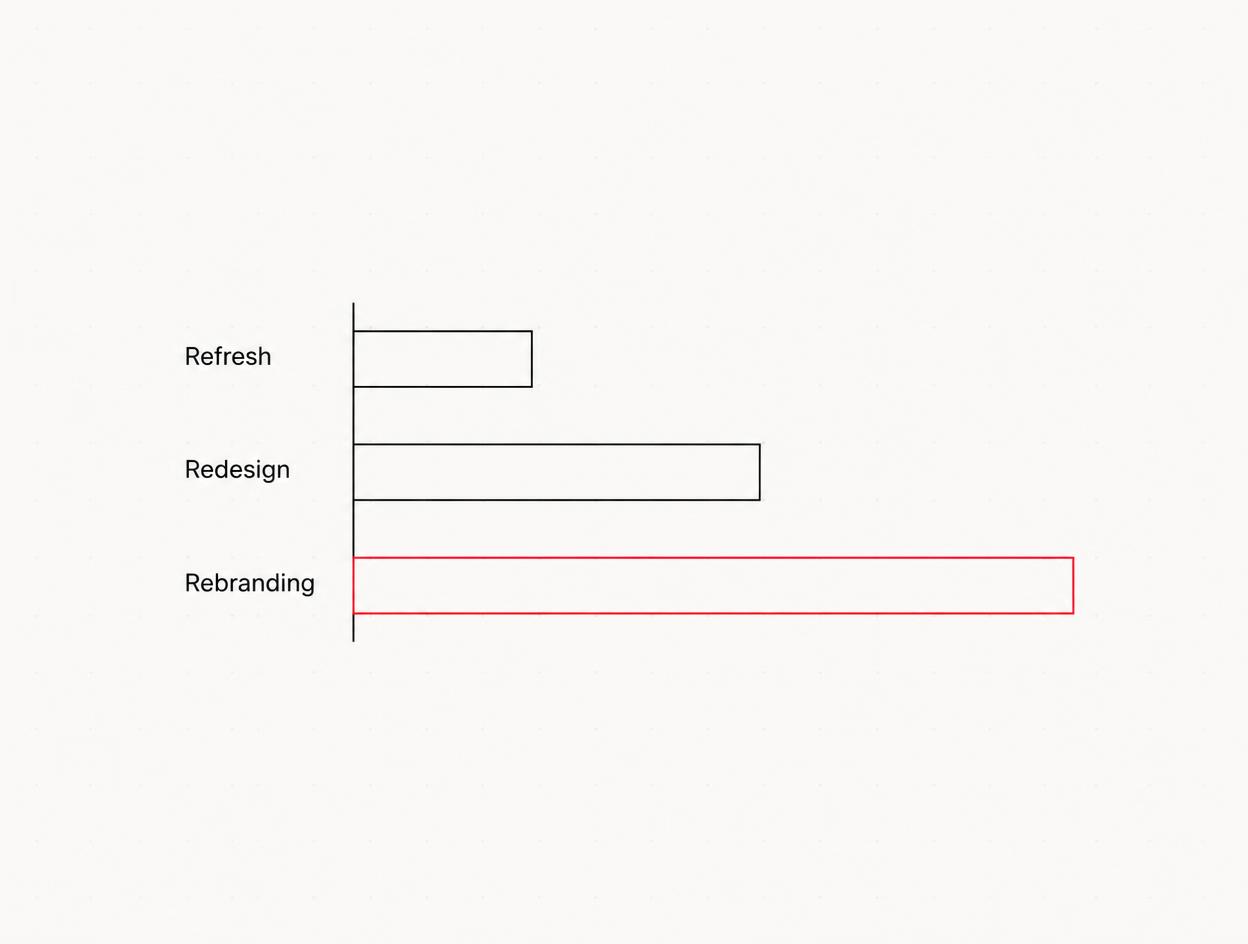
- Brand refresh. The brand stays, but its visual identity is refined: typography, colour balance, imagery, a cleaner logo. Positioning and name remain untouched.
- Redesign. The visual system is rebuilt, often including the logo, design system and website. The strategic foundation remains in place.
- Rebranding. The work starts with positioning. The target audience, promise, tone of voice and often the name are redefined. All visual elements follow from there.
Brand development is the umbrella term for the strategic work behind this – whether for a new venture or an established business.
Seven reasons that make the investment worthwhile
- Your positioning no longer fits. What you sell today is different from five years ago, but your brand still tells the old story.
- You attract the wrong enquiries. Discussions about price rather than quality are almost always a positioning problem, not a sales problem.
- Merger, acquisition or spin-off. Two cultures under one roof need a shared identity.
- Succession or generational change. The brand reflects an era that has passed.
- New markets or target audiences. What worked regionally often does not translate internationally.
- Legal constraints. Naming conflicts, trademark disputes, likelihood of confusion.
- Inconsistency. Every department has its own template, and nobody knows which rules apply any more. This is the most common case among SMEs.
Not a reason: management simply getting bored. Brands only work through repetition. Changing every two years destroys recognition.
The most expensive mistake is deciding to rebrand without diagnosing the problem. In our initial conversation, we always ask first which business problem needs solving. If the answer is “we no longer like our logo", a refresh is enough in eight out of ten cases.
The process: positioning, naming, design system, rollout
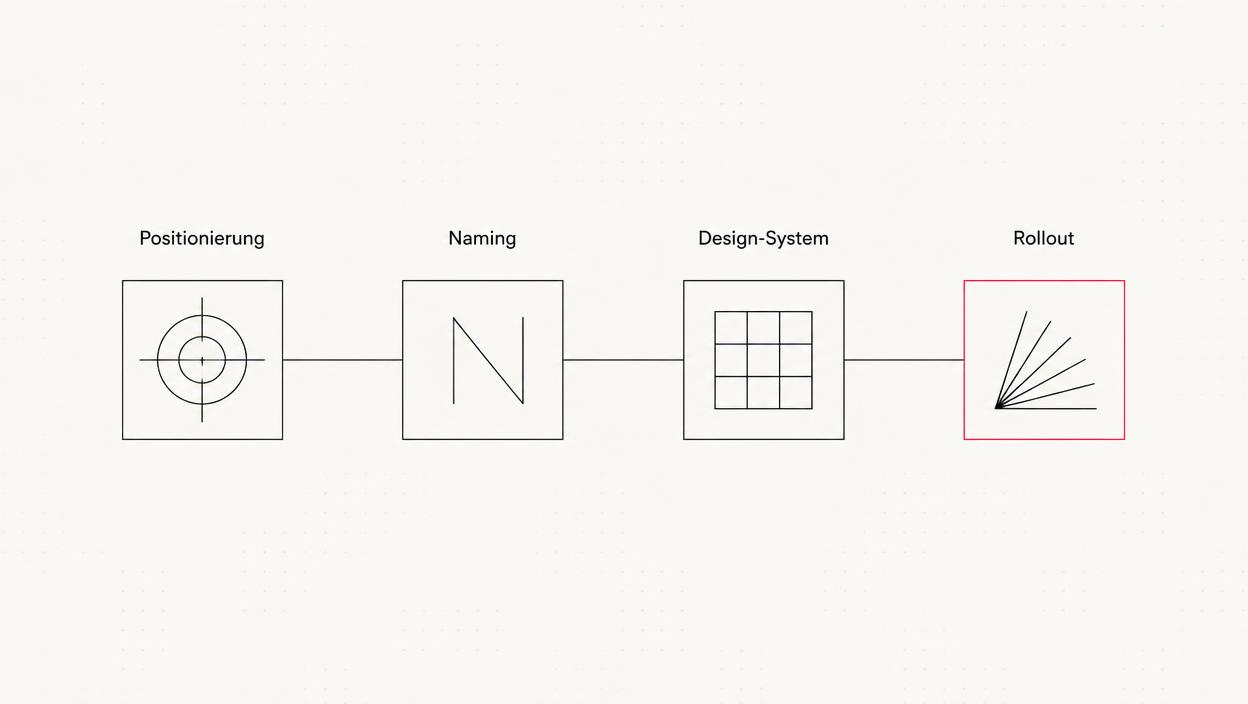
1. Positioning (2 to 4 weeks)
We start with a brand workshop: competitor analysis, interviews with sales teams and existing customers, and a clearer definition of the target audience. The result is a brand essence, value proposition, tone of voice and a sentence explaining why someone buys from you rather than the next business. Without that sentence, every design decision is a matter of taste.
2. Naming (0 to 6 weeks, optional)
Only necessary if the name is holding you back: difficult to pronounce, impossible to protect, carrying the wrong associations or too narrow for new areas of business. The process: set criteria, develop 80 to 150 candidates, narrow them down to 10, check availability (domain, Handelsregister, DPMA search), then obtain legal clearance. Expect candidates to fall through: many favourites are ruled out by existing trademark rights.
3. Design system (4 to 8 weeks)
Logo, colour palette, typography, grids, imagery, icons, layout principles. The key is to create a system with rules, not a collection of files. Everything goes into a brand book so that the agency, printer and internal teams all work from the same foundation.
4. Rollout (4 weeks to 12 months)
Website, business stationery, social media, signage, vehicles, exhibition stands, presentations, email signatures. This is where most costs and delays arise. Two strategies:
| Strategy | Approach | Suited to |
|---|---|---|
| Big bang | A fixed launch date, with everything visible at once | Name changes, PR opportunities, small to medium-sized businesses |
| Phased | By priority: digital first, then print, then physical assets | Large inventories, multiple locations, tight budgets |
Case study: Living Creations GmbH
For Living Creations, we developed a complete brand identity: logo and corporate design, a brand book as the definitive set of guidelines, business stationery and a corporate brochure. Sustainability needed to come through in the materials and imagery, rather than simply being a claim in the copy.
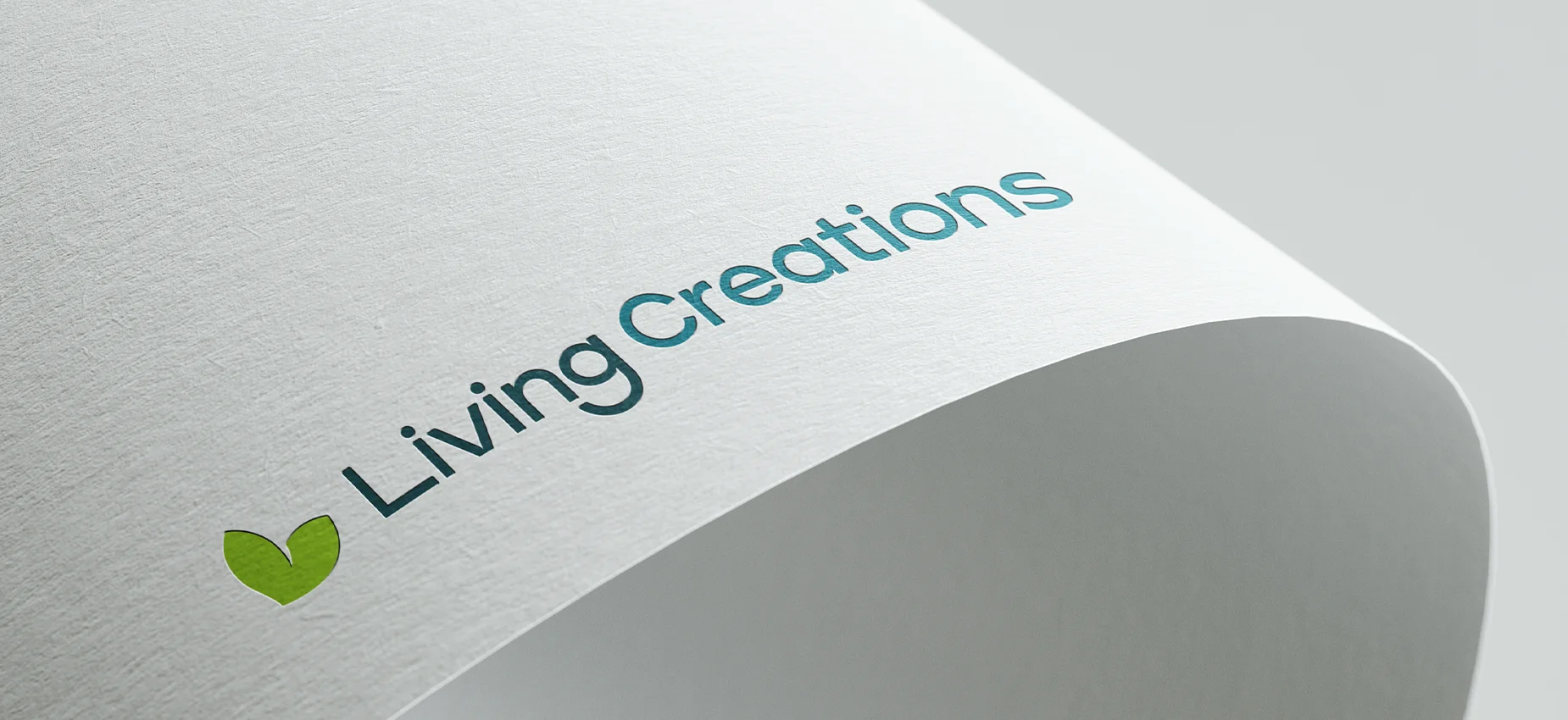
View the full case study: Living Creations GmbH →
The crucial element was the brand book. Once several suppliers work on a brand, it makes the difference between a consistent identity and twelve interpretations of the same logo.
A second case shows a different starting point: for fünfdrei eventagentur GmbH, we built the brand from launch – logo, colour palette, typography. Starting a business is the most cost-effective time for brand work, because there are no existing assets to replace.
What brand development costs
Prices vary considerably depending on scope. We consider these ranges realistic for SME clients in the Cologne area:
| Service | Scope | Indicative cost |
|---|---|---|
| Brand workshop | 1 day, positioning and key messages | 1.500–3.000 € |
| Logo design | Concepts, refinement, file package | 2.500–6.000 € |
| Corporate design | Colour, typography, grids, imagery | 5.000–12.000 € |
| Brand book | Definitive guidelines and examples of use | 3.000–8.000 € |
| Naming including research | Candidates, availability, preliminary checks | 4.000–10.000 € |
| Digital and print rollout | Website, stationery, templates | from 8.000 € |
A complete rebrand with a name change therefore rarely comes in below 25.000 Euro. Thorough brand development without a name change is possible from around 10.000 Euro. If you only need individual elements, you can find them separately in our shop, such as logo design, the brand book or the complete corporate design package.
Do not forget: the budget also needs to cover third-party costs. Trademark registration with the DPMA, legal checks, reprinting existing materials, signage, vehicle wraps. These items regularly exceed the design costs.
Risks of a name change
Changing the name is the only part of a rebrand that can become genuinely risky.
- Loss of search visibility. If the domain changes, you need proper 301 redirects for every single URL, an updated sitemap and patience. In our experience, rankings take two to six months to stabilise.
- Lost backlinks. Old links lead nowhere if redirects are missing. Export a list of links beforehand, then cross-check it afterwards.
- Google Business Profile and directories. The name, address and phone number must be changed everywhere at the same time, otherwise conflicting listings will appear.
- Trademark law. Without research and registration, you risk receiving a cease-and-desist notice after everything has been printed.
- Internal confusion. Sales and support teams need agreed messaging before customers start asking questions.
- Awareness back to zero. An established name carries trust. If you give it up, you need a communications budget to make the new one known.
Keeping the name and only updating the visual identity avoids almost all of these issues. This is one reason we only recommend a name change when there is a compelling reason for it.
If the website is also being rebuilt as part of the rebrand, include our website relaunch checklist in your planning. For pricing, see our article What does a website really cost?.
The order to follow
- Identify the business problem, not the design problem.
- Take stock: where does the brand appear? This list determines the rollout budget.
- Decide: refresh, redesign or a full rebrand.
- Clarify positioning in a workshop and document it.
- Only then commission the design work.
- Set a rollout plan with a launch date and clear responsibilities.
Frequently asked questions
What is the difference between brand development and rebranding?+
When is a rebrand worthwhile?+
What does a rebrand cost?+
How long does a rebrand take?+
What belongs in a brand book?+
Does rebranding always require a name change?+
What are the SEO risks of changing a name or domain?+
How do I recognise a good corporate design agency?+
Can we implement the rebrand in stages?+

Josef leads the strategic and creative development of brands at Maluure. For over a decade, he has guided medium-sized businesses from brand positioning to digital delivery.
Managing Director of Maluure GmbH, Cologne. Specialising in corporate design, brand strategy and digital brand experiences.
Weiterlesen
Using a corporate film on social media: twelve weeks of content from one shoot day
A corporate film is not a one-off asset, but a bank of source material. How to turn one shoot into formats for LinkedIn, Instagram, your website and sales, with an editing plan, content calendar and practical example.
Corporate video scripts: storytelling that works in 90 seconds
The script determines whether your corporate video makes an impact or just looks good. Structure, narrative, common mistakes and a shot list that saves the shoot day.

Officially certified: Maluure is a Lovable Partner
Since 16. September 2026, Maluure has been an officially certified Lovable Partner, Expert Website Builder and Expert App Builder. What the certification involves and what it means for your project.
Explore more blog topics
Corporate film or recruitment video: What your company really needs
Both films cost a similar amount but have very different effects. This comparison shows which format suits which goal and how to produce both in a single day of filming.
LinkedIn Video: Formats, Lengths and Best Practices for Businesses
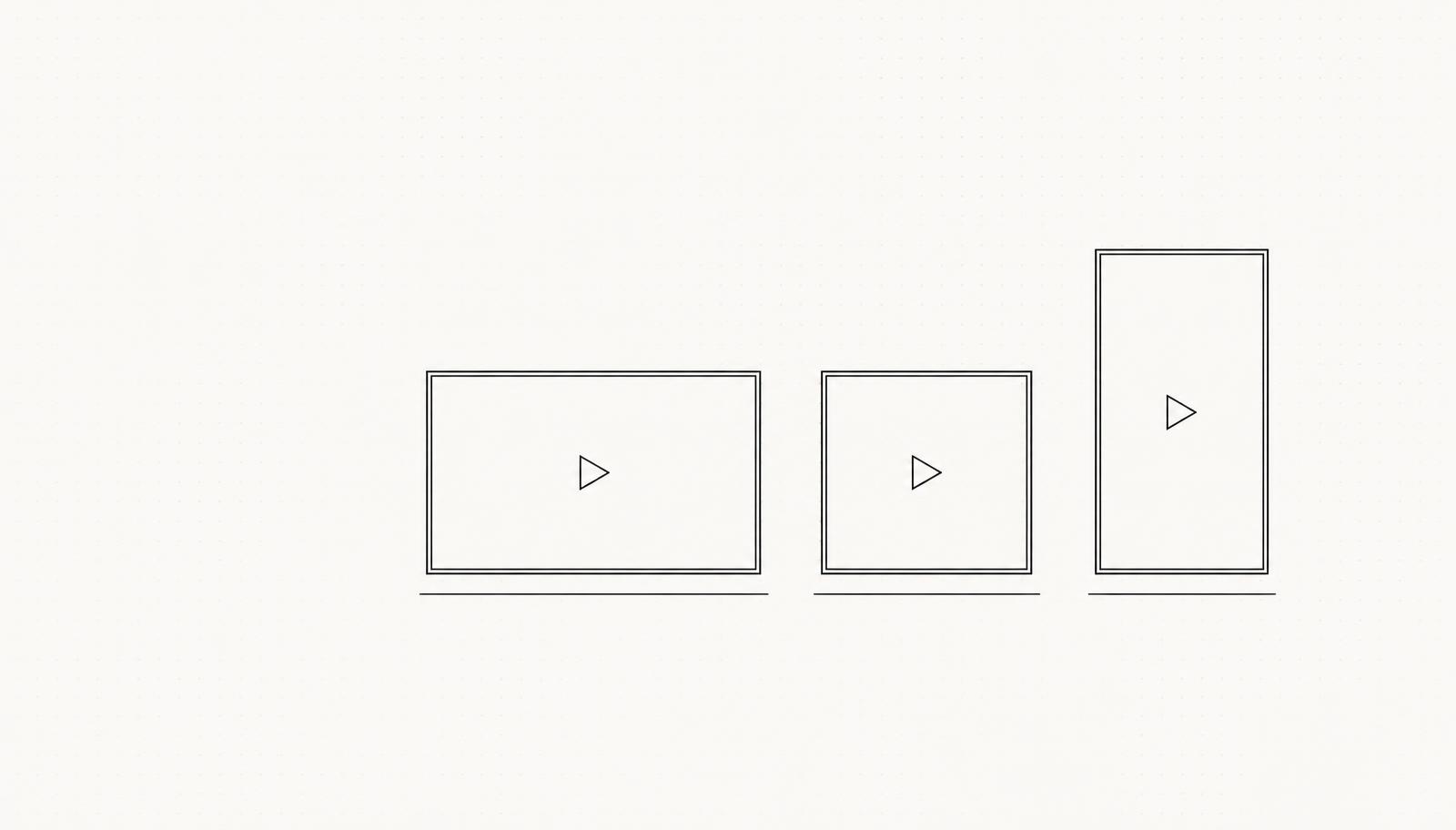
What works for LinkedIn video: formats from 1:1 to 9:16, the right length for each objective, subtitles, hooks and upload strategy. A concise guide for businesses.
Recruitment video: showing employees as they really are
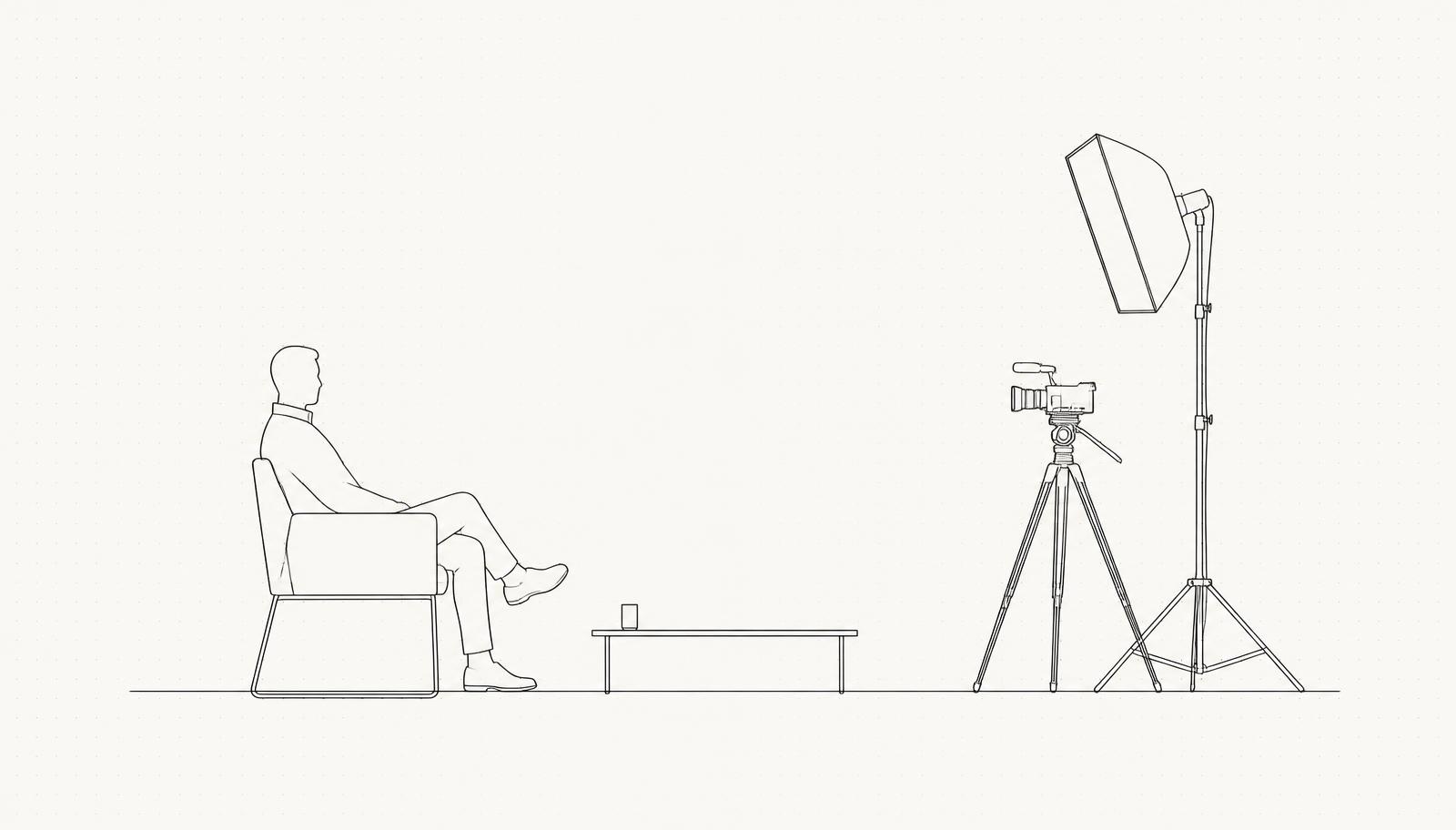
How a recruitment video shows real employees rather than glossy clichés, what it costs and why authenticity brings in more applications.