Website for Restaurants & Hospitality: What Guests Really Look For
Menu, opening hours, reservations: how to build a restaurant website that convinces guests in seconds and gets found locally.

What does a restaurant website need to do today?
What content belongs on a restaurant website?
- A menu as a real web page. Not a PDF but readable text. It loads faster, works on phones and search engines understand it. Mark allergens and vegetarian options clearly.
- Opening hours and address. Visible at the top, identical on every page and on your Google profile. Keep holidays and closures up to date.
- Reservations. One button leading straight to a form or booking tool, with a tap-to-call phone number next to it.
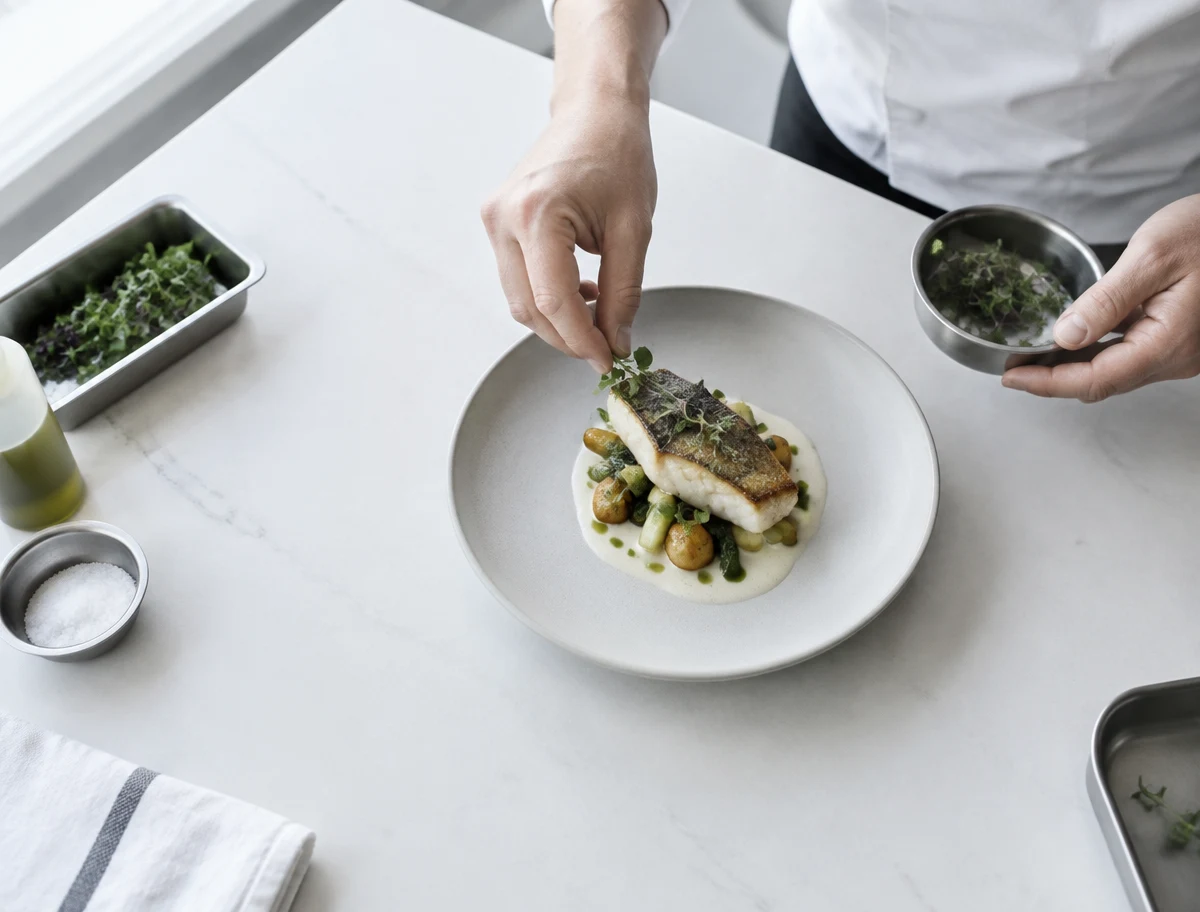
- Real photos. Dishes, dining room, terrace, team. Good own photos beat any stock library.
- Your story. Two or three paragraphs about cuisine, origin and attitude. That makes you distinguishable.
- Events and occasions. Lunch menu, brunch, private parties, catering. Every service that earns money deserves a mention.
| Building block | Guest's question | Typical mistake |
|---|---|---|
| Menu | Will I like it, is the price right? | Outdated PDF |
| Opening hours | Are you open now? | Contradicts Google |
| Reservation | Can I get a table tonight? | Phone only, unreachable at night |
| Photos | What does it look like? | Stock or dark phone photos |
| Directions | How do I get there, where do I park? | No map, no transit info |
Why is a PDF menu a problem?
How do you get found locally on Google?
- Complete your Google profile. Category, hours, photos, menu and a reservation link can be added directly [2].
- Reply to reviews. Friendly and short, including criticism. Future guests read along.
- Consistent data. Same name, address and phone number on website, profile, delivery platforms and directories.
- Local terms on your website. District, street, special location. This tells Google which searches you are relevant for.
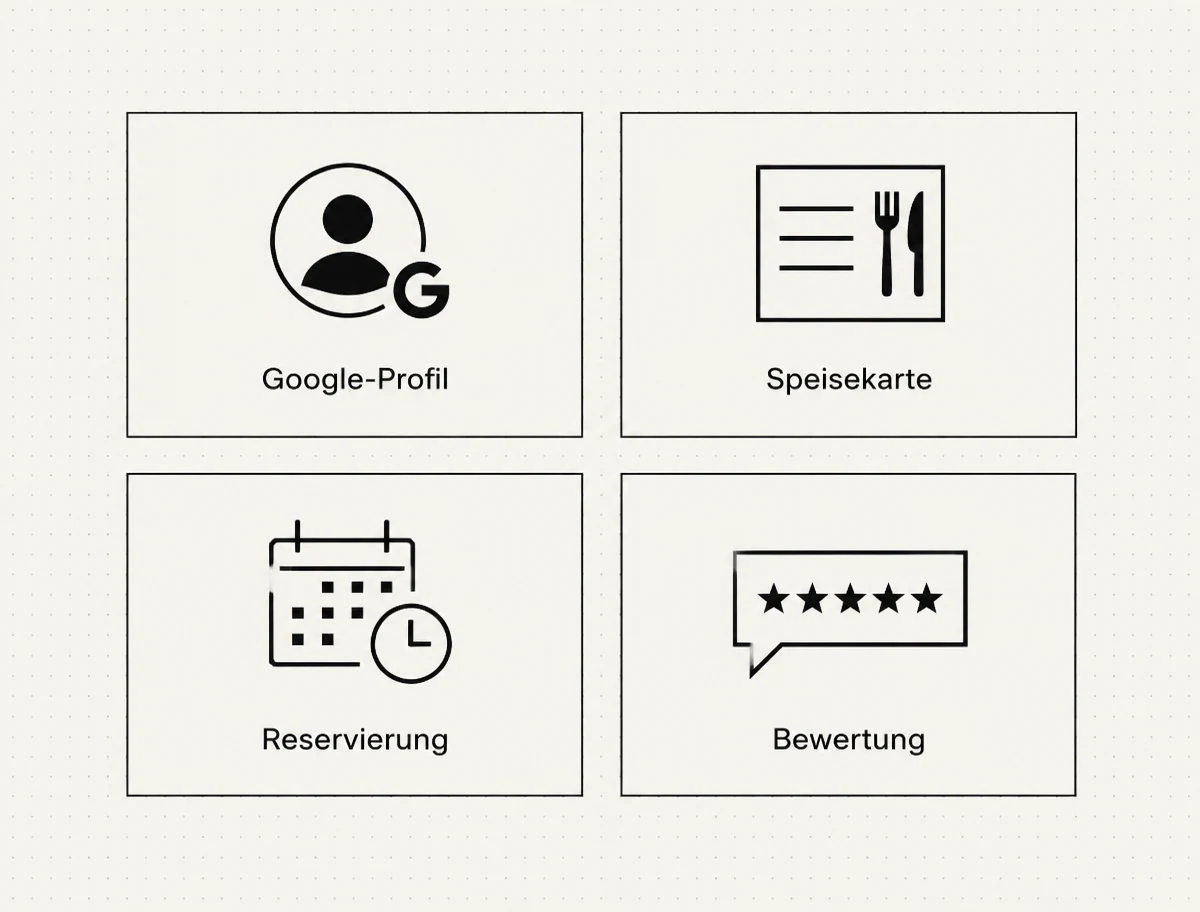
Booking tool, delivery platform or your own solution?
How much does a restaurant website cost?
How does a restaurant website project work?
- A short conversation about concept, target guests and goals.
- A photo shoot of dishes, room and team, ideally before service.
- Structure and copy aligned with your guests' questions.
- Build with menu, reservations and Google profile alignment.
- Handover, so you can maintain menu and hours yourself.
Which mistakes cost restaurants the most guests?
- Wrong opening hours. A guest stands in front of a locked door because website and Google show different times. That costs not only this visit but often a bad review.
- No notice of rest days and holidays. Many guests search spontaneously during holiday periods. A short notice at the top of the homepage prevents disappointment.
- Phone-only reservations. Many guests plan in the evening or late at the weekend when nobody answers. Without an online option they book elsewhere.
- No prices. Anyone who cannot estimate the cost of an evening chooses a place with a transparent menu.
- Autoplay music and full-screen videos. They feel atmospheric but make the site slow and annoying on phones.
How does the website win regulars and events?
- Newsletter or guest list. A simple form for news about the seasonal menu, wine evenings or brunch. Collect consent properly and only write when there is something new.
- A dedicated page for parties and corporate events. With room sizes, capacities, sample menus and an enquiry form. Such requests often bring far more revenue than a regular evening.
- Gift vouchers. A voucher guests can buy or request online is an easy gift and brings new guests in.
- Catering and takeaway. If you deliver or offer pick-up, show it clearly on the homepage with times and ordering path.
Checklist: is your restaurant website ready?
- Menu as text, with prices and allergens
- Opening hours identical to Google, rest days maintained
- Reservation reachable in one click, phone number tappable
- Your own bright photos of dishes and dining room
- Address, map, parking and public transport notes
- Page loads on a phone within a few seconds
- Legal notice and privacy policy complete
Guests buy with their eyes and decide in seconds. A good restaurant website shows honestly what comes on the plate and secures the table with a single tap.
Frequently asked questions
What does a restaurant website absolutely need?+
Should the menu be online as a PDF?+
How does a restaurant get found on Google?+
Do I need an online reservation system?+
Aren't Instagram and delivery platforms enough?+
Which photos work for a restaurant website?+
How often should I update my restaurant website?+
How much does a restaurant website cost?+
Does a restaurant website need to be accessible?+
Can I change the menu myself?+
Sources
- Google Consumer Insights: Local Search Statistics, Think with Google (2024)
- Google Business Profile Hilfe: Speisekarte und Reservierungen hinzufügen, Google (2025)
Want to see our articles more often in Google's Top Stories? Add Maluure as a preferred source.
Add on Google
Josef leads the strategic and creative development of brands at Maluure. For over a decade, he has guided medium-sized businesses from brand positioning to digital delivery.
Managing Director of Maluure GmbH, Cologne. Specialising in corporate design, brand strategy and digital brand experiences.
Weiterlesen

A Website for Dental Practices: What Really Matters in 2026
Which content a dental website needs, how local SEO brings inquiries, and what a practice website really costs.

Willi on the DNA Insider Podcast: Marketing Needs Clear Prices
Willi was a guest on the DNA Insider Podcast by the Deutscher Netzwerk Award. Eleven minutes on clear pricing, founding Maluure with his brother Josef, and why networking is no buzzword for us.
PHP Security Warning: What It Means for Our Customers
The PHP warning explained briefly: our assessment for Lovable and Webflow, and what operators of WordPress, TYPO3 and other PHP systems should do now.
Explore more blog topics
Structured Data: What Google and AI Really Read
Structured data makes content unambiguous for machines. Which types Google really uses, what AI does with it and where the limits are.

How ChatGPT and Perplexity Choose Sources and How to Become One
AI answers cite only a few sources. How ChatGPT and Perplexity find and choose them, and what your website needs for it.
Google Ads Budget: How Much Do You Really Need?
Instead of guessing a budget, calculate it backwards from leads, conversion rate and cost per click. With formula, example and test phase.