How ChatGPT and Perplexity Choose Sources and How to Become One
AI answers cite only a few sources. How ChatGPT and Perplexity find and choose them, and what your website needs for it.
Few spots, big impact
How an AI answer with sources is created
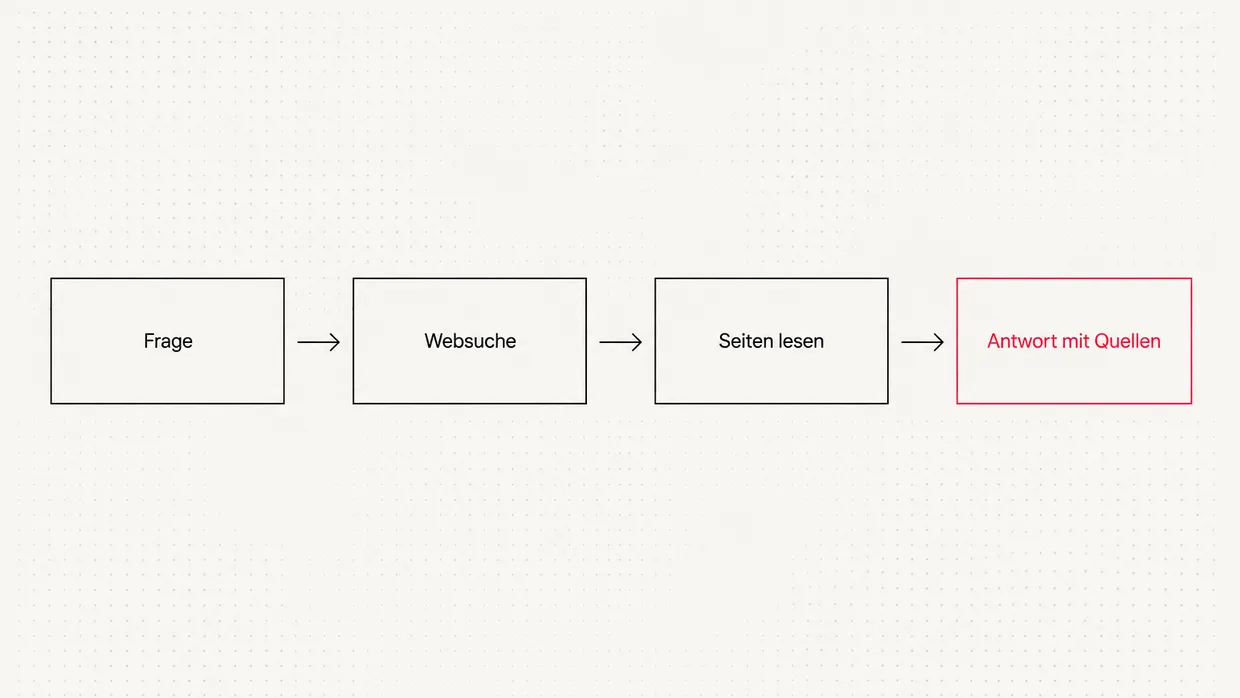
- A question is asked. The system decides whether it needs current information from the web.
- It searches the web. ChatGPT search uses search partners and its own crawlers, Perplexity searches the web for every query. [3] [2]
- It reads the pages found and looks for passages that answer the question.
- It writes an answer and links the pages it relies on.
Know the crawlers
| Crawler | Provider | Purpose |
|---|---|---|
| OAI-SearchBot | OpenAI | Capture pages for search in ChatGPT |
| ChatGPT-User | OpenAI | Fetch pages when users ask for them |
| GPTBot | OpenAI | Collect content for model training |
| PerplexityBot | Perplexity | Index pages for search results |
| Googlebot | Search and AI Overviews |
What makes a page citable
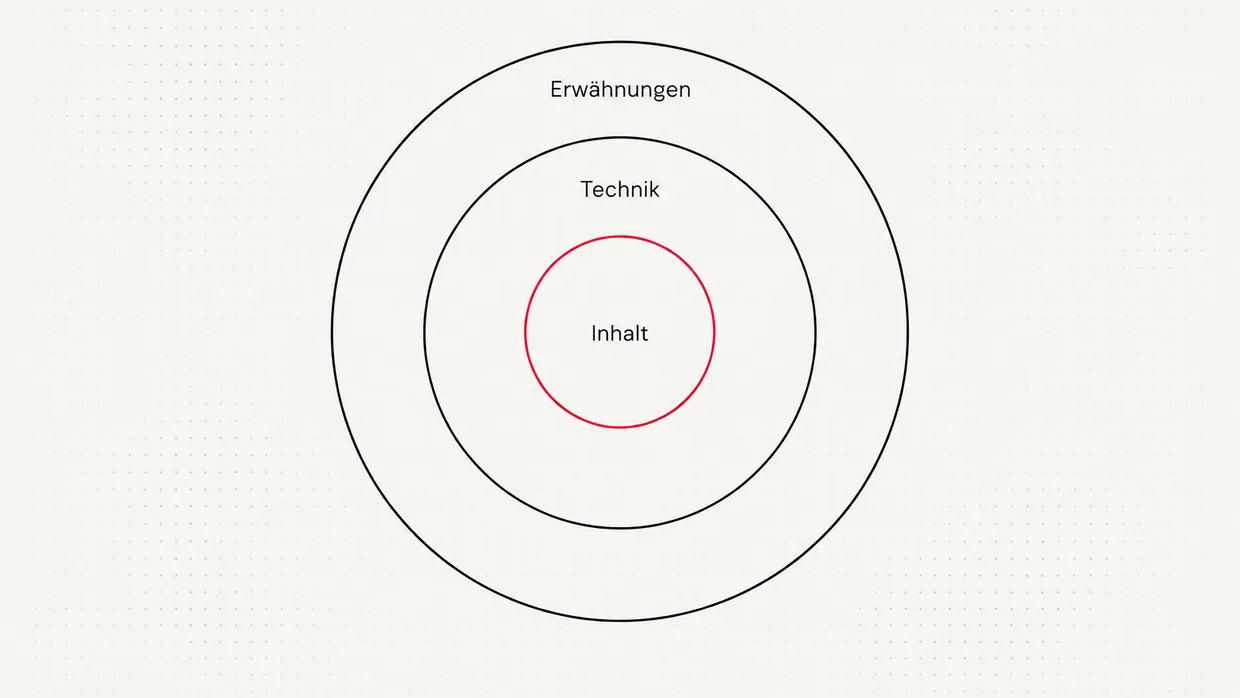
- Direct answers: the key statement comes at the start of a section, not after three paragraphs of introduction.
- Clear structure: one question per section, meaningful subheadings, lists and tables.
- Concrete facts: figures, definitions, steps and cited sources instead of generic statements.
- Visible expertise: author, company and experience are visible.
- Freshness: maintained pages with dates are more likely to be used for time-sensitive questions.
- Mentions elsewhere: those named in trade articles, directories and forums are more likely to appear.
- Technical readability: content is present in the HTML, not only visible after heavy JavaScript. More in Technical SEO.
AI search rewards the same virtue as a good conversation: answer the question instead of talking around it.
What does not help
- Keyword repetition: language models understand meaning, not frequency.
- Hidden text for bots: risky and against search engine guidelines.
- Special "AI files" as a cure-all: they do not replace accessible, good content.
Measure whether it works
Which sources does ChatGPT use?
| Mode | Where the knowledge comes from | Sources visible? |
|---|---|---|
| Answer from training knowledge | Data the model was trained on | No, no links |
| Answer with web search | Pages retrieved live from the web | Yes, as links in the answer |
| Answer from uploaded files | Documents users provide themselves | Yes, reference to the file |
How do I get cited as a source by ChatGPT?
- Check access: robots.txt and firewall allow OAI-SearchBot and PerplexityBot.
- Ensure indexing: the page is indexed by Google and Bing, as many AI systems rely on search indexes.
- Identify questions: which concrete questions does your audience ask? Each deserves its own clear section.
- Answer directly: the first sentence under each heading fully answers the question.
- Provide evidence: figures, sources, your own experience, an author with expertise.
- Build mentions: trade articles, interviews, directories and partnerships make sure your name appears in connection with your topic on other sites too.
- Keep it current: review content regularly and show the update date.
Checking your website step by step
- Open robots.txt at yourdomain.com/robots.txt and look for entries for GPTBot, OAI-SearchBot, ChatGPT-User and PerplexityBot.
- Check security services: some bot protection settings at your host or CDN block AI crawlers without it showing in robots.txt.
- Ask test questions: write five to ten questions your customers would ask, for example "Which agency in Cologne builds websites with Lovable?", and regularly check which sources are cited.
- Analyse web analytics: watch referrals from chatgpt.com, perplexity.ai and similar services as a separate source.
- Use Search Console: visibility in Google, including AI Overviews, is reported there together with regular search.
Example: how content becomes citable
If a paragraph is understandable and correct even without the rest of the article, it has a good chance of ending up in an AI answer.
Conclusion
Frequently asked questions
How does ChatGPT choose its sources?+
How does Perplexity find sources?+
Do I need to allow AI crawlers on my website?+
What is the difference between GPTBot and OAI-SearchBot?+
Which content do AI search engines prefer to cite?+
Does classic SEO help for ChatGPT and Perplexity too?+
Can I guarantee being mentioned in AI answers?+
How do I measure whether I appear in AI answers?+
Which sources does ChatGPT use?+
How do I get cited as a source by ChatGPT?+
Sources
- Overview of OpenAI Crawlers, OpenAI (2025)
- Perplexity Crawlers, Perplexity (2025)
- Introducing ChatGPT search, OpenAI (2024)
- KI-Funktionen und deine Website, Google Search Central (2025)

Josef leads the strategic and creative development of brands at Maluure. For over a decade, he has guided medium-sized businesses from brand positioning to digital delivery.
Managing Director of Maluure GmbH, Cologne. Specialising in corporate design, brand strategy and digital brand experiences.
Weiterlesen

Google Ads Budget: How Much Do You Really Need?
Instead of guessing a budget, calculate it backwards from leads, conversion rate and cost per click. With formula, example and test phase.
Landing Page Quality Score Explained: How to Lower Your Google Ads Click Costs
Quality Score helps determine what a click costs you. The landing page is one of the biggest levers. Here is how to improve it.

Google Ads vs. SEO: Which Pays Off When?
Google Ads brings visitors immediately, SEO builds lasting visibility. When each channel pays off and how both work best together.
Explore more blog topics

Websites for law firms: credible presence, more mandates
Clients look for help in exceptional situations. How a law firm website builds trust, stays compliant with professional rules and brings in mandates.

Websites for estate agents: winning sellers, not just searchers
Properties find buyers via portals. Owners find agents via their website. How an estate agent website brings in sales mandates.

Websites for medical practices: trust, online booking and legal basics
Patients search online before they call. What a practice website must deliver, what the law says and how it takes pressure off the phone.