SEO & Marketing

    SEO for Lovable Websites and Web Apps

    How we optimize Lovable websites for Google and AI search through SSR, metadata, topic clusters, performance, and real launch data.

    of Josef Kujawski9 min read1.567 Words
    SEO for Lovable Websites and Web Apps
    Short answer
    Lovable websites and web apps can perform very well in search when content is server-rendered, URLs are clearly structured, and every page has unique metadata. At Maluure, we combine TanStack Start SSR with topic clusters, internal links, structured data, performance work, and direct answers for Google and AI search. Our own site generated more than 70,000 organic impressions and over 2,500 suggestions in AI summaries and chatbots during its first three months.

    Is Lovable good for SEO?

    Yes. A website or web app built with Lovable can perform very well in search engines and AI answers. The decisive factor is not the builder alone. What matters is whether the finished application delivers content in the first response, gives every URL a clear purpose, and offers search engines a structure they can understand.
    At Maluure, we do not use Lovable as a shortcut for arbitrary single pages. We combine fast product development with a reliable technical foundation, clear information architecture, and editorial work. As an official Lovable Partner, we explain in what an experienced Lovable agency adds to a project why strategy and implementation still belong together.
    AreaCommon weaknessOur approach
    DeliveryContent only appears after JavaScript runsServer-rendered HTML with TanStack Start
    MetadataOne title and description across the siteUnique titles, descriptions, canonicals, and social metadata per URL
    StructureEverything sits on one long homepageIndexable URLs for services, topics, and articles
    ContentIsolated keywords without contextPillar pages, topic clusters, and intentional internal links
    AI searchLong copy without direct answersSummaries, tables, FAQs, sources, and clear entities
    TechnologyLarge bundles and slow primary contentFocused queries, prioritized content, and ongoing performance audits
    Kernaussage
    Lovable supports SEO. Strong visibility still depends on server-side delivery, clear URLs, useful content, internal linking, and continuous measurement.

    Why do we use server-side rendering for Lovable websites?

    Search engines can process JavaScript, but rendered HTML makes important content immediately available. Google explicitly describes rendering as part of processing JavaScript-based pages. [1] We therefore build public, search-relevant pages with TanStack Start so headings, copy, links, and structured data are present in the first server response.
    This matters especially for:
    1. Landing pages targeting a specific service.
    2. Blog and knowledge articles with substantial structured content.
    3. Product pages whose prices, options, or descriptions should be indexed.
    4. Multilingual sites with separate German and English URLs.
    5. Social previews and AI crawlers that do not execute every application like a full browser.
    A browser-only application is not automatically invisible. It does, however, make reliable indexing depend on an additional processing step. Our goal is simple: the core content must be readable without waiting for client-side JavaScript.

    Which technical SEO foundations do we implement on every page?

    Unique metadata for every URL

    Every relevant page receives its own title and meta description. We also provide Open Graph and Twitter data for shared links. The title reflects the specific search intent rather than merely repeating the brand name.

    Canonical and hreflang

    Every indexable page has a self-referencing canonical URL. German and English versions are connected with hreflang. This avoids conflicting signals when similar content exists in multiple languages.

    Sitemap and robots.txt

    The XML sitemap lists all public pages, articles, projects, and products that search engines should discover. Unpublished content stays out. The robots.txt does not block public content globally and points crawlers to the sitemap.

    Structured data

    Where appropriate, we add machine-readable information for the organization, articles, products, breadcrumbs, or FAQs. Google recommends matching structured data to visible page content. [2] It does not replace useful copy, but helps search engines identify the author, topic, and page type.

    Error pages and redirects

    Removed or moved pages need the correct status and appropriate redirects. A visually normal page with the wrong status can confuse search engines. During a relaunch, we therefore review old URLs, redirects, canonicals, and the sitemap together.

    How do we connect SEO, content, and topic clusters?

    One article can answer one question. A topic cluster shows readers and search engines that a site covers a subject in depth. We organize content across three levels:
    1. Pillar page: a central service or topic page, such as our SEO agency in Cologne.
    2. Supporting articles: focused pieces on technical SEO, SEO audits, or GEO for AI search.
    3. Commercial next steps: relevant services and products, such as an SEO audit or a consultation.
    We do not distribute links at random. A link should answer the next question or offer a sensible next step. Descriptive anchor text is more useful than generic wording such as “click here.”
    This structure also exposes content cannibalization. When several pages serve the same intent, we decide which URL should provide the central answer. Other pages are differentiated, consolidated, or linked clearly to the main page.
    Kernaussage
    A useful SEO cluster is not a large pile of articles. It consists of distinct search intents, a strong central page, and understandable paths between related content.

    How do we optimize Lovable websites for AI search and AI Overviews?

    Classic SEO and GEO overlap substantially. AI systems need clear statements, recognizable sources, and consistent information about a company, its services, and its people. We structure important content so individual answers can be understood and cited on their own.
    Our approach includes:
    • a direct summary at the beginning of an article,
    • question-based section headings,
    • tables and lists for comparable information,
    • specific author details and verifiable experience,
    • sources for external facts,
    • FAQs with concise standalone answers,
    • consistent information about Maluure, its services, location, and responsible people,
    • internal links to deeper explanations instead of repeated short copy.
    Our article on GEO optimization for ChatGPT and AI search explains the subject in greater depth.

    What role do performance and Core Web Vitals play?

    A fast page is not a substitute for relevance, but it prevents technology from obstructing access to content. Google names loading performance, responsiveness, and visual stability as central aspects of page experience. [3]
    For Lovable projects, we review:
    • how quickly the main visible content appears,
    • whether the layout shifts while loading,
    • how much JavaScript a page actually needs,
    • whether large data sets load during the first request,
    • whether fonts, images, and videos are prioritized appropriately,
    • whether navigation, animation, and forms still work after optimization.
    We do not optimize blindly for a single laboratory score. A change must not damage content, design, or functionality. The meaningful result combines measured performance, real usage signals, and stable implementation.

    Case study: What did our own Lovable website achieve during launch?
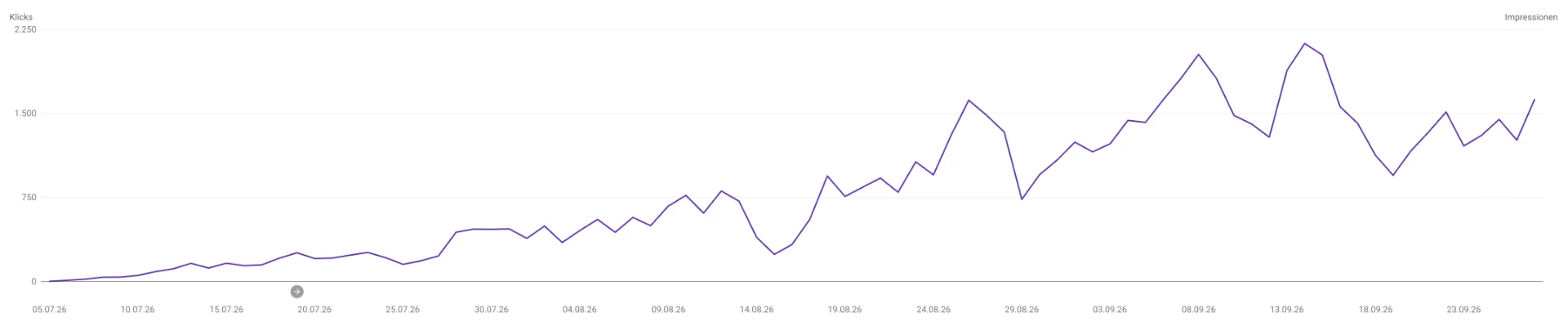
    Our own website is a reliable example because we are responsible for its architecture, content, and measurement. During the first three months after launch, the pages generated more than 70,000 organic search impressions. The chart shows daily visibility rising from almost zero to repeated peaks above 1,500 impressions.
    Organic impressions for the Maluure website during its first three months
    More than 70,000 organic impressions during the first three months of the Maluure website.
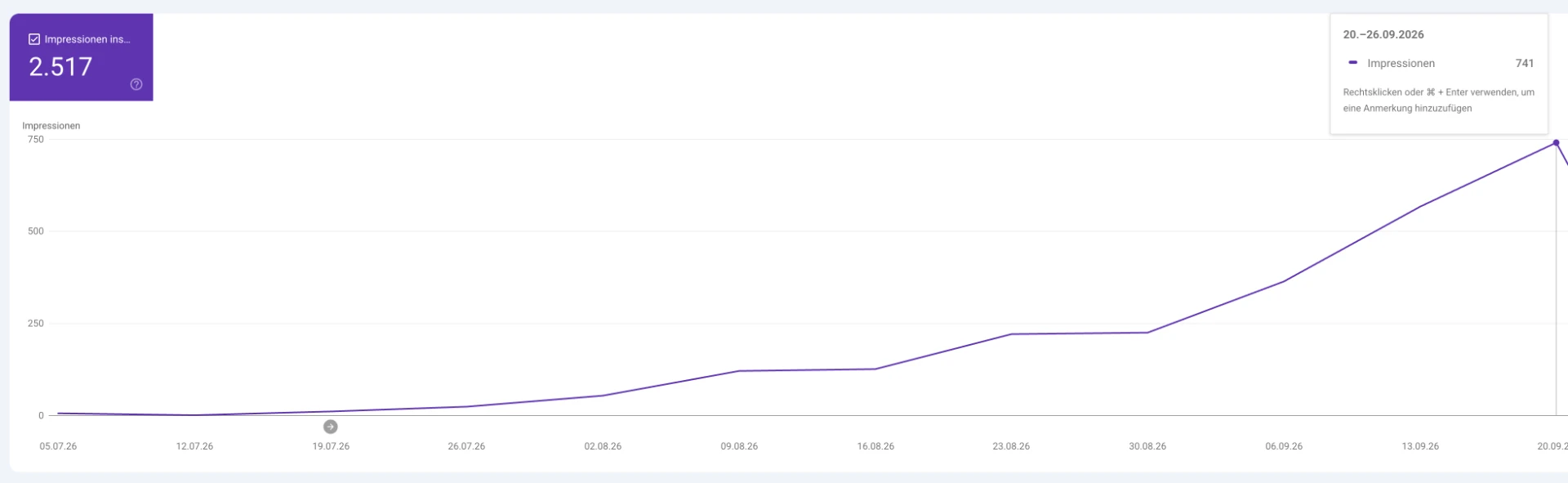
    During the same period, Maluure content was suggested more than 2,500 times in AI summaries and chatbots. This does not prove that any individual measure works in isolation. It does show that clean delivery, topic clusters, direct answers, sources, and consistent company signals can produce measurable reach early on.
    Maluure website impressions in AI summaries and chatbots
    More than 2,500 measured impressions in AI summaries and chatbots during the launch phase.
    Lovable makes development faster. Visibility still comes from the same disciplined work as on any good website: clear pages, genuine substance, transparent technology, and consistent improvement.
    – Josef Kujawski, Geschäftsführer Maluure GmbH

    What does SEO for a Lovable website look like at Maluure?

    We divide the work into a transparent process:
    1. Clarify search intent and offer: Which questions should the site answer, and which service sits behind them?
    2. Plan the information architecture: We define pillar pages, supporting pages, topic clusters, and URLs.
    3. Build the technical foundation: SSR, metadata, canonicals, hreflang, sitemap, structured data, and error handling.
    4. Write and connect content: Every page receives a clear purpose and relevant internal links.
    5. Review the launch: We test indexability, redirects, page titles, social previews, loading behavior, and forms.
    6. Evaluate data: Impressions, clicks, rankings, landing pages, and AI mentions show where content needs expansion or restructuring.
    7. Expand clusters: New articles address verified gaps rather than following a generic publishing quota.
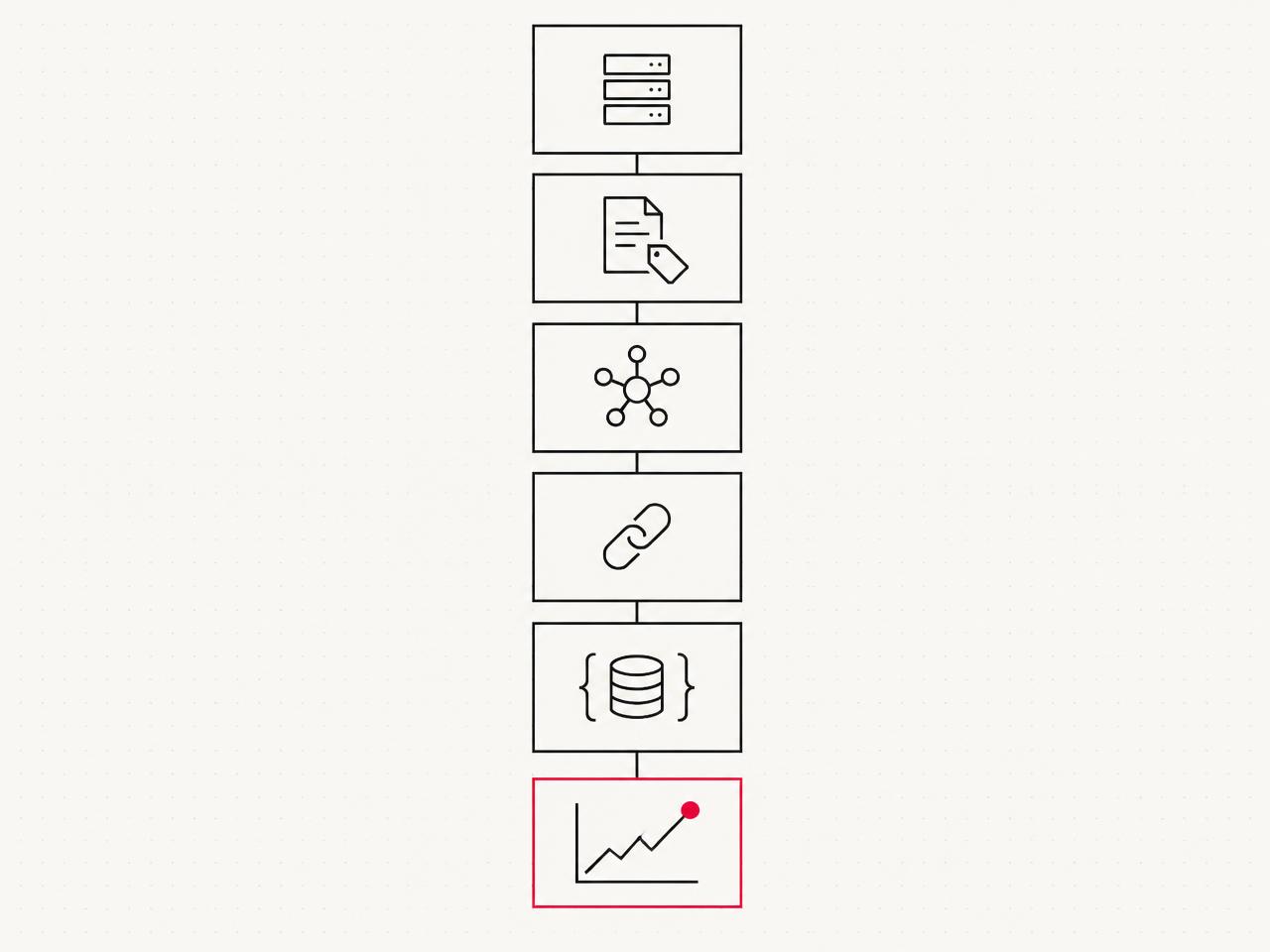
    Six elements of search engine optimization for Lovable websites
    Our SEO system connects delivery, metadata, topic clusters, internal links, structured data, and measurement.
    An SEO audit can be the starting point. For ongoing prioritization, we also explain what monthly SEO support should include.

    What commonly goes wrong with Lovable SEO?

    Most problems do not come from Lovable itself, but from an incomplete release:
    • all content sits on one URL,
    • titles and descriptions are identical across pages,
    • important content only appears after the browser loads it,
    • canonicals point every page back to the homepage,
    • drafts or internal areas are indexed accidentally,
    • the sitemap and navigation contain dead links,
    • articles are disconnected from service pages,
    • generic AI copy repeats familiar claims without first-hand experience,
    • multilingual pages change language but not URL and metadata,
    • performance is improved by removing visible functionality or content.
    These problems are avoidable when SEO is treated as part of product development rather than a checklist added at the end.

    Is SEO worthwhile for a Lovable website or web app?

    Yes. If the application presents public services, products, or knowledge, SEO can become a sustainable acquisition channel. Lovable enables rapid iteration, but it does not replace strategy or editorial quality. The strongest results emerge when development, design, content, and measurement are planned together.
    Planning a Lovable website or want to prepare an existing web app for Google and AI search? We can review its structure, technology, and content together.
    Discuss Lovable SEO

    Frequently asked questions

    Is Lovable good for SEO?+
    Yes. With server-side rendering, clear URLs, unique metadata, a sitemap, and useful content, Lovable websites can be indexed and ranked effectively.
    Can Google index a Lovable website?+
    Google can index JavaScript-based sites. We also deliver search-relevant content as server-rendered HTML so headings, copy, and links are available in the first response.
    What does Lovable SEO include?+
    It includes SSR, unique titles and descriptions, canonicals, hreflang, sitemap, structured data, performance, internal links, and content that answers a defined search intent.
    Does a Lovable web app need server-side rendering?+
    Not every internal web app needs SSR. For public landing pages, products, articles, and knowledge content, SSR makes delivery to crawlers more reliable.
    How do topic clusters work on Lovable websites?+
    A pillar page connects to focused supporting articles and relevant services. Every URL covers a distinct intent and points readers to the next useful resource.
    How is a Lovable website optimized for AI search?+
    Direct summaries, question-based headings, tables, FAQs, sources, author information, and consistent company details help AI systems understand and attribute content.
    How quickly can Lovable SEO show results?+
    Timing depends on competition, the domain, content, and indexing. Our own site generated more than 70,000 organic impressions in the first three months after launch.
    How much does SEO for a Lovable website cost?+
    Cost depends on scope, technical condition, page count, and content needs. An SEO audit is the clearest starting point for defining priorities and effort.

    Sources

    1. Understand the JavaScript SEO basics, Google Search Central (2025)
    2. Understand how structured data works, Google Search Central (2025)
    3. Understanding Core Web Vitals and Google search results, Google Search Central (2025)

    #Lovable#SEO#Technisches SEO#GEO#Web App
    Josef Kujawski
    Author
    Josef Kujawski
    Managing Director & Creative Director at Maluure

    Josef leads the strategic and creative development of brands at Maluure. For over a decade, he has guided medium-sized businesses from brand positioning to digital delivery.

    Managing Director of Maluure GmbH, Cologne. Specialising in corporate design, brand strategy and digital brand experiences.

    Newsletter

    New articles straight to your inbox.

    A newsletter when we genuinely have something new to share. No noise.