Website for Physiotherapy: More Appointments and Applications
Treatments, appointment requests, team and careers: how to build a physio website that convinces patients and therapists alike.

What does a physiotherapy practice website need to do?
What content does a physiotherapy website need?
- Treatments explained clearly. Physiotherapy, manual therapy, lymphatic drainage, equipment-based therapy, sports physio. One short section per treatment: what happens, who it helps, whether it is covered by prescription or self-paid.
- Appointment request. A form asking for prescription type, preferred times and concern. It saves reception time.
- The team with real photos. Names, specialisms and training. People choose therapists, not rooms.
- Classes and prevention. Back school, Pilates, rehab sport. These attract self-payers and belong visibly on the homepage.
- Accessibility. Opening hours, phone, address, parking and step-free access. Crucial for patients with limited mobility.
- Careers page. What makes you a good employer, with a simple way to apply.
| Building block | Patient's question | Typical mistake |
|---|---|---|
| Treatments | Will this help with my complaint? | Jargon without explanation |
| Appointment | How soon can I be seen? | Phone only, always busy |
| Team | Who will treat me? | No photos, no specialisms |
| Classes | What can I do myself? | Classes only on a notice board |
| Access | Can I get in with a walking aid? | No accessibility information |
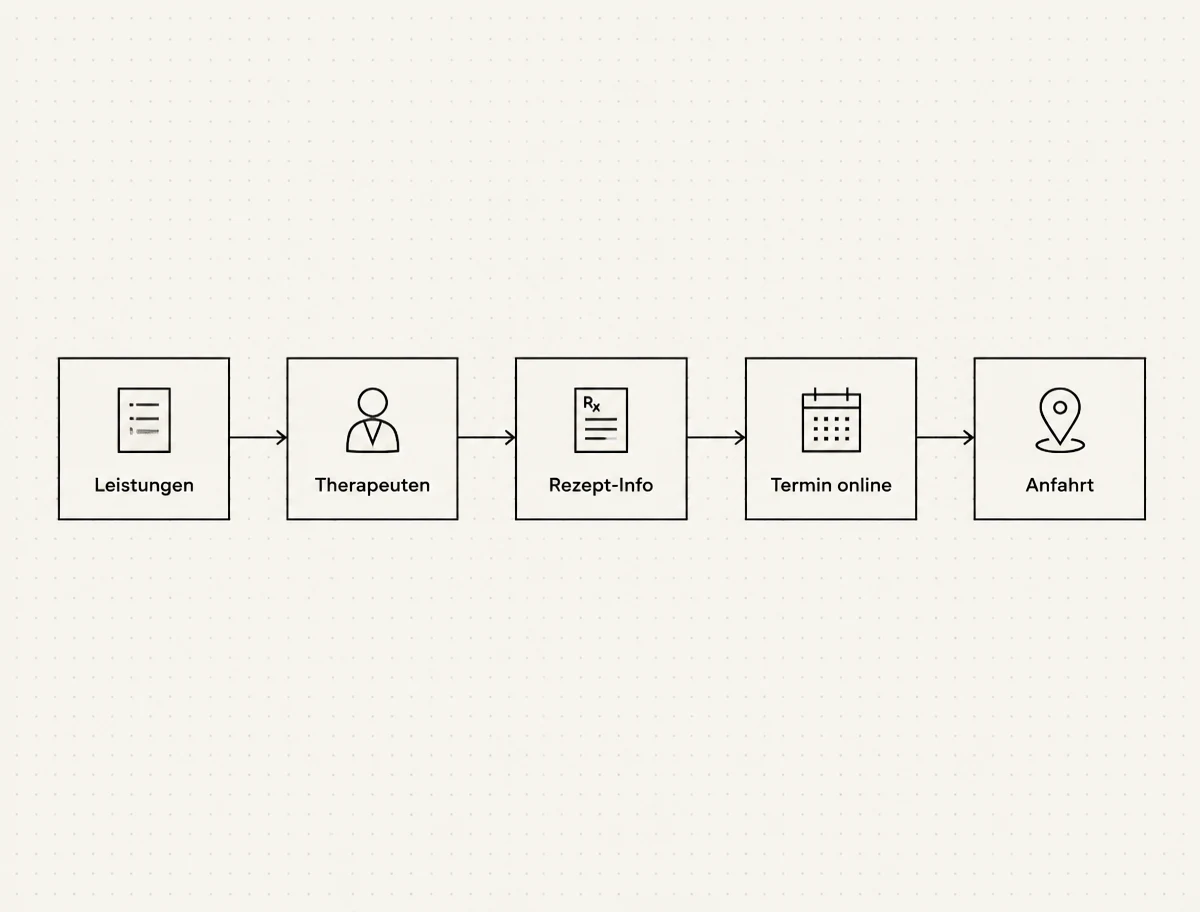
How do you explain treatments without overpromising?
How does a physio practice get found locally?
- Google Business Profile. Complete with category, services, photos and hours. Reply kindly to reviews.
- Dedicated pages for key treatments. A page about manual therapy or lymphatic drainage is found for exactly those searches more easily than a long overview.
- Consistent contact data. Same name, address and phone everywhere: website, profile and directories.

How does the website help recruit staff?
How much does a physiotherapy website cost?
How does a project work?
- A conversation about specialisms, audiences and open positions.
- Photos of team, rooms and treatment situations.
- Structure and copy, factual and patient-friendly.
- Build with appointment request, service pages and careers section.
- Training, so your team can maintain classes and news themselves.
Which mistakes do we see most often on physio websites?
- Treatments as a bare list. Abbreviations mean nothing to patients. Every one needs plain language and two or three sentences of explanation.
- No hint about availability. Patients with a prescription want to know whether calling is worthwhile. A short note like "new patients currently about two weeks' lead time" saves both sides time, as long as you keep it current.
- Missing information on home visits. If you offer home visits, show them clearly with the service area. Many relatives search for exactly that.
- Unclear costs. What does statutory insurance cover, what is self-paid, what applies to private insurance? A short, factual overview removes uncertainty.
- Outdated class schedules. A class that ended months ago undermines trust in every other detail.
How do you build trust before the patient arrives?
- Explain the first appointment. What to bring, how long it takes, what happens during assessment? These questions come up on the phone daily and can be answered well once.
- Show the rooms. Photos of reception, treatment rooms and training area lower the threshold.
- Introduce therapists with specialisms. If someone specialises in sports injuries, neurology or children, say so. Patients search for it.
- Include reviews. Real feedback with its source, unedited.
Checklist: is your physio website ready?
- Every treatment explained in plain language, prescription or self-pay marked
- Appointment request with prescription type and preferred times
- Team with photos and specialisms
- Classes with current dates
- Information on home visits, accessibility and parking
- Careers page with a short application form
- Factual copy without healing promises
In practices, trust decides. A website that shows the team and explains treatments honestly reaches patients before they open the door for the first time.
Frequently asked questions
What belongs on a physiotherapy practice website?+
Can I advertise treatment results on my website?+
Do I need an online appointment request?+
How does my physio practice get found on Google?+
Should every treatment have its own page?+
Can the website help with recruiting?+
How important is accessibility information?+
How much does a website for physiotherapists cost?+
Should I highlight classes and self-paid services?+
Can I update content myself?+
Sources
- Google Consumer Insights: Local Search Statistics, Think with Google (2024)
- Heilmittelwerbegesetz (HWG), Bundesministerium der Justiz (2024)
Want to see our articles more often in Google's Top Stories? Add Maluure as a preferred source.
Add on Google
Josef leads the strategic and creative development of brands at Maluure. For over a decade, he has guided medium-sized businesses from brand positioning to digital delivery.
Managing Director of Maluure GmbH, Cologne. Specialising in corporate design, brand strategy and digital brand experiences.
Weiterlesen

Website for Hotels: More Direct Bookings, Less Commission
Rooms, booking widget, location and direct benefits: how to build a hotel website that brings guests back from platforms to your own site.

Website for Restaurants & Hospitality: What Guests Really Look For
Menu, opening hours, reservations: how to build a restaurant website that convinces guests in seconds and gets found locally.

A Website for Dental Practices: What Really Matters in 2026
Which content a dental website needs, how local SEO brings inquiries, and what a practice website really costs.
Explore more blog topics

Willi on the DNA Insider Podcast: Marketing Needs Clear Prices
Willi was a guest on the DNA Insider Podcast by the Deutscher Netzwerk Award. Eleven minutes on clear pricing, founding Maluure with his brother Josef, and why networking is no buzzword for us.

PHP Security Warning: What It Means for Our Customers
The PHP warning explained briefly: our assessment for Lovable and Webflow, and what operators of WordPress, TYPO3 and other PHP systems should do now.

Structured Data: What Google and AI Really Read
Structured data makes content unambiguous for machines. Which types Google really uses, what AI does with it and where the limits are.