Structured Data: What Google and AI Really Read
Structured data makes content unambiguous for machines. Which types Google really uses, what AI does with it and where the limits are.

What people see and what machines read
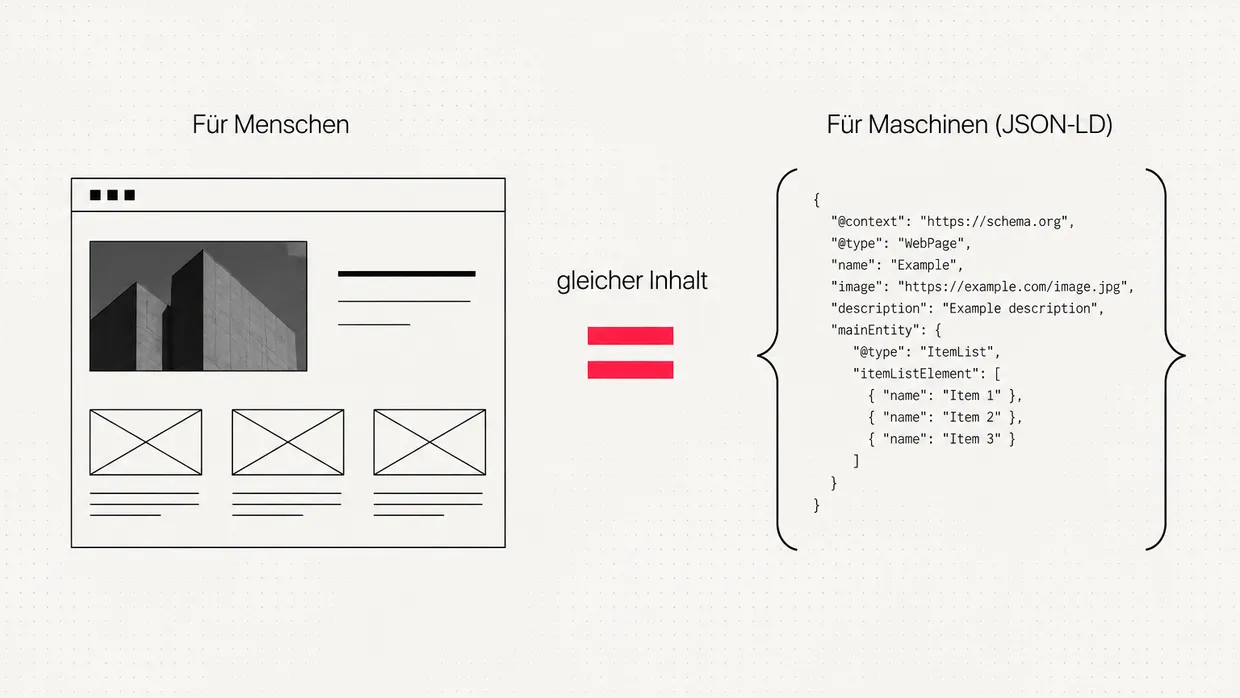
What it looks like
{
  "@context": "https://schema.org",
  "@type": "Organization",
  "name": "Example Ltd",
  "url": "https://www.example.com",
  "logo": "https://www.example.com/logo.png"
}
Which types are worth it
| Type | For | Possible display on Google |
|---|---|---|
| Organization / LocalBusiness | Company, logo, contact | Knowledge panel, logo |
| BreadcrumbList | Page hierarchy | Path instead of URL in the result |
| Article / BlogPosting | Articles with author and date | Better classification in search and news |
| Product + Offer | Products with price and availability | Price, reviews, stock status |
| Event | Events | Date and location in the result |
| FAQPage | Questions and answers | Rich result only for selected websites |
And what does AI read?
- Google says structured data helps make content understandable for its systems, but requires no special markup for AI Overviews. The fundamentals are the same as for regular search. [5]
- ChatGPT, Perplexity and others do not disclose how much they weight markup. They read pages as text, though. Information that exists only in markup and not visibly on the page is worth little to them.
- Indirectly, clean markup still helps: it strengthens the unambiguous association of companies, authors and topics, and many AI systems rely on search indexes.
Data as a connected picture
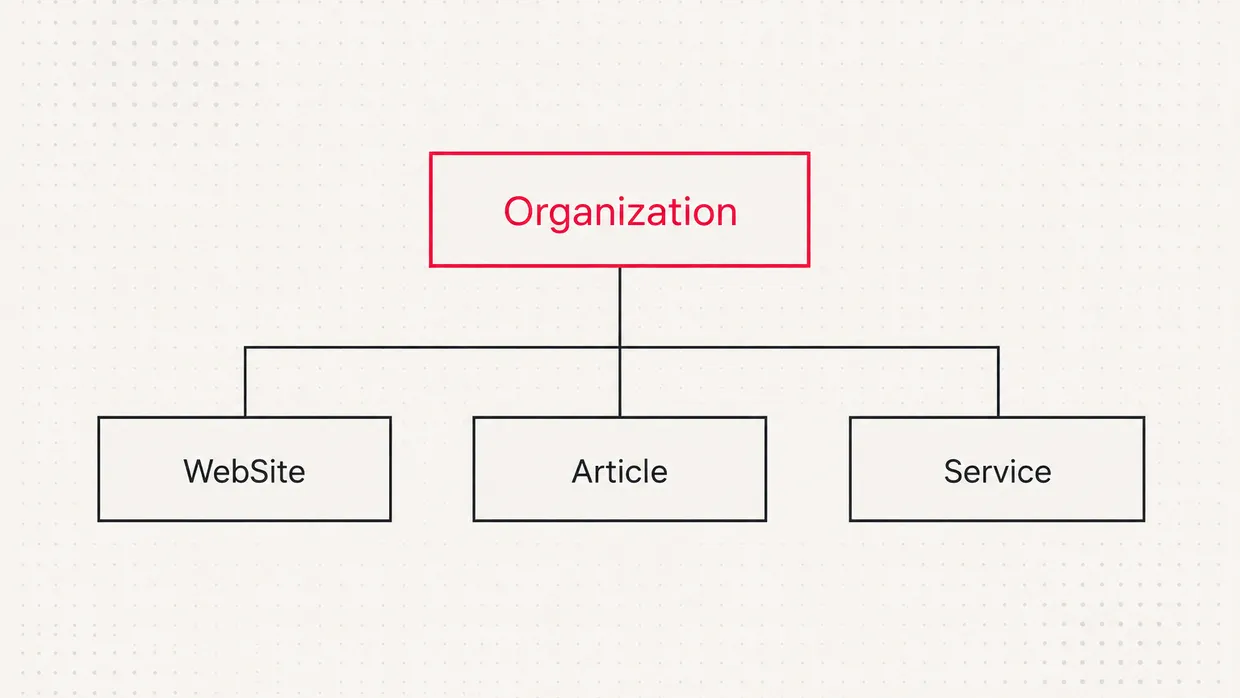
Structured data is like a neatly labelled warehouse. It does not make good goods better, but it makes sure they are found.
The key rules
- Only mark up what is visible. Markup must reflect page content, otherwise manual actions may follow. [2]
- Choose the most specific type, such as LocalBusiness rather than just Organization if you have a shop.
- Fill in all required fields that Google requires for the type.
- Test regularly with the Rich Results Test and in Search Console.
- Generate automatically where possible, so markup and content do not drift apart.
More examples: LocalBusiness, Article and Event
{
  "@context": "https://schema.org",
  "@type": "LocalBusiness",
  "name": "Example Ltd",
  "address": {
    "@type": "PostalAddress",
    "streetAddress": "Example Street 1",
    "postalCode": "50667",
    "addressLocality": "Cologne",
    "addressCountry": "DE"
  },
  "telephone": "+49 221 000000",
  "openingHours": "Mo-Fr 09:00-18:00"
}
{
  "@context": "https://schema.org",
  "@type": "BlogPosting",
  "headline": "Structured data explained",
  "datePublished": "2026-10-22",
  "author": { "@type": "Person", "name": "Jane Doe" },
  "image": "https://www.example.com/image.webp"
}
{
  "@context": "https://schema.org",
  "@type": "Event",
  "name": "Autumn workshop",
  "startDate": "2026-11-12T18:00",
  "location": { "@type": "Place", "name": "Example Ltd", "address": "Cologne" }
}
Rich snippets: what is realistic
Checking schema markup: the key tools
| Tool | For | Note |
|---|---|---|
| Rich Results Test | Checks whether a page is eligible for rich results | Only shows types Google supports |
| Schema.org Validator | Checks markup against the full Schema.org vocabulary | Independent of Google |
| Google Search Console | Shows errors and warnings across the whole website | Ideal for ongoing monitoring |
| Browser source code | Quick check whether JSON-LD is delivered at all | Especially important for JavaScript websites |
Common mistakes
- Markup for invisible content: for example reviews that are not visible on the page at all.
- Wrong types: a blog article marked up as a Product to get stars.
- Outdated details: prices, opening hours or dates not kept up to date in the markup.
- Duplicate markup: plugins and theme generate contradictory data in parallel.
- Generated only in the browser: if JSON-LD is loaded via JavaScript, some crawlers may miss it. Server-side markup is more robust.
Structured data in WordPress, Webflow and Lovable
The best markup is the one nobody has to look after, because it is generated automatically from the real content.
Conclusion
Frequently asked questions
What is structured data?+
Which format does Google recommend for structured data?+
Does structured data improve my ranking?+
Are FAQ rich results still shown?+
Do ChatGPT and Google AI use structured data?+
Which structured data does a business website need?+
How do I test structured data?+
May markup contain content that is not on the page?+
Does structured data guarantee rich snippets?+
What is the difference between the Rich Results Test and the Schema.org Validator?+
Sources
- Einführung in strukturierte Daten, Google Search Central (2025)
- Allgemeine Richtlinien für strukturierte Daten, Google Search Central (2025)
- Vereinfachung der Suchergebnisse: FAQ und HowTo, Google Search Central Blog (2023)
- Schema.org Vokabular, Schema.org (2025)
- KI-Funktionen und deine Website, Google Search Central (2025)

Josef leads the strategic and creative development of brands at Maluure. For over a decade, he has guided medium-sized businesses from brand positioning to digital delivery.
Managing Director of Maluure GmbH, Cologne. Specialising in corporate design, brand strategy and digital brand experiences.
Weiterlesen

How ChatGPT and Perplexity Choose Sources and How to Become One
AI answers cite only a few sources. How ChatGPT and Perplexity find and choose them, and what your website needs for it.

Google Ads Budget: How Much Do You Really Need?
Instead of guessing a budget, calculate it backwards from leads, conversion rate and cost per click. With formula, example and test phase.

Landing Page Quality Score Explained: How to Lower Your Google Ads Click Costs
Quality Score helps determine what a click costs you. The landing page is one of the biggest levers. Here is how to improve it.
Explore more blog topics

Google Ads vs. SEO: Which Pays Off When?
Google Ads brings visitors immediately, SEO builds lasting visibility. When each channel pays off and how both work best together.

Websites for law firms: credible presence, more mandates
Clients look for help in exceptional situations. How a law firm website builds trust, stays compliant with professional rules and brings in mandates.

Websites for estate agents: winning sellers, not just searchers
Properties find buyers via portals. Owners find agents via their website. How an estate agent website brings in sales mandates.