Technical SEO: the points that actually matter
Crawling, indexing, speed, structure: which technical factors move rankings and which you can safely ignore.

Layer 1: is the page found at all?
- robots.txt. Does it block directories that should rank? A single
Disallow: /can make an entire site invisible. - noindex. After relaunches the staging header often survives. It is the most common silent total failure.
- Canonicals. Does every page point to itself, apart from deliberate duplicates? Wrong canonicals hand rankings to the wrong URL.
- Sitemap. Does it contain all indexable pages, and only those? Redirected or deleted URLs have to go.
- Status codes. 404s on linked pages, redirect chains across several hops, soft 404s returning status 200: all of it costs crawl budget and trust.
Layer 2: rendering and server rendering
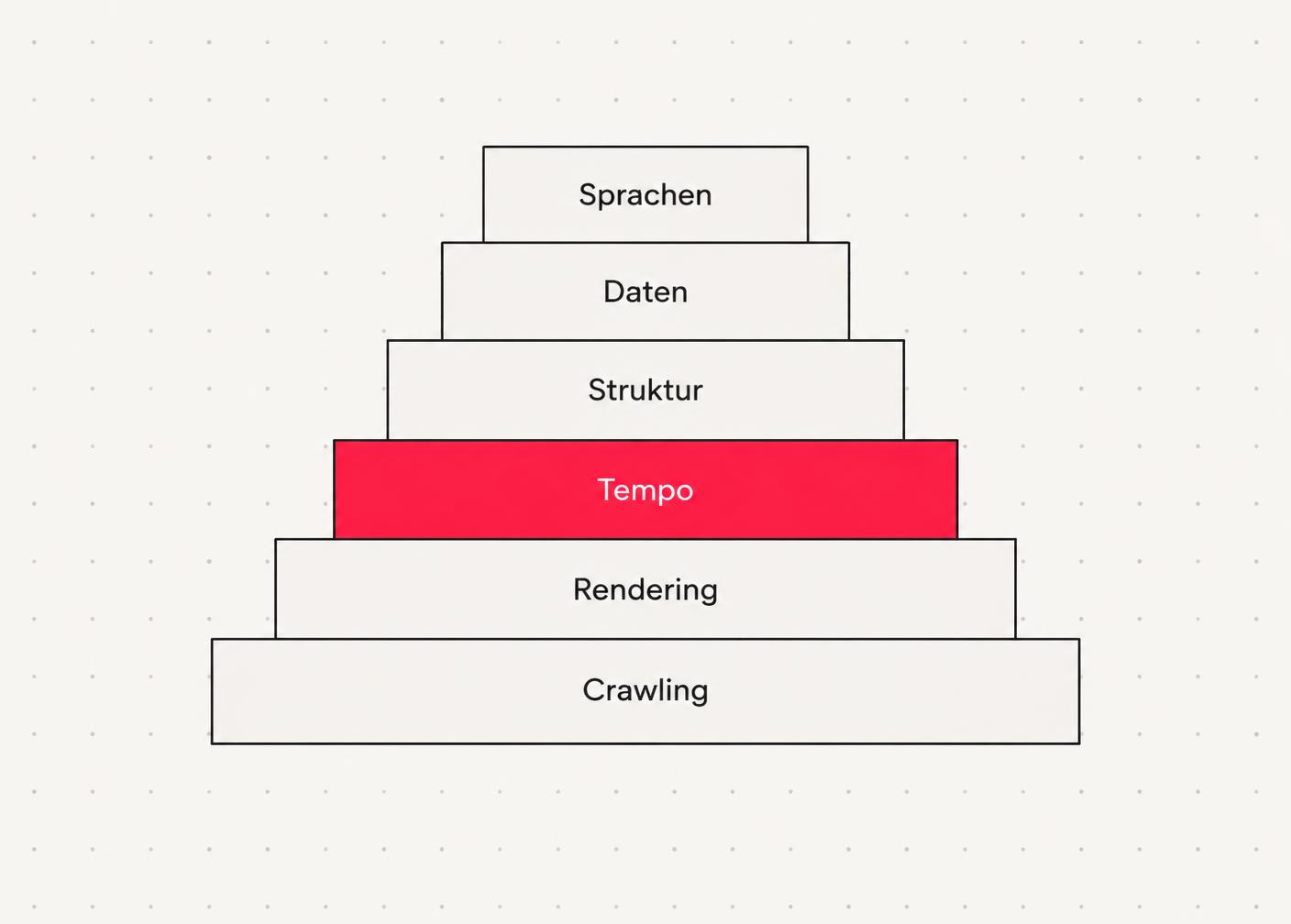
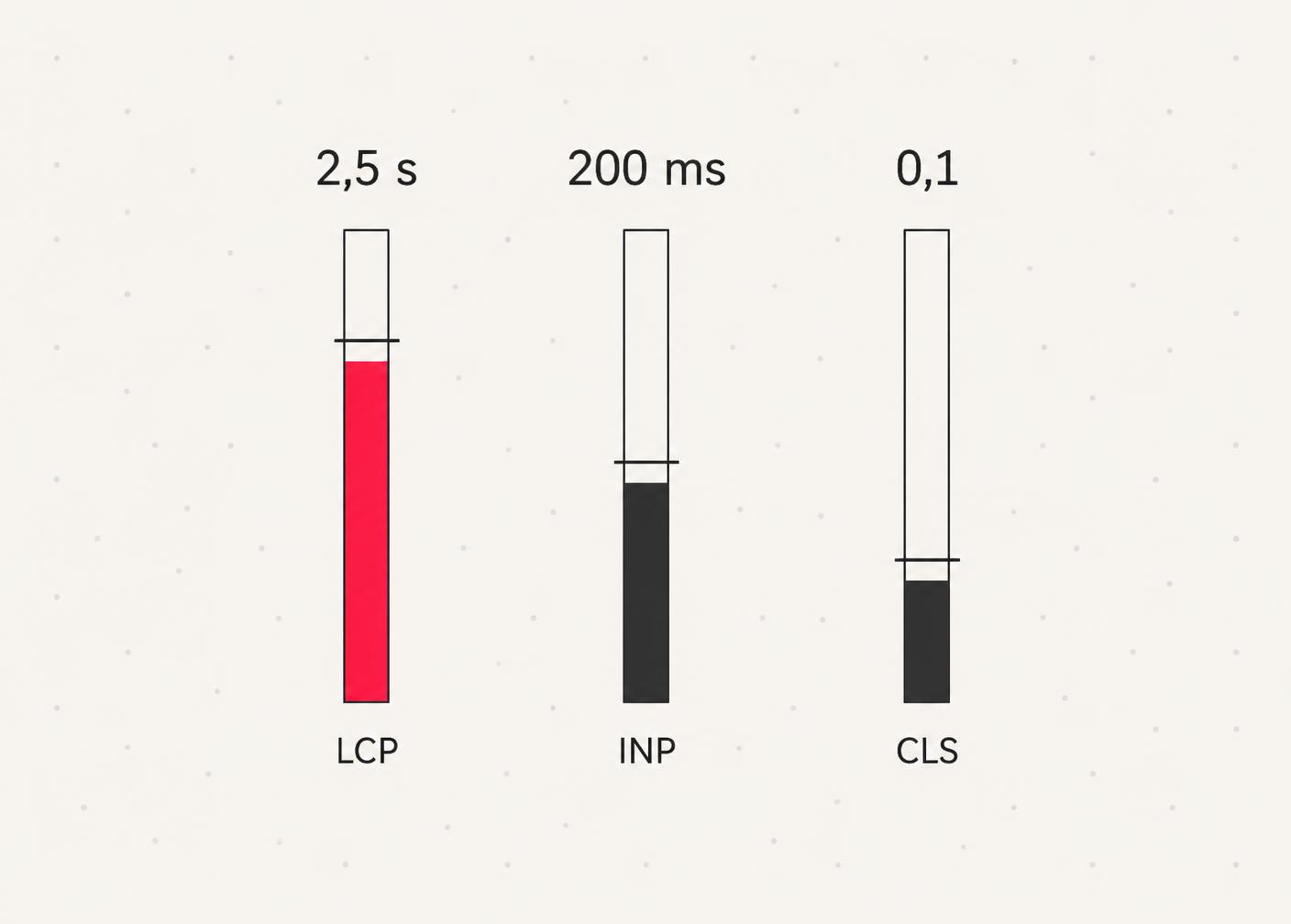
Layer 3: speed and Core Web Vitals
| Metric | Target | What typically breaks it |
|---|---|---|
| LCP (largest element visible) | under 2.5 s | huge uncompressed images, blocking fonts |
| INP (response to input) | under 200 ms | too much JavaScript, heavy third-party scripts |
| CLS (layout shifts) | under 0.1 | images without dimensions, late-loading banners |
Layer 4: structure and internal linking
- Every important page is within three clicks of the homepage.
- Link texts describe the destination, not "here" or "learn more".
- Topic clusters link centrally to their main page, not in all directions.
- Orphan pages without inbound links get connected or removed.
We have seen projects where cleaning up internal links alone delivered more than six months of new articles.
Layer 5: structured data
OrganizationorLocalBusinessfor company dataArticlefor blog posts including author and dateFAQPagefor genuine question and answer blocksProductandOfferfor shop pagesBreadcrumbListfor the path shown in search results
Layer 6: multiple languages and duplicates
hreflang references and an x-default variant. Parameter URLs, print versions and filter pages belong bundled via canonical or noindex.What you can safely ignore
- Keyword density and meta keywords. Both have been meaningless for years.
- Perfect tool scores. A PageSpeed score of 100 is not a goal, a fast real-world page build is.
- Every single crawl warning. Priorities beat completeness.
- Constantly renaming URLs. Every change costs visibility first.
Order of implementation
- Fix indexability (robots, noindex, canonicals, status codes)
- Secure rendering (content in the HTML)
- Bring load time to an acceptable level
- Clean up internal linking and site structure
- Add structured data
- Mark up languages and duplicates properly
Conclusion
Frequently asked questions
What belongs to technical SEO?+
Is load time a ranking factor?+
Does my site need server rendering?+
How important is structured data?+
What can I ignore in technical SEO?+
In which order should I work?+
Sources
- Core Web Vitals, web.dev, Google (2026)

Josef leads the strategic and creative development of brands at Maluure. For over a decade, he has guided medium-sized businesses from brand positioning to digital delivery.
Managing Director of Maluure GmbH, Cologne. Specialising in corporate design, brand strategy and digital brand experiences.
Weiterlesen

Commissioning a restaurant website: What to look out for
Manage your own menu, showcase reviews and get found locally: What a restaurant website really needs to do, with two projects from Cologne.

Recharge and connect: our recap of the 3rd Recharge Lounge
Live music, Cologne specialties and genuine encounters: on 17 September 2026 we accompanied the 3rd Recharge Lounge at La Linea in Cologne and captured it on film. Our recap of a special evening.

SEO audit: process, scope and cost
What an SEO audit checks, how long it takes, what it costs and how to recognise an audit that actually helps.
Explore more blog topics

Finding a video production company: how to recognise a good provider
Video production quotes are difficult to compare. Here are the five questions that make a difference, the warning signs to watch for and what a solid brief looks like.

Using a corporate film on social media: twelve weeks of content from one shoot day
A corporate film is not a one-off asset, but a bank of source material. How to turn one shoot into formats for LinkedIn, Instagram, your website and sales, with an editing plan, content calendar and practical example.

Corporate video scripts: storytelling that works in 90 seconds
The script determines whether your corporate video makes an impact or just looks good. Structure, narrative, common mistakes and a shot list that saves the shoot day.