Website for Electricians: The Right Jobs and New Skilled Staff
Service pages, service area, references and careers: how to build an electrician website that brings preferred jobs and applications.

What does an electrical contractor's website need to do?
What content does an electrician website need?
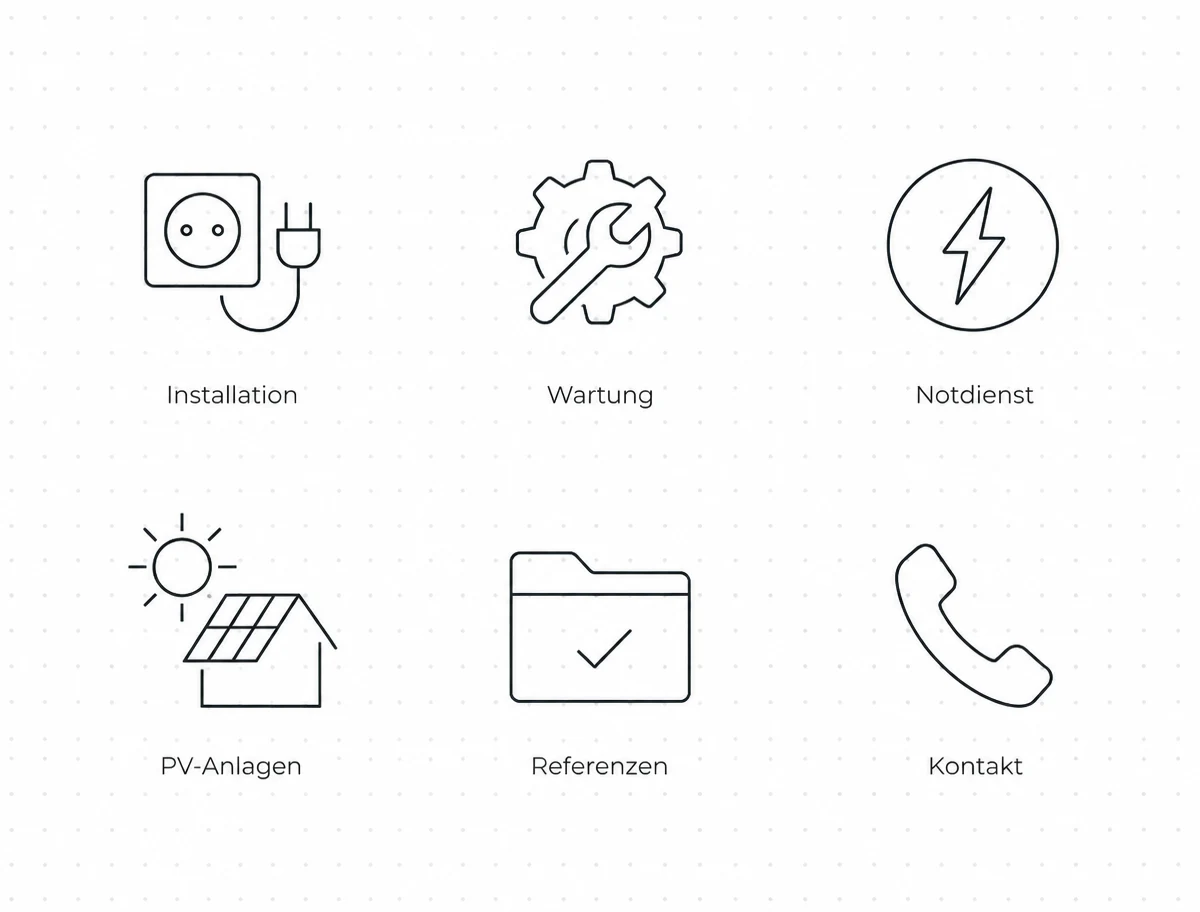
- Services shown individually. Electrical installation, renovation, smart home, solar PV, wallbox, safety checks, emergency service. Each key service with its own page or section.
- Service area. Which towns and districts you cover, clearly named. Customers immediately know whether you are an option.
- Contact without hurdles. Tap-to-call phone number and a short enquiry form with photo upload for the on-site situation.
- References. Real photos of your own projects with short descriptions. That builds more trust than any promise.
- Qualifications. Master craftsman business, trade registration, manufacturer certifications, memberships.
- Careers. What you offer journeymen, apprentices and career changers, with a simple way to apply.
| Building block | Customer's question | Typical mistake |
|---|---|---|
| Services | Do you install wallboxes? | Just a keyword list |
| Service area | Will you come to me? | No location named |
| Contact | How fast can I reach someone? | Email address only |
| References | How do you work? | No own photos |
| Qualification | Are you a master business? | Not mentioned anywhere |
Why does every service need its own page?
How does an electrician get found locally?
- Google Business Profile. Complete with services, service area, photos and hours. Relevance, distance and prominence determine local ranking [2].
- Actively collect reviews. After a successful job, ask briefly for a review and reply to every one.
- Consistent data. Same name, address and phone everywhere: website, profile and trade directories.
- Local content. References with location show Google and customers where you work.
How does the website help recruit skilled staff?
How much does a website for an electrical business cost?
How does a project work?
- A conversation about preferred jobs, service area and open positions.
- Photos of team, vehicles and projects.
- Service pages and copy, clear for private and commercial customers.
- Build with enquiry form, Google profile alignment and careers page.
- Upkeep, so new references are added regularly.
Which mistakes cost electrical businesses enquiries?
- Only a contact form, no phone number. Especially with faults, customers want to speak to someone immediately.
- No service area. Customers from the next town do not know whether you come to them and call the business that names their town instead.
- Outdated services. If solar, wallbox or smart home are missing although you offer them, exactly these well-paid jobs go to competitors.
- No response after an enquiry. An automatic confirmation saying when you will get back prevents customers from asking three other businesses in parallel.
- Stock photos of smiling tradespeople. Customers recognise them instantly. Your own everyday photos are more credible, even if not perfect.
How does the website filter the right jobs?
- State minimum scope or focus areas. If you no longer take very small jobs, say so politely. It saves refusals on the phone.
- Targeted questions in the form. Type of building, desired service, timeframe, photo of the situation. You see immediately whether a job fits.
- Address commercial clients separately. Property managers, developers and companies have different questions than private customers. A dedicated page makes that clear.
- Highlight maintenance contracts and inspections. Regular inspections bring plannable work and long-term customer relationships.
Checklist: is your electrician website ready?
- Phone number at the top and tappable, emergency service marked
- Service area with towns and districts
- Dedicated pages for the most important services
- Enquiry form with targeted questions and photo upload
- References with own photos and location
- Master business and certificates visible
- Careers page with a short application path
- Google profile complete and reviews answered
Trade businesses win online when they show what they can really do. Real projects and a direct line to the master craftsman beat any glossy brochure.
Frequently asked questions
What belongs on a website for electricians?+
How does an electrician get found on Google?+
Does every service need its own page?+
Is a website worth it if I am already fully booked?+
How do I recruit journeymen through my website?+
Should I show reference projects?+
Is an enquiry form with photo upload useful?+
How much does a website for an electrical business cost?+
How important are Google reviews for electricians?+
Should I highlight an emergency service on my website?+
Sources
- Google Consumer Insights: Local Search Statistics, Think with Google (2024)
- Google Business Profile Hilfe: Tipps zur Verbesserung des lokalen Rankings, Google (2025)
Want to see our articles more often in Google's Top Stories? Add Maluure as a preferred source.
Add on Google
Josef leads the strategic and creative development of brands at Maluure. For over a decade, he has guided medium-sized businesses from brand positioning to digital delivery.
Managing Director of Maluure GmbH, Cologne. Specialising in corporate design, brand strategy and digital brand experiences.
Weiterlesen

Website for Hotels: More Direct Bookings, Less Commission
Rooms, booking widget, location and direct benefits: how to build a hotel website that brings guests back from platforms to your own site.

Website for Physiotherapy: More Appointments and Applications
Treatments, appointment requests, team and careers: how to build a physio website that convinces patients and therapists alike.

Website for Restaurants & Hospitality: What Guests Really Look For
Menu, opening hours, reservations: how to build a restaurant website that convinces guests in seconds and gets found locally.
Explore more blog topics

A Website for Dental Practices: What Really Matters in 2026
Which content a dental website needs, how local SEO brings inquiries, and what a practice website really costs.

Willi on the DNA Insider Podcast: Marketing Needs Clear Prices
Willi was a guest on the DNA Insider Podcast by the Deutscher Netzwerk Award. Eleven minutes on clear pricing, founding Maluure with his brother Josef, and why networking is no buzzword for us.
PHP Security Warning: What It Means for Our Customers
The PHP warning explained briefly: our assessment for Lovable and Webflow, and what operators of WordPress, TYPO3 and other PHP systems should do now.