Websites for estate agents: winning sellers, not just searchers
Properties find buyers via portals. Owners find agents via their website. How an estate agent website brings in sales mandates.

The misconception: the website as a second property portal
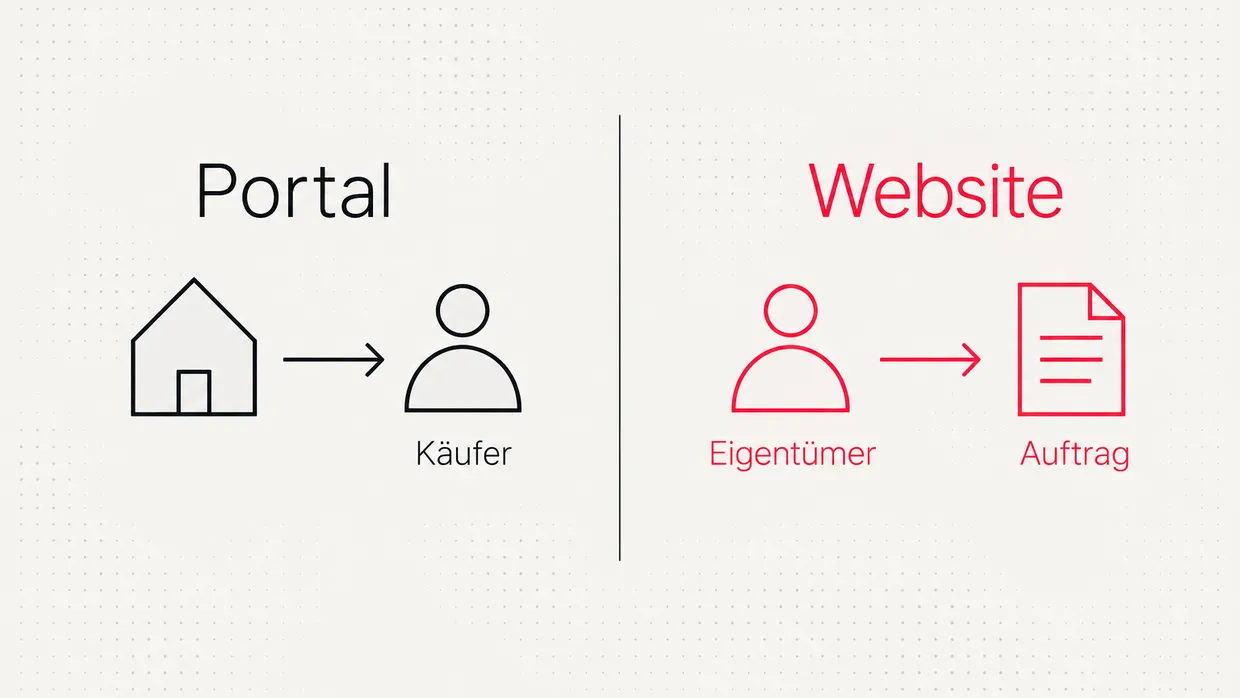
What owners want to see
| Owner's question | Answer on the website |
|---|---|
| Does the agent know my area? | District pages with real market data and sales figures |
| Have they sold comparable properties? | References with photos, location and time on market |
| How does the sale work? | Clear process in a few steps |
| What will it cost me? | Transparent information on commission |
| Can I trust them? | Team photos, qualifications, reviews, association memberships |
| What is my property worth? | Entry via valuation or callback |
The path from visitor to mandate
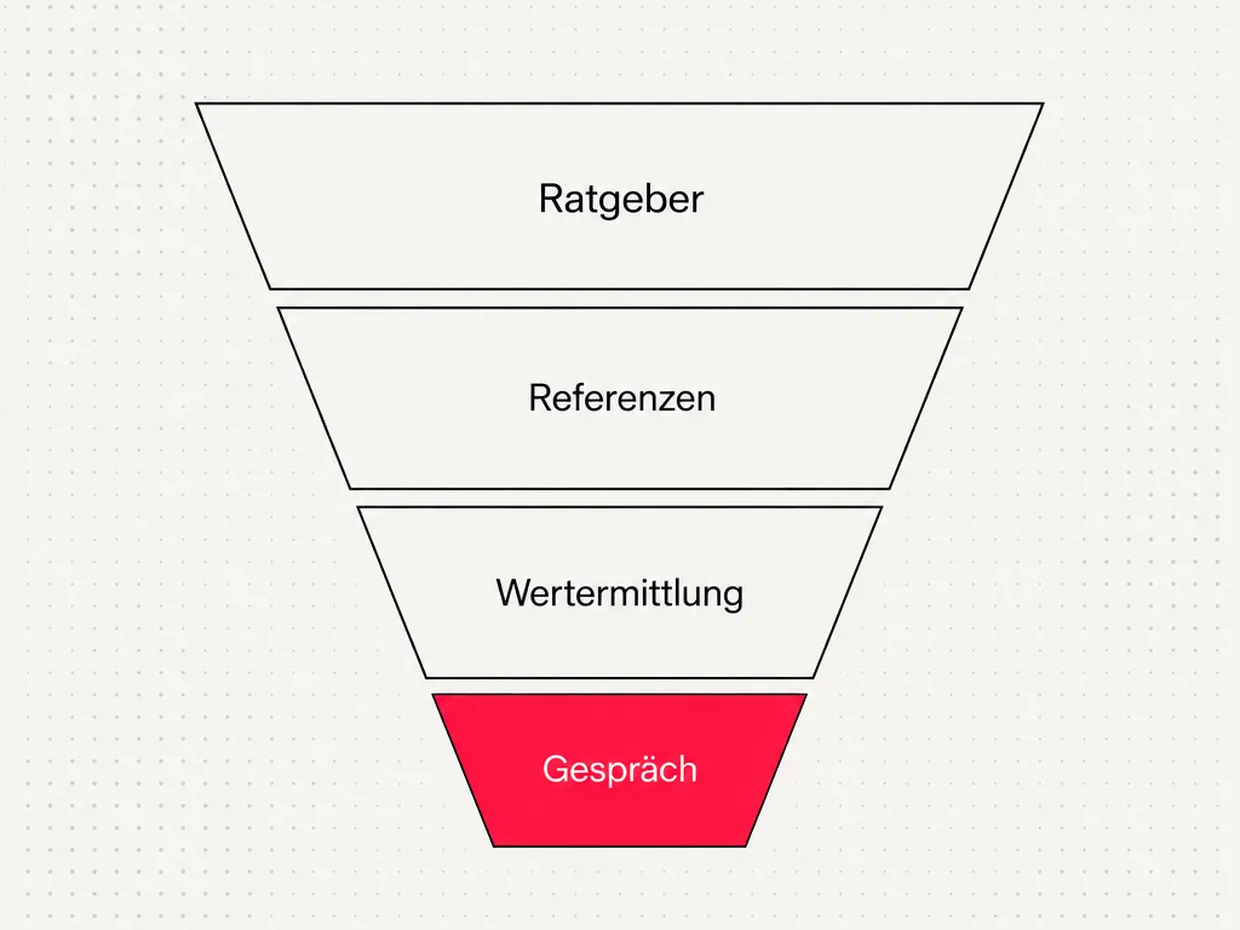
- Guide content on topics such as selling after inheritance, divorce, selling with residential rights or documents needed for a sale. It brings visitors via Google.
- References showing you have successfully marketed comparable properties.
- Valuation as an easy entry, honestly presented as a first orientation.
- Personal conversation with an on-site valuation as the actual goal.
Presenting properties to a high standard
- professional photos, floor plans and honest copy
- location information with infrastructure
- optionally a 3D room tour for a viewing in advance
- automatic sync with the agent software so data stays current
Becoming visible locally
- a complete Google Business Profile with reviews
- dedicated pages for key districts, with real market information instead of boilerplate
- guide articles for typical searches such as "sell house" plus city
What does an estate agent website cost?
| Scope | Typical content | Guide price |
|---|---|---|
| Compact | Services, team, references, contact | approx. 5,000 to 7,000 € |
| Standard | Plus property interface, valuation | approx. 7,000 to 11,000 € |
| Extensive | District pages, guide section, 3D tours | approx. 11,000 to 15,000 € |
An owner often entrusts an agent with the biggest asset of their life. The website has to live up to that moment: calm, competent and with clear evidence instead of sales slogans.
Estate agent homepage: how it differs from portals
| Property portal | Your own agent website | |
|---|---|---|
| Audience | Buyers and tenants searching | Owners willing to sell |
| Competition | Right next to other agents | Only you |
| Brand | Barely visible | Fully visible |
| Content | Property data | Expertise, market knowledge, references |
| Data and contacts | Held by the portal | Held by you |
The valuation page: your most important acquisition lever
- Clear benefit: "What is my property worth?" is the question owners really ask.
- Few steps: property type, location, size, year built, contact. The first step needs no more.
- Honest expectations: say whether an automatic first estimate follows or a personal call with a viewing.
- Trust right next to it: reviews, sold properties, your face.
Building an estate agent website: content that shows expertise
- District pages: short portraits of the areas you work in, with notes on price trends and demand.
- Guides: inheritance, divorce, selling in old age, energy certificates. These are exactly the topics owners search on Google.
- References: sold properties with time frame and one sentence on how it went, where owners agree.
- Process: how does a sale with you work, from valuation to notary appointment?
Common mistakes on agent websites
- Only a property list, no person: owners hire people, not databases.
- Outdated listings: long-sold properties without a note look unprofessional.
- Slow image galleries: uncompressed photos make the site sluggish on smartphones.
- No data protection concept: valuation forms collect personal data and need proper notices.
In the end an agent sells trust. The website is the first place where an owner checks whether to entrust you with their most valuable asset.
Checklist for your estate agent website
- Clear service promise for owners on the homepage
- References with location and time on market
- Easy entry via valuation or callback
- District pages with real market information
- Guide content on typical selling situations
- Listing pages with mandatory GEG details
- Imprint with licence under § 34c GewO
- Google Business Profile with reviews
Frequently asked questions
Does an estate agent still need a website besides portals?+
How do I win owners via my website?+
Is an online valuation tool worthwhile?+
Which mandatory details apply to property listings on the website?+
What belongs in an estate agent's imprint?+
How do I best present properties on my website?+
How does an estate agent get found locally on Google?+
What does an estate agent website cost?+
Why do estate agents need their own homepage if portals exist?+
What is the most important page on an agent website?+
Sources
- Gebäudeenergiegesetz (GEG), § 87 Pflichtangaben in Immobilienanzeigen, Bundesministerium der Justiz (2024)
- Gewerbeordnung (GewO), § 34c Makler, Bundesministerium der Justiz (2024)
- How to improve your local ranking on Google, Google Business Profile Help (2025)

Josef leads the strategic and creative development of brands at Maluure. For over a decade, he has guided medium-sized businesses from brand positioning to digital delivery.
Managing Director of Maluure GmbH, Cologne. Specialising in corporate design, brand strategy and digital brand experiences.
Weiterlesen

Websites for medical practices: trust, online booking and legal basics
Patients search online before they call. What a practice website must deliver, what the law says and how it takes pressure off the phone.

Websites for trade businesses: what they need to bring in jobs and skilled workers
Full order books but no skilled workers? A good tradesperson website brings suitable enquiries and applications. Here is what it needs.

Website Maintenance: Costs, Services and Why It Pays Off
Updates, backups, security: what website maintenance costs, what should be included, and when you can handle it yourself.
Explore more blog topics

WordPress Agency Cologne: When WordPress Fits and When It Doesn't
We support WordPress websites in Cologne, but we don't always recommend WordPress. Here's an honest look at when it fits and when other systems are better.

Packaging Design Agency: What to Look for When Choosing One
From die-cut to print approval: how to recognize a good packaging design agency and what you should budget for in terms of price.

Getting an Online Shop Built: Costs, Systems, and Process
From Shopify to Webflow: which systems exist, what a professional online shop costs, and how to get from concept to first sale.