Commissioning a visual identity: costs, process and what to look out for
What does a professional visual identity cost, what does it include and how does the process work? A complete overview, including a real-world example from Cologne.
What does a visual identity include?
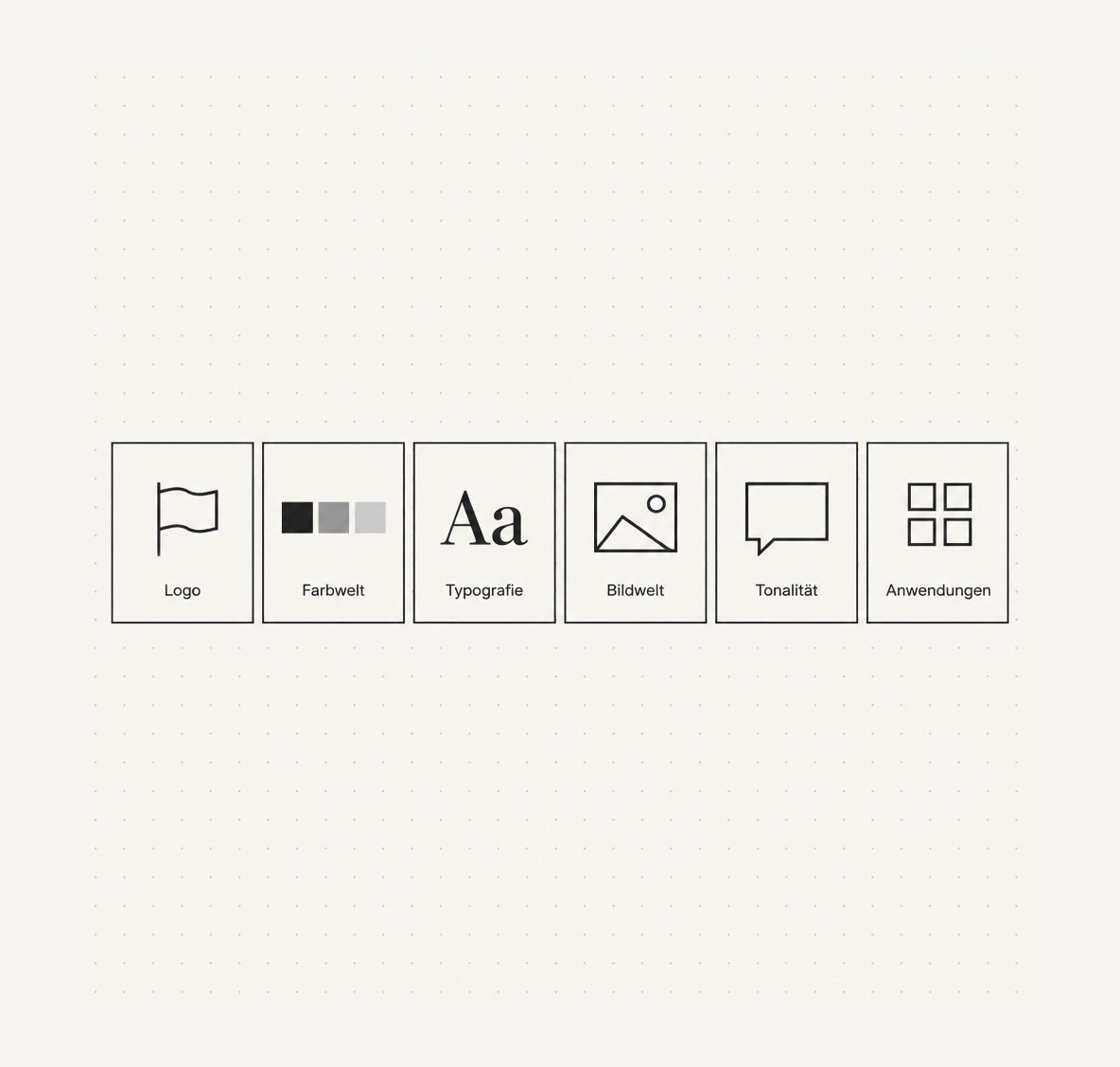
- Logo and symbol: Primary logo, secondary versions, favicon, clear space and minimum sizes
- Colour palette: Primary and secondary colours with exact values for print (CMYK, Pantone) and digital (RGB, HEX)
- Typography: Brand typefaces for headings and body copy, including fallback fonts for Office and the web
- Imagery: Photography or illustration style, image editing, cropping
- Tone of voice: How the brand writes and speaks, from forms of address to sentence structure
- Applications: Business cards, letterheads, presentations, email signatures, social media templates, website
Visual identity, corporate identity, branding: what is the difference?
| Term | Meaning | Example |
|---|---|---|
| Corporate identity (CI) | The company's entire identity: values, behaviour, communication and appearance | How your company presents itself and acts internally and externally |
| Visual identity (CD) | The visual part of the corporate identity | Logo, colours, typography, layout grids |
| Branding | The ongoing process of building and maintaining the brand | Campaigns, brand management, development |
Why a professional visual identity is worth the investment
The most expensive design phase is the one in which a company works without a system. Every document is reinvented, every decision debated again. Above all, a good visual identity is an efficiency measure that happens to look good too.
The process: how a visual identity project works
- Analysis and briefing: We get to understand the business model, target audiences, competitors and ambitions. What should the brand convey, and where will it be used?
- Positioning: The analysis establishes a clear direction: what does the brand stand for, and how does it differentiate itself?
- Design exploration: Initial visual directions take shape through mood boards and style concepts. This establishes the overall look and feel.
- Design development: The logo, colour palette, typography and imagery style are developed and tested in real applications.
- Brand manual: All guidelines are documented in a style guide so internal teams and external providers can work consistently.
- Rollout: The applications are produced: website, business stationery, templates, social media.
What does a visual identity cost?
| Scope | Typical provider | Price range |
|---|---|---|
| Logo package without a system | Freelancers, platforms | 300 to 1.500 € |
| Basic visual identity (logo, colours, typography, mini style guide) | Freelancers, small studios | 2.000 to 6.000 € |
| Complete visual identity including brand manual and core applications | Branding agency | 8.000 to 25.000 € |
| Redesign with rollout, website and campaigns | Branding agency | from 20.000 € |
The most common visual identity mistakes
- Ordering a logo without a system: Standalone logo files without colour values, fonts and usage guidelines leave every provider doing their own thing.
- No written brand manual: Verbal agreements do not survive staff changes. Without documented guidelines, the visual identity drifts within a year.
- Too many exceptions: If every department gets its own colours and layouts, the system falls apart.
- Thinking only about digital: Developing a design solely on screen can lead to nasty surprises on the first print run, particularly with colour values and contrast.
- Copying trends: What looks modern today will look dated in three years. A good visual identity is guided by positioning, not Pinterest.
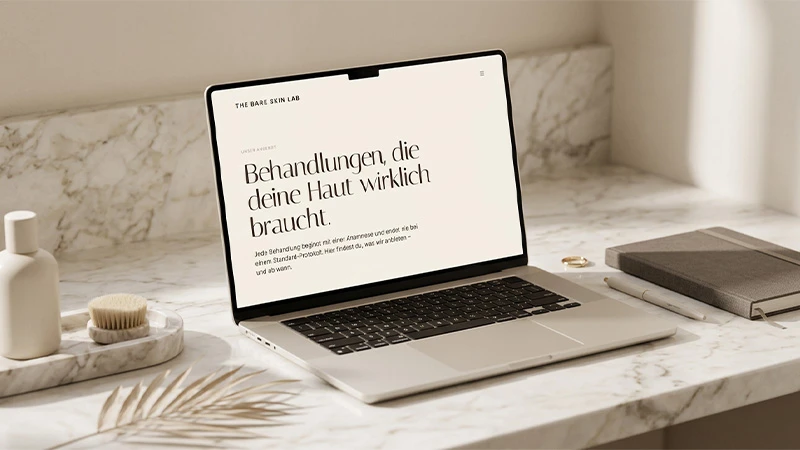
Real-world example: The Bare Skin Lab
Creating a visual identity: agency, freelancer or DIY?
Corporate design agency: how to spot a good one
- Strategy before design. A good corporate design agency asks about positioning, audiences and competition first. Anyone showing logo drafts straight away is selling taste, not effect.
- A rulebook, not a single graphic. Insist on a style guide or brand manual with colour, type and image rules. Without documentation the identity falls apart within a year.
- Applied in real media. Ask to see the brand on a website, brochure, packaging or trade show wall, not as a logo on white.
- Execution under the same roof. When website, film and print come from the same agency, translation losses and feedback loops disappear.
- Files and rights settled. Open files, export formats and usage rights belong in the scope, not in a later negotiation.
Conclusion
Frequently asked questions
What does it cost to commission a visual identity?+
What does a visual identity include?+
How long does it take to develop a visual identity?+
What is the difference between visual identity and corporate identity?+
Do I need a brand manual?+
Can I create a visual identity myself using AI or Canva?+
When is a visual identity redesign worthwhile?+
What should a brief for a visual identity agency include?+
Sources
- The State of Brand Consistency 2019, Marq (Lucidpress) (2019)
- Impact of Color on Marketing, Management Decision, Emerald Publishing (2006)
Want to see our articles more often in Google's Top Stories? Add Maluure as a preferred source.
Add on Google
Josef leads the strategic and creative development of brands at Maluure. For over a decade, he has guided medium-sized businesses from brand positioning to digital delivery.
Managing Director of Maluure GmbH, Cologne. Specialising in corporate design, brand strategy and digital brand experiences.
Weiterlesen

Website for Electricians: The Right Jobs and New Skilled Staff
Service pages, service area, references and careers: how to build an electrician website that brings preferred jobs and applications.

Website for Hotels: More Direct Bookings, Less Commission
Rooms, booking widget, location and direct benefits: how to build a hotel website that brings guests back from platforms to your own site.

Website for Physiotherapy: More Appointments and Applications
Treatments, appointment requests, team and careers: how to build a physio website that convinces patients and therapists alike.
Explore more blog topics

Website for Restaurants & Hospitality: What Guests Really Look For
Menu, opening hours, reservations: how to build a restaurant website that convinces guests in seconds and gets found locally.

A Website for Dental Practices: What Really Matters in 2026
Which content a dental website needs, how local SEO brings inquiries, and what a practice website really costs.

Willi on the DNA Insider Podcast: Marketing Needs Clear Prices
Willi was a guest on the DNA Insider Podcast by the Deutscher Netzwerk Award. Eleven minutes on clear pricing, founding Maluure with his brother Josef, and why networking is no buzzword for us.