Web Design Tech Stack Comparison: Webflow, WordPress, Lovable & More
Which tech stack is right for your website? We compare Webflow, WordPress, Lovable, custom development, Squarespace and website builders, with real client projects.
When you plan a new website, most agencies immediately name a tech stack: "We do that with WordPress." Or: "We're a Webflow agency." At Maluure, we take a different approach. We have built websites in Webflow, WordPress, Lovable, with fully custom development, in Squarespace and in website builders such as Wix or Ionos. For us, technology is almost never the limiting factor. We choose it after we understand what you need.
This article explains each stack in detail, shows real client projects and clarifies which technology is right for which situation. The conclusion upfront: There is no universally "best" system. There is only the best system for your project. Web design process: from screen design to implementation explains how we define strategy and design first.
Why we work as a technology-agnostic web design agency
"Technology-agnostic" means we are not tied to any provider, CMS or platform by contract, ideology or convenience. We recommend the system that suits your project, not our sales interests.
The default approach at many agencies is understandable: One team, one stack, the same templates every week. That makes quotes cheaper and processes faster. But it also means every project gets forced into the same system, whether it fits or not. We see this every day with clients who switch to us, bringing websites built on the wrong foundations: WordPress sites with 40 plugins for a company website that needs two templates. Custom-coded portals for brands that need three landing pages and a blog. Webflow projects where the client can never change anything themselves because the CMS has been configured with unnecessary complexity.
The six stacks we use to build websites
We have experience with six categories of systems. Each has clear strengths and clear limitations. This overview provides a map, with the following sections exploring each in depth.
| Stack | Ideal for | Weaknesses | Implementation price range |
|---|---|---|---|
| Webflow | Design-led marketing sites, streamlined CMS blogs | Complex logic, many user roles, large-scale growth | 6 000 – 25 000 EUR |
| WordPress | Content-heavy sites, editorial teams, shops via WooCommerce | Maintenance demands, plugin chaos, security | 5 000 – 30 000 EUR |
| Lovable | Custom CMS backends, apps, MVPs, rapid iteration | Young ecosystem, fewer off-the-shelf plugins | 8 000 – 40 000 EUR |
| Custom development | Highly scalable platforms, specialist business logic | Higher costs, longer time to market, reliance on development team | from 25 000 EUR |
| Squarespace | Small brands, portfolios, very fast time to market | Design limitations, little CMS flexibility, limited SEO control | 2 000 – 6 000 EUR |
| Wix, Ionos, other website builders | Sole traders, very small budgets, self-management | SEO limitations, performance, lock-in, little scope for distinctive branding | 1 500 – 5 000 EUR |
Prices cover implementation by us only, excluding ongoing licences, hosting or maintenance. You can find details of our pricing in our article What does a website really cost.
Our two favourites: Webflow and Lovable
Of all the stacks we use, we prefer two – depending on the project: Webflow and Lovable. Both have one thing in common: They let us deliver quickly and cleanly without having to work around someone else's templates.
Webflow is our favourite for design-led marketing websites. The code stays clean, we retain full visual control and the client gets a CMS they can use themselves later. When precise design control matters, Webflow offers the best balance of freedom and stability.
We use Lovable when complete flexibility and speed are essential. It lets us build bespoke CMS backends, small internal tools or process apps in a fraction of the time traditional development would take. Lovable is our first choice, particularly for projects that need to support specific workflows as well as provide a website.
Webflow: Precise design with a streamlined CMS
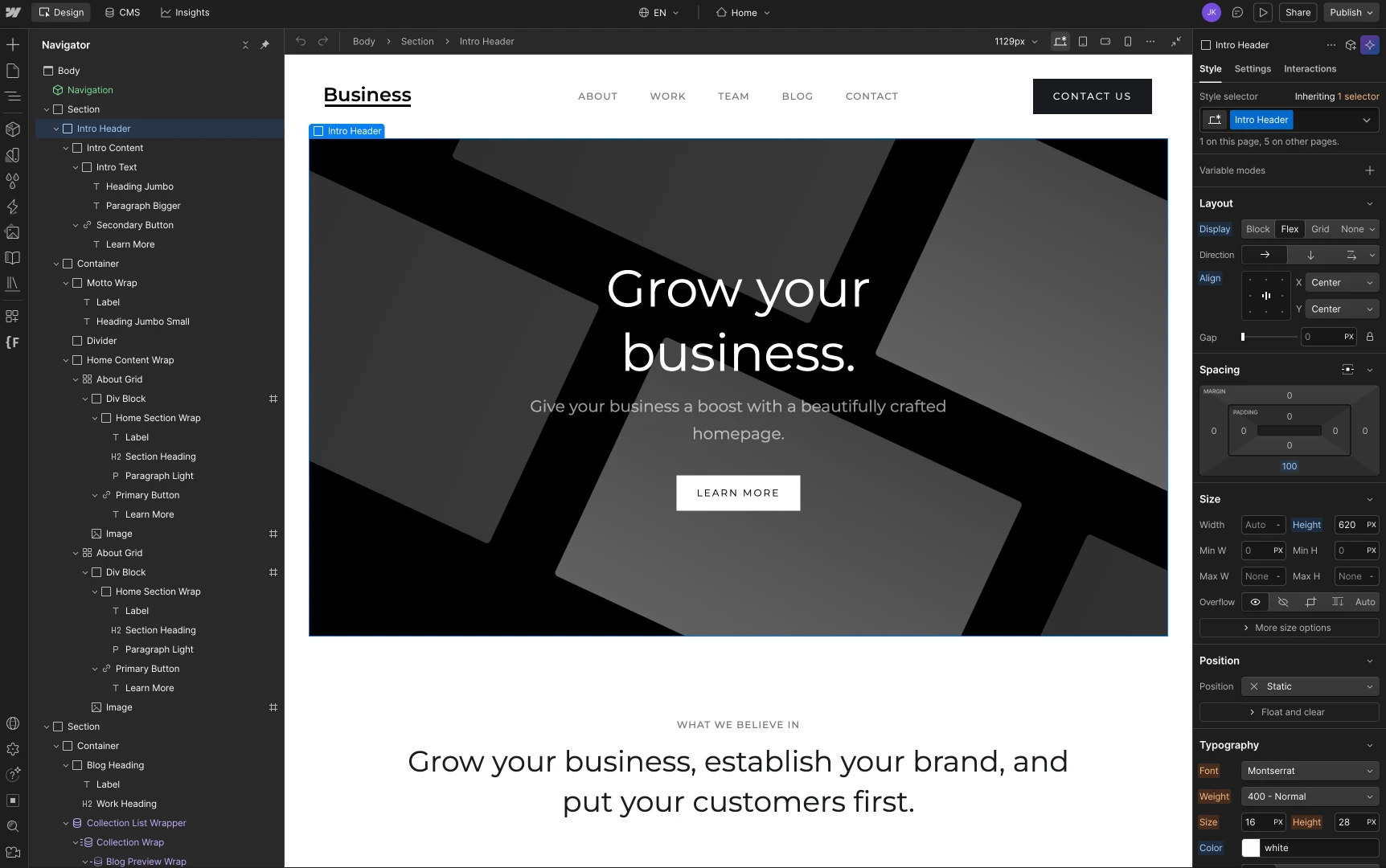
Webflow is a visual website builder that generates clean HTML, CSS and JavaScript code in the background. Its advantage over traditional website builders: Designers can work with pixel-level precision without accepting templates that all look the same. Its advantage over WordPress: No tangle of plugins, a significantly smaller attack surface, and integrated hosting with a global CDN.
We use Webflow when three things come together: high design standards, manageable CMS requirements and a client who wants to maintain their own content.
Client example: Ohrenkorrektur Fadenmethode (Schwaben Aesthetic)
The website for the Fadenmethode is a prime example of using Webflow for the right project. The client needed a streamlined, high-performance landing page with a CMS-powered blog they could manage independently. They already knew Webflow from a previous project and did not want to learn a new system. For us, that was a clear signal: The stack was decided because it suited the person using it.
We:
- developed a design combining medical credibility with a calm, modern aesthetic
- set up a CMS for blog articles that the client can populate in just a few clicks
- optimised performance and SEO to help the site gain organic visibility in its niche
- built clear conversion paths for enquiries
The result: The client has maximum independence, needs no maintenance contracts and can publish content without us. Exactly what Webflow does well.
If a client already loves and knows their system, it would be foolish to force a new one on them just because we would rather sell it.
When Webflow is not the right choice
As soon as roles, permissions, multi-site setups, hundreds of CMS entries with complex reference logic or deeply integrated third-party systems come into play, Webflow can quickly become cumbersome. There are solutions for multilingual sites too, but they are rarely as elegant as a bespoke backend.
WordPress: The content classic with a maintenance burden
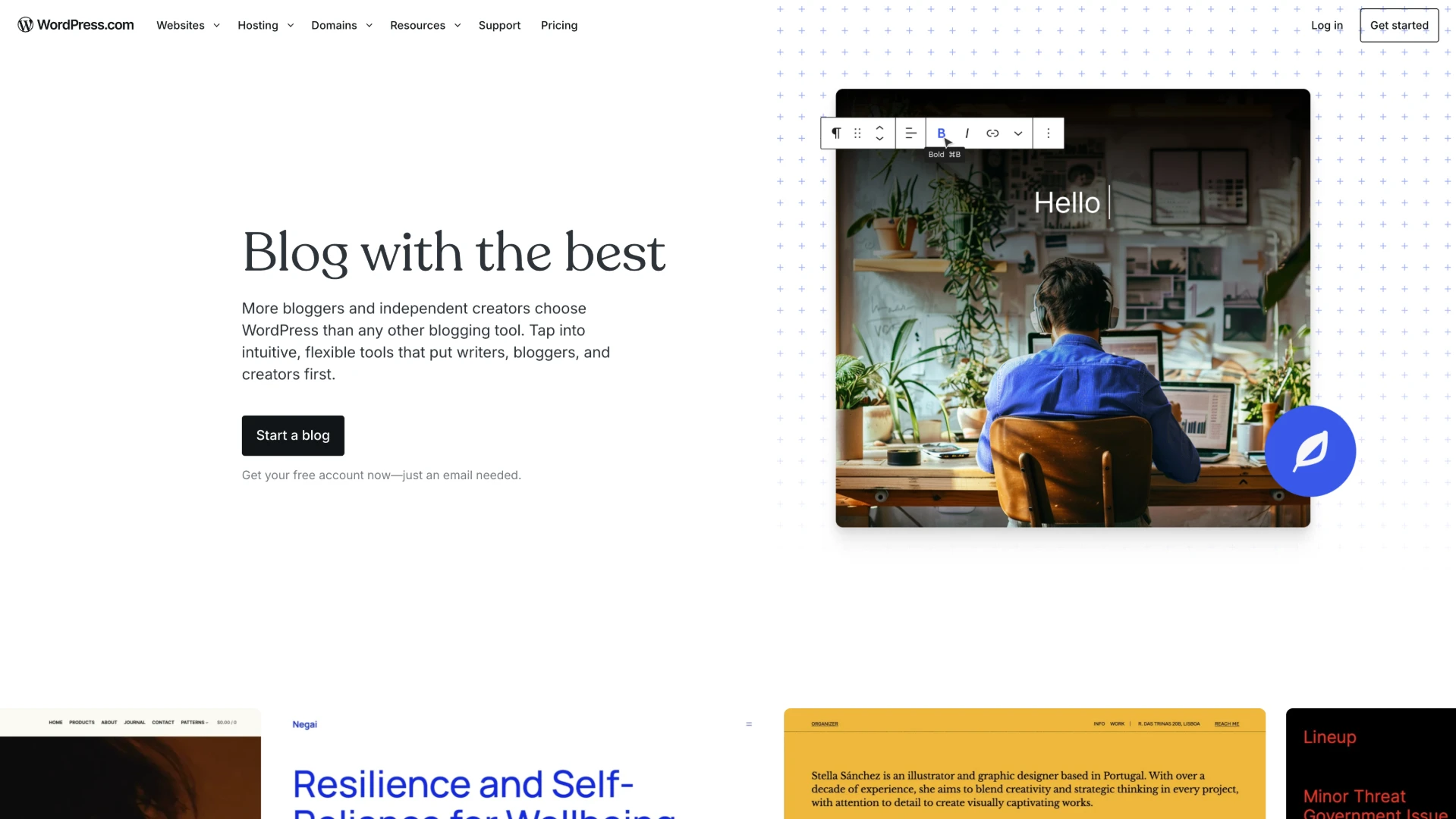
According to W3Techs, WordPress still powers over 40 per cent of all websites worldwide. [1] That popularity is both a blessing and a curse. The blessing: There is a plugin for virtually every requirement. The curse: There is a plugin for virtually every requirement, and many are poorly maintained, conflict with others or introduce security vulnerabilities.
We use WordPress when a client:
- needs a large editorial team with clearly defined roles and permissions
- wants to maintain a very large volume of content over many years
- runs or plans a sophisticated shop with WooCommerce
- already has a working WordPress setup that only needs rebranding
We deliberately avoid WordPress for small company websites with five pages and a contact form. The maintenance effort is disproportionate to the benefit. The same site runs in Webflow or Squarespace at a fraction of the ongoing cost and without monthly update cycles.
Webflow vs. WordPress: Which system should you choose?
The most common tech stack question we hear is a direct comparison: Webflow vs. WordPress. Both systems can deliver the desired outcome in many projects, but they are built for different needs. At its core, Webflow is a design tool with a CMS module. WordPress is an editorial system with a design layer. That is the crucial difference.
| Criterion | Webflow | WordPress |
|---|---|---|
| Design freedom | Very high, pixel-level precision without being tied to templates | Theme-dependent, often involves compromises |
| CMS depth | Solid, sufficient for many marketing sites | Very extensive, ideal for large editorial teams |
| Maintenance | Minimal, hosting included | High, ongoing plugin and core updates |
| Security | Managed, minimal attack surface | Most widely used CMS, frequent target for attacks [2] |
| Performance out of the box | Strong, global CDN | Highly variable, dependent on plugins [3] |
| Ideal for | Design-led marketing sites | Content-heavy portals and shops |
As a rule of thumb: If your site primarily sells, persuades and generates leads, Webflow is usually a better fit. If your site primarily publishes, edits and archives content, WordPress is generally the smarter choice.
Lovable: A bespoke backend in record time
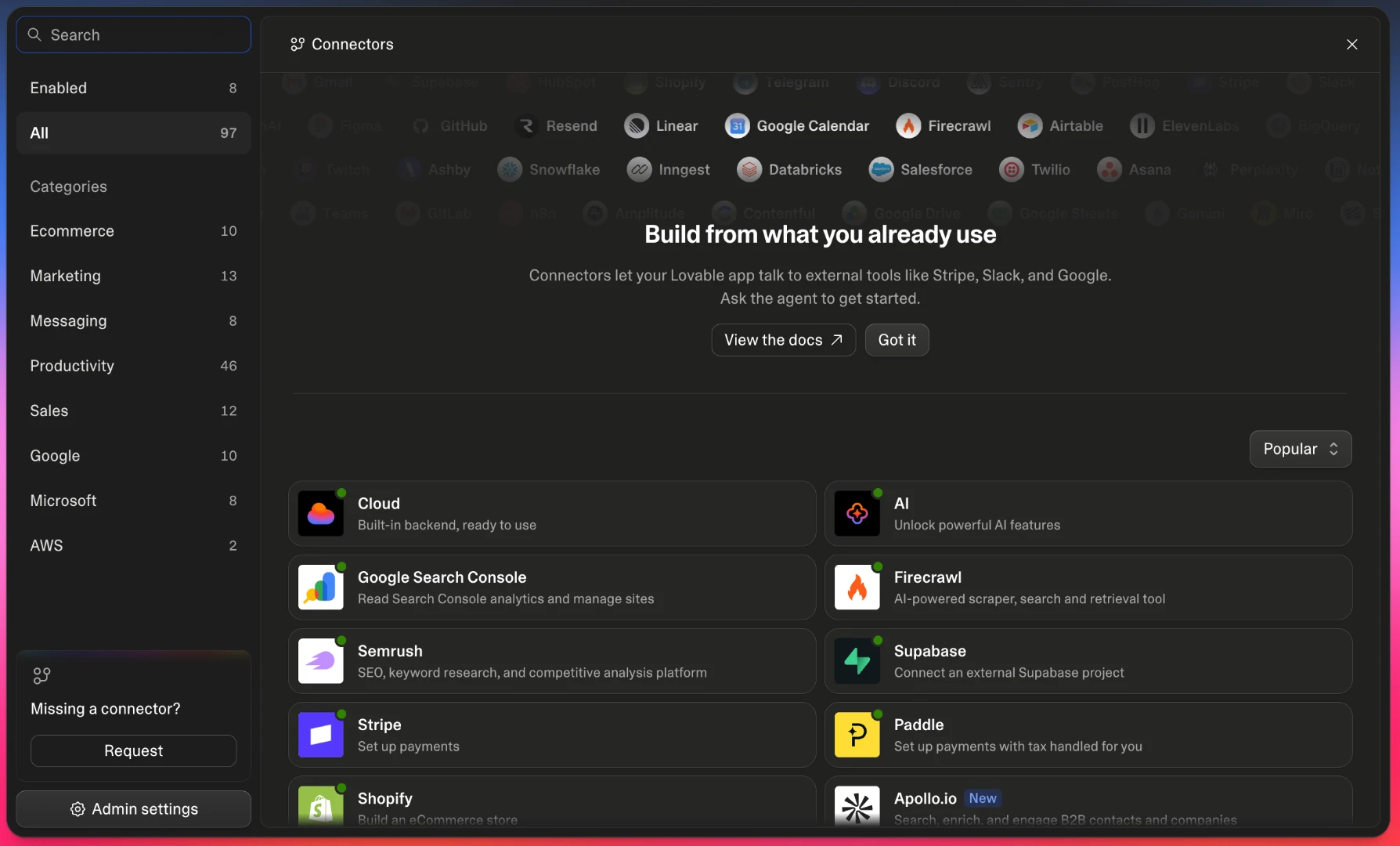
Lovable is an AI-powered development platform we use to build fully fledged web applications, including a custom frontend, tailored CMS and database. Unlike traditional website builders, we work directly with code here, just significantly faster than in traditional development.
For us, Lovable is useful when:
- the client's CMS should truly fit the client, not the other way round
- the project sits between a website and a web app
- rapid iteration matters more than "that's how we've always done it"
- custom login or role logic is needed
Client example: Living Creations
We built the Living Creations website and backend entirely with Lovable. The advantage: We could tailor the entire client CMS precisely to their internal processes. Instead of forcing the client into a standard WordPress interface, we built fields, views and workflows around the way they already organise their work. Design iterations took hours, not weeks. Deployment included.
That is the core benefit: A bespoke system without a six-figure development investment.
Where Lovable reaches its limits
Lovable is a young ecosystem. Anyone looking for an obscure WordPress plugin will not find it here as a "simple download". We build what we need ourselves. That is usually an advantage because the result is cleaner. But for very large marketplace integrations, a mature stack is sometimes the smarter choice.
Custom development: When no CMS is enough
Fully custom development means a team of developers builds the frontend, backend, database and deployment pipeline from scratch, usually on a framework such as Next.js, Nuxt or Remix and dedicated cloud infrastructure. This is the most expensive option, but also the most flexible.
We recommend custom development when:
- the project will become a full-scale web platform with thousands of users, roles and data objects
- the business logic is so specific that any CMS would get in the way
- scaling, performance and security go beyond standard requirements
- the team can retain its own developers to maintain the code long term
For a traditional marketing website, that is overkill. For a portal that is your core business, it is the only credible approach.
Squarespace: Small, fast, well built
Squarespace is a website builder with very good templates. For small brands, portfolios, photographers, studios or restaurants, it is often the fastest way to establish a professional online presence. We use Squarespace when budgets and time are tight, but the design still needs to look better than "a website builder from 2010".
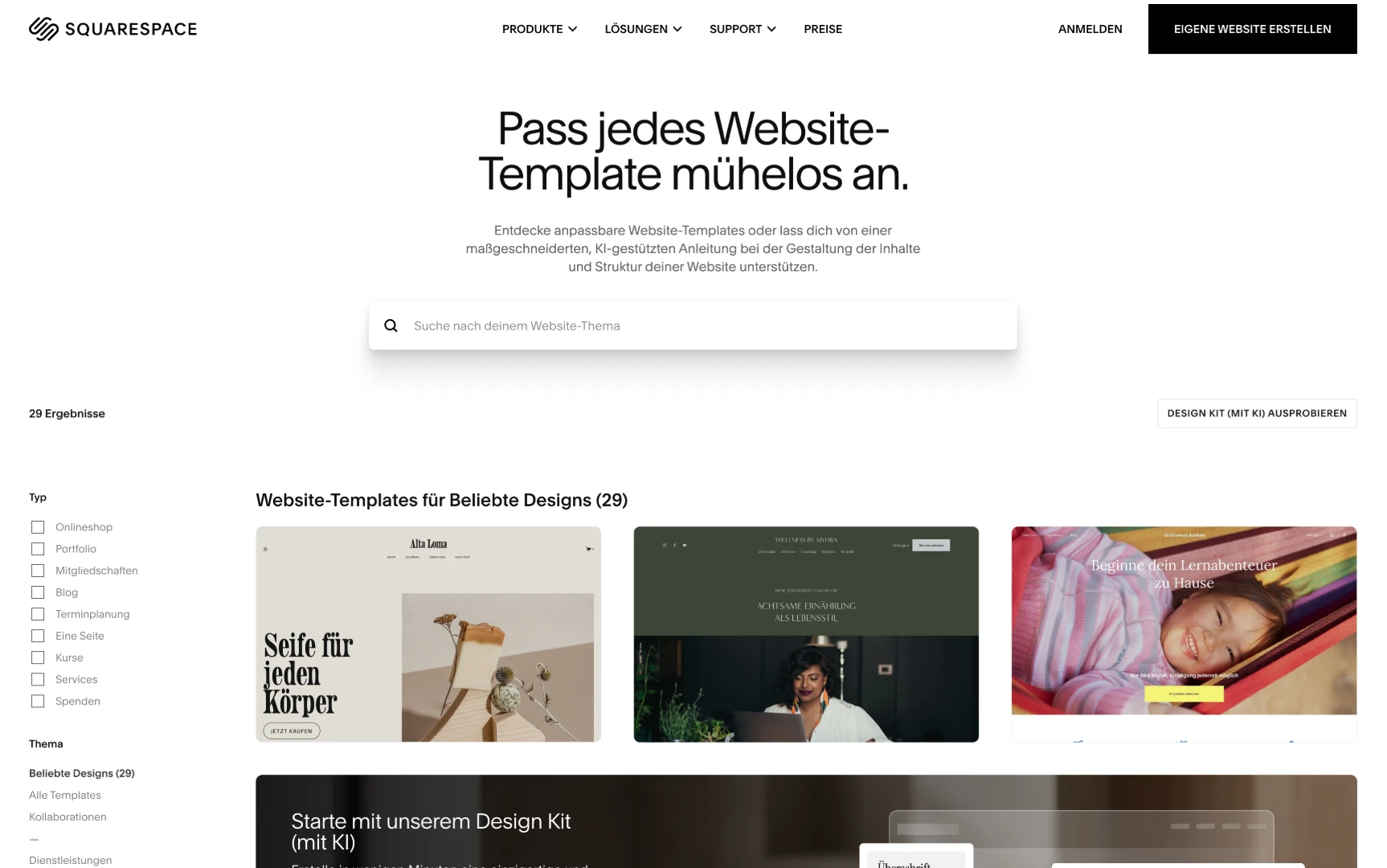
Limitations: SEO control is restricted, customisation quickly reaches its limits, and third-party integrations often involve workarounds. For a brand that needs to scale, Squarespace is rarely the right choice.
Website builders compared: Wix, Ionos and more
Wix and Ionos target clients who want to maintain their own website on a small budget. We only work with these systems when an existing setup needs optimisation or a client explicitly asks us to.
From an agency perspective, the limitations are clear:
- SEO options are more restricted than in Webflow or WordPress
- performance scores are lower on average
- lock-in is high: Moving usually means a complete rebuild
- design freedom stops at the predefined blocks
For a sole trader with a clear message, three pages and a contact form, this can still be the right practical choice. Honesty before sales: If you need a site for 1 500 EUR that goes live tomorrow, we will not recommend a custom stack for 25 000 EUR.
How we choose the right stack for your project
Our selection process is not based on gut feeling. It follows a clear sequence. It always takes place before any design or development decision, immediately after the strategy process we describe in Creating a website concept.
- Understand the site's goals. Marketing, lead generation, editorial content, shop, platform, portfolio. Each goal has a different sweet spot.
- Clarify day-to-day content management. Who maintains the content? How often? With what prior knowledge?
- Assess scaling needs. Two landing pages or two hundred? Will the volume of content grow or stay stable?
- Check integrations. CRM, newsletter, booking system, inventory management, payment providers.
- Align budget and time to market. What is realistic, and what is desired?
- Make a recommendation, not a sales pitch. If the answer is "Squarespace for 3 000 EUR", we say so.
Two honest truths to finish
First: Almost all websites that perform poorly today are not failing because of the technology. They fail because of a lack of strategy, unclear content and mediocre design. The stack is rarely the cause. A good screen design process, which we describe in Web design process: From concept to screen design, matters more than any discussion about frameworks.
Second: We retain responsibility, regardless of the system. We have in-house developers, designers and strategists with practical expertise across all six stacks. When we work with external specialists, such as WordPress developers for very large editorial setups, project management stays with us. You have one point of contact. Always.
Our aim is not to work with every system. Our aim is for you to end up with the website that suits you, rather than the one that suits our schedule.
If you want to know which stack fits your project, get in touch. We will give you an honest recommendation, even if the answer is: "Stay with the system you have."
Only considering Webflow and WordPress?
If these are the only two systems on your shortlist, you can find a detailed head-to-head comparison of performance, maintenance, costs and security here: Webflow vs. WordPress: The comparison for businesses.
Frequently asked questions
What is the best tech stack for a website?+
Is Webflow better than WordPress?+
How much does a website in Webflow, WordPress or Lovable cost?+
What does technology-agnostic mean?+
Can I maintain my website myself after launch?+
Which stack do you recommend for a shop?+
What is Lovable and why do you use it?+
Are Wix or Ionos really that bad?+
Do I need to choose a stack as a client?+
Webflow vs. WordPress: Which is better?+
Which website builder is best for small businesses?+
Sources
- Usage Statistics of Content Management Systems, W3Techs (2026)
- Websites hosted using WordPress, BuiltWith Trends (2026)
- CMS chapter, Web Almanac, HTTP Archive (2024)
- Core Web Vitals – Overview, Google web.dev (2025)

Josef leads the strategic and creative development of brands at Maluure. For over a decade, he has guided medium-sized businesses from brand positioning to digital delivery.
Managing Director of Maluure GmbH, Cologne. Specialising in corporate design, brand strategy and digital brand experiences.
Weiterlesen
Using a corporate film on social media: twelve weeks of content from one shoot day
A corporate film is not a one-off asset, but a bank of source material. How to turn one shoot into formats for LinkedIn, Instagram, your website and sales, with an editing plan, content calendar and practical example.

Corporate video scripts: storytelling that works in 90 seconds
The script determines whether your corporate video makes an impact or just looks good. Structure, narrative, common mistakes and a shot list that saves the shoot day.

Officially certified: Maluure is a Lovable Partner
Since 16. September 2026, Maluure has been an officially certified Lovable Partner, Expert Website Builder and Expert App Builder. What the certification involves and what it means for your project.
Explore more blog topics
Corporate film or recruitment video: What your company really needs
Both films cost a similar amount but have very different effects. This comparison shows which format suits which goal and how to produce both in a single day of filming.

LinkedIn Video: Formats, Lengths and Best Practices for Businesses
What works for LinkedIn video: formats from 1:1 to 9:16, the right length for each objective, subtitles, hooks and upload strategy. A concise guide for businesses.

Recruitment video: showing employees as they really are
How a recruitment video shows real employees rather than glossy clichés, what it costs and why authenticity brings in more applications.