LinkedIn Video: Formats, Lengths and Best Practices for Businesses
What works for LinkedIn video: formats from 1:1 to 9:16, the right length for each objective, subtitles, hooks and upload strategy. A concise guide for businesses.
Video is no longer a niche format on LinkedIn. The platform prioritises video in the feed, and businesses that post regularly achieve noticeably greater reach than with text-only or image posts. Yet in practice, we keep seeing the same mistake: a carefully produced film is shared as a YouTube link, without subtitles, with a 20-second intro. The reach never materialises, and the conclusion is “LinkedIn doesn't work for us". But it is almost never the platform at fault. It is the format, length and opening.
This guide summarises which formats and lengths actually work on LinkedIn, how to handle uploads and how to get weeks of content from a single shoot day. It complements our pillar page on commissioning a corporate film and our articles on corporate film costs and video production in Cologne.
The right formats: 1:1, 4:5 or 9:16
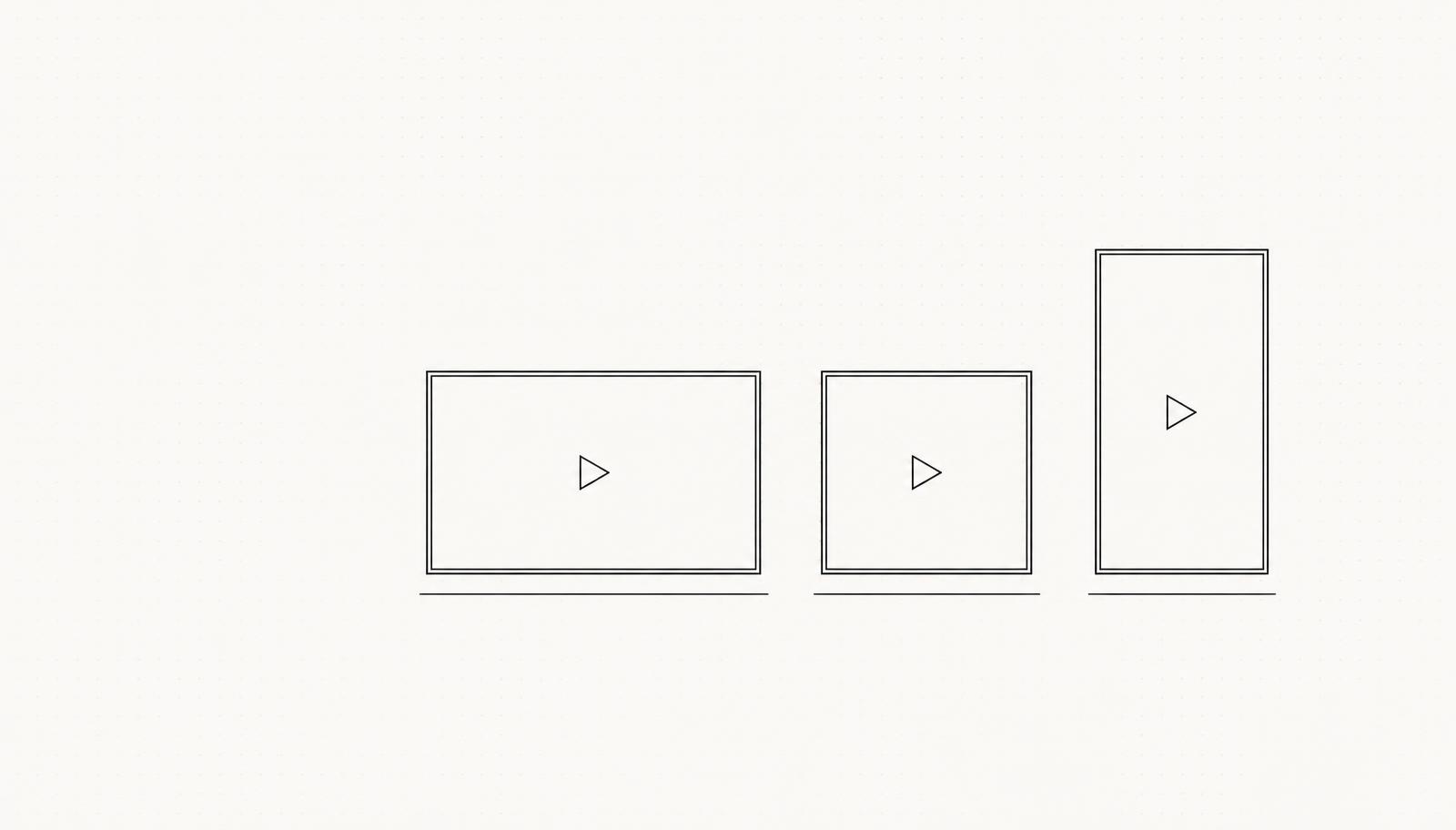
The LinkedIn feed is mobile-first. More than half of all visits come from smartphones, where every pixel of screen space counts. A wide 16:9 video looks small in a vertical feed and loses out to formats that take up more of the screen. [1]
| Format | Aspect ratio | Use |
|---|---|---|
| Square | 1:1 | Versatile feed format, maximum space without scrolling |
| Vertical | 4:5 | Largest feed area, ideal for people speaking to camera |
| Portrait | 9:16 | Short clips, teasers, behind the scenes |
| Widescreen | 16:9 | Only when no other version of the footage is available |
Our recommendation: produce in 4:5 from the outset, or frame your shots so that a 16:9 master can be cropped cleanly to 1:1 or 4:5. On set, that means enough headroom, no important content at the edges and a clear area for subtitles.
The right length: shorter than you think
Technically, LinkedIn allows native videos of up to 15 minutes. In practice, the first few seconds determine whether someone keeps watching. Length should follow the objective, not the footage.
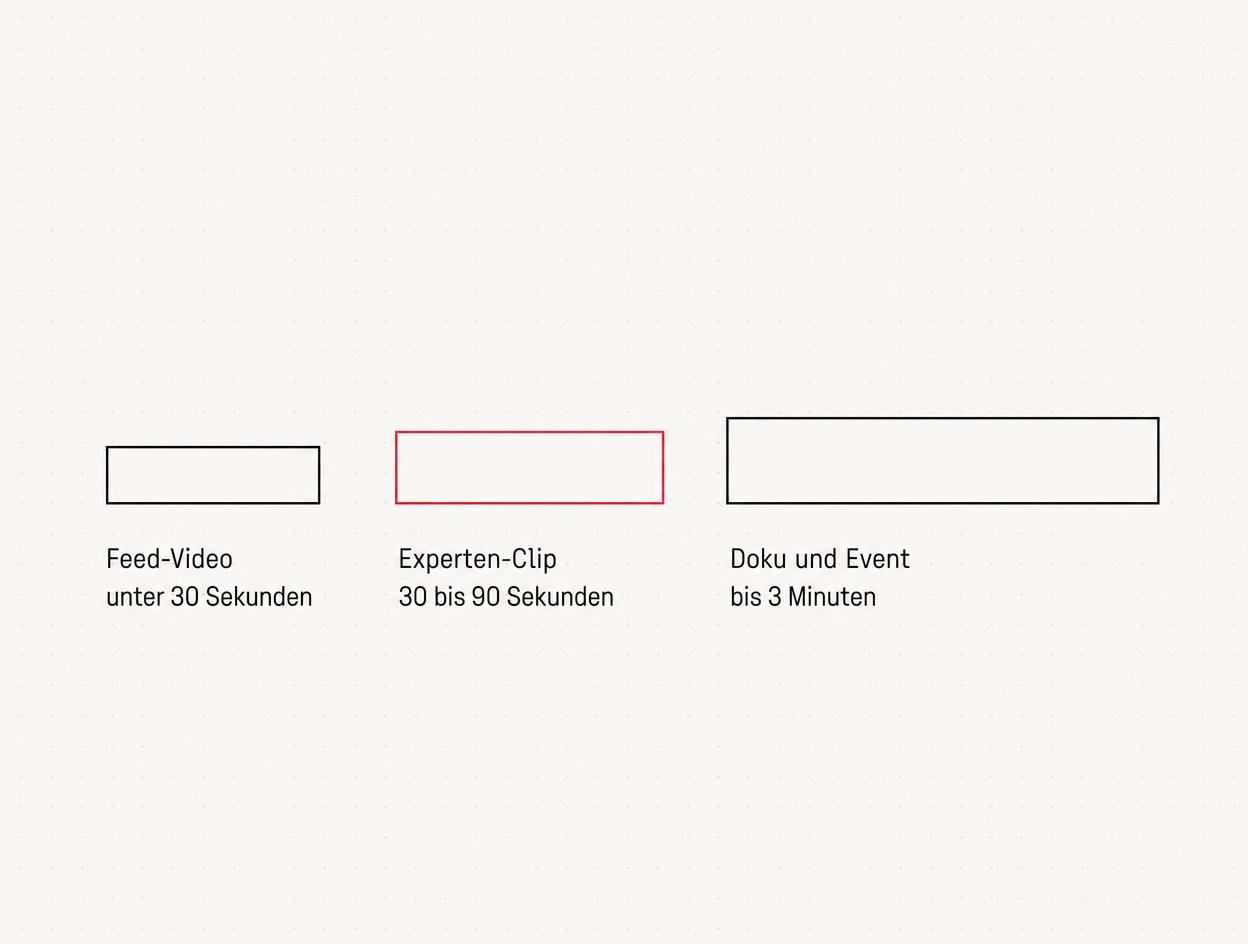
- Feed video under 30 seconds: One idea, one statement, one moment. Ideal for teasers, event highlights or quick tips.
- Expert clip of 30 to 90 seconds: One person answers one question. This format offers the best balance between production effort and impact.
- Documentary and event video up to 3 minutes: A recruitment story, project profile or event recap. Anything longer belongs on your website or YouTube, not in the feed.
If you have produced a longer recruitment video or an aftermovie, edit it into several short extracts for LinkedIn rather than posting the entire film.
Subtitles are essential, not an extra
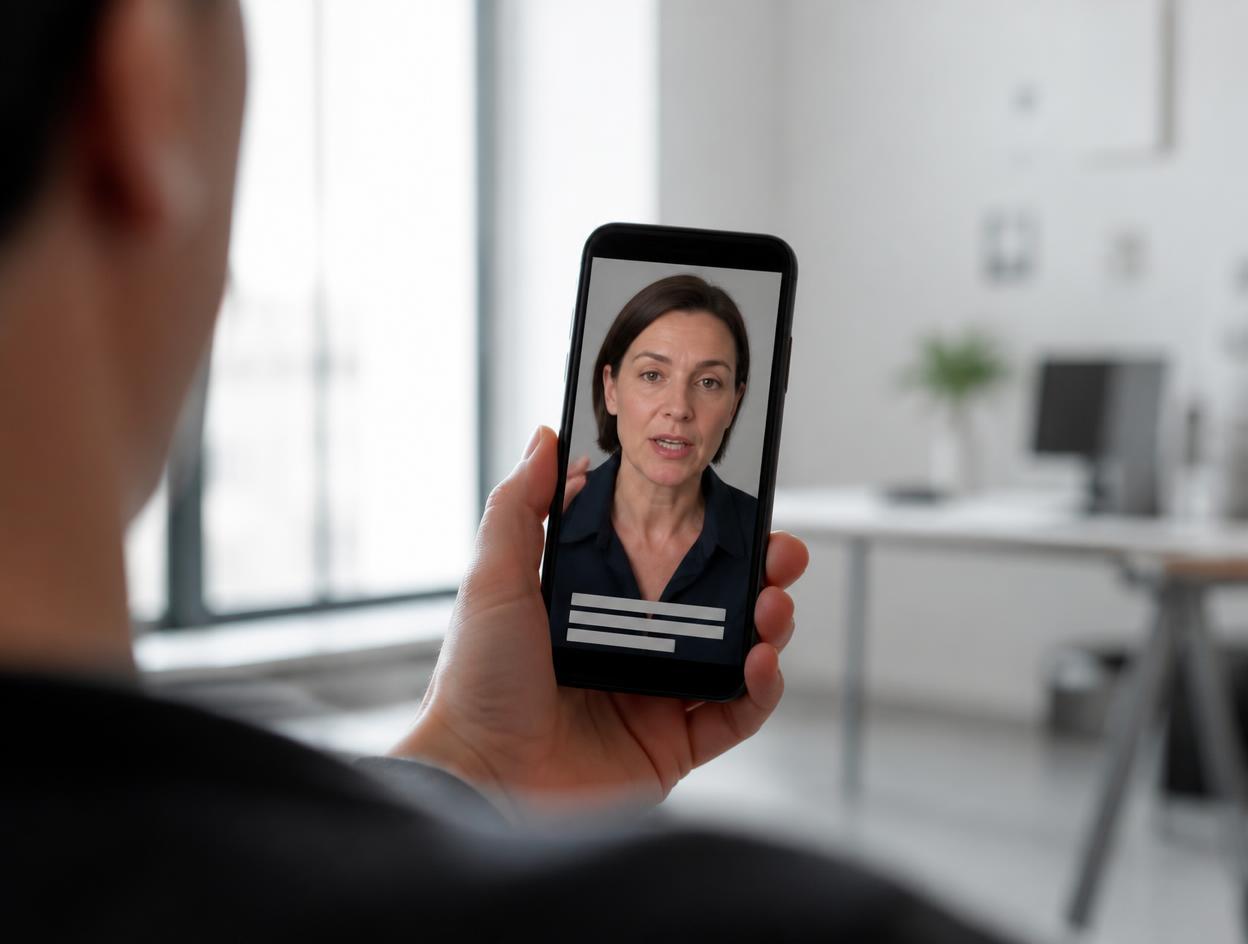
Most LinkedIn users scroll through the feed without sound. Autoplay starts muted, and anyone who cannot understand the first few seconds visually will scroll on. Subtitles are therefore not an accessibility bonus, but the foundation for your video having any impact at all.
Two approaches work: subtitles burned directly into the video, or an SRT file supplied when you upload. Burned-in subtitles are the safer option because they are always visible, even when shared. Use large text, high contrast and a position in the lower third that is not obscured by LinkedIn's interface.
Hook first: the first three seconds
LinkedIn autoplays the video, but you have to earn people's attention. The classic opening with a logo animation and “Welcome" is the surest way to lose it.
What works instead:
- The key message first: “Three out of four applications now come through video" beats any intro.
- The most compelling question: “Why do good people leave after two years?"
- The strongest visual moment: With event footage, put the most emotive shot first rather than following chronological order.
- A text hook in the post: The first line of the accompanying text is part of the hook. It appears above the “see more" cut-off.
On LinkedIn, you are not competing with other businesses, but with your audience's thumbs. That is why we edit every video so that the first three seconds work without sound or context.
Native upload instead of a YouTube link
LinkedIn wants users to stay on the platform and rewards content accordingly: a natively uploaded video plays automatically in the feed and achieves many times the reach of a link to an external platform. [2]
In practical terms:
- Upload the video file directly to the post rather than linking to it.
- Put the YouTube or website link in the comments or in the text after the main content.
- Personal profiles achieve more organic reach than company pages. Post through people, not logos.
- Consistency beats perfection: one to two videos a week over several months achieve more than one elaborate film a year.
One shoot day, eight weeks of content
The most efficient way to produce LinkedIn videos regularly is batching. Rather than producing each post individually, collect questions and topics and film everything in one day:
- Collect questions: 10 to 15 questions that customers and applicants genuinely ask.
- Plan a half-day shoot: Two to three people, five questions per person, a quiet location and good lighting.
- Edit into clips: Each answer becomes a standalone video of 30 to 90 seconds, with subtitles and a hook.
- Fill your content calendar: One clip a week gives you three months of content from one shoot day.
A compact setup is enough to get started. If you want a professional approach, our video production team in Cologne handles filming, editing and delivery in all formats. If you also want to refine your profile's visual presentation, our shop's LinkedIn profile banner is a useful addition.
Subtitles: the workflow that actually works
Around 80 per cent of LinkedIn videos are watched without sound. Subtitles are therefore not a secondary accessibility measure, but the feed's soundtrack. A practical workflow:
- Transcribe automatically in your editing software or with a transcription service. That takes care of 90 per cent.
- Correct technical terms and names. This is exactly where automation falls short, and these are precisely the words that matter.
- Split subtitles across two lines, with a maximum of 42 characters per line. Three lines obscure the image and get cut off by the controls on mobile.
- Safe area: keep the bottom 15 per cent and top 10 per cent of the image clear, as this is where interface elements sit.
- Burn them in rather than uploading an SRT. Burned-in subtitles display consistently everywhere, even if the video later ends up on Instagram or in a presentation.
- Check contrast. Use white text with a dark outline or a semi-transparent bar, never white on a light background.
A small change with a big impact: add an on-screen line of text in the first two seconds that previews the key message. Someone scrolling will read that line and either stop or move on.
One shoot day, an eight-week content calendar
One shoot day with two to three people can easily yield eight to ten clips. Here is how to plan it:
| Week | Format | Content | Length |
|---|---|---|---|
| 1 | Expert clip | A clear position on an industry topic | 60 to 90 sec. |
| 2 | Quick answer | A direct answer to the most common customer question | 30 to 45 sec. |
| 3 | Behind the Scenes | How a project actually works | 45 sec. |
| 4 | Numbers clip | One result, one chart, one statement | 30 sec. |
| 5 | Team introduction | One person, one role, one sentence on their approach | 45 sec. |
| 6 | Myth-busting | What almost everyone in your industry gets wrong | 60 sec. |
| 7 | Customer testimonial | Their own words, not advertising copy | 45 sec. |
| 8 | Looking ahead | What you are currently working on | 30 sec. |
The trick is not in the filming, but in the preparation: write down eight topics before the shoot and define three sentences for each, and you will have everything filmed by the evening. Shoot without a topic list, and you will have plenty of footage but no plan.
In practice: MAD About Brands
For MAD About Brands, we considered the brand, digital presence and video together, rather than treating video as an afterthought. The advantage is particularly clear on social media: because the colour palette, typography and visual style were defined in advance, the clips are instantly recognisable as one brand in the feed, even without a logo in the first frame. That is especially valuable on LinkedIn, where your post sits among hundreds of unrelated pieces of content.
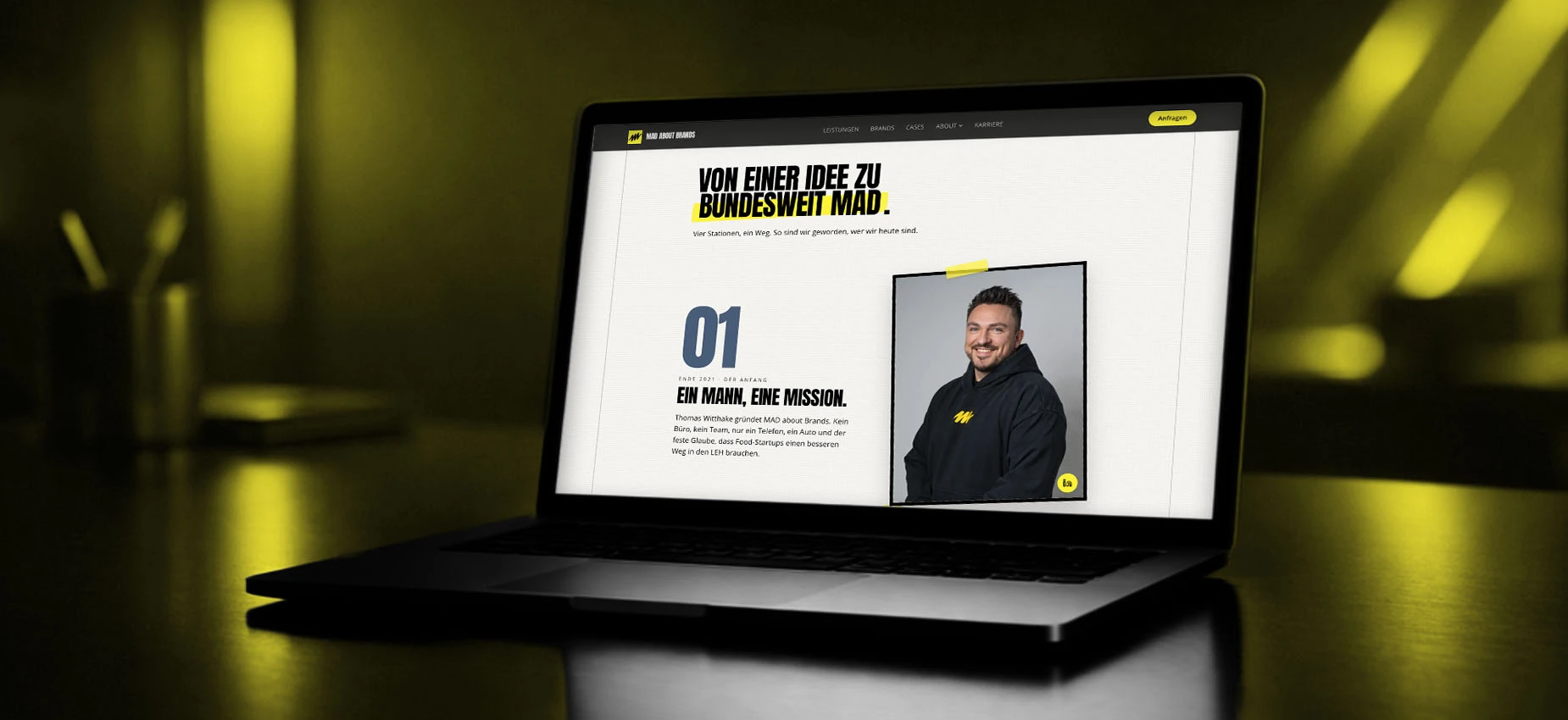
View the full case study: MAD About Brands →
The most common mistake on LinkedIn is not poor quality, but inconsistency. A business that posts one clip a week for eight consecutive weeks beats any single polished video followed by six months of silence.
Which metrics actually tell you something
Views are the least important figure because LinkedIn counts even very brief views. The meaningful metrics are:
- Percentage watched. Over 50 per cent for a 60-second clip is good; anything below 25 per cent means the opening is not holding attention.
- Drop-off in the first three seconds. If this rises, the hook is almost always the issue, not the content.
- Comments and shares, not likes. They drive distribution beyond your own network.
- Profile views after the post. This is the metric most closely linked to enquiries.
Test only one variable at a time: one week, the same content with a different opening; another week, the same length in a different format. If you change everything at once, you learn nothing.
The technical setup you need
You do not need a studio. What matters, in this order, is sound, lighting and image.
- Sound: A lapel microphone or a directional microphone close to the speaker. Sound makes the difference between professional and improvised, not the camera.
- Lighting: A large window to one side, with the person facing slightly towards it. No window behind them.
- Image: A current camera or modern smartphone in portrait orientation, steady on a tripod at eye level.
- Background: The real workplace, tidy and with depth. Not a blank wall.
- Recording: Always shoot at the highest resolution and only switch to the target format when exporting. That way, you can still crop a 16:9 recording to 9:16.
How often to post, and what that realistically means
Once a week is the point at which consistency becomes visible without overloading the team. Twice a week only works with a bank of content from a shoot day. Daily posting is not a realistic goal for most businesses and leads to giving up after four weeks.
Continuity matters more than frequency: one clip a week for twelve weeks has more impact than twenty clips in three weeks followed by nothing. The algorithm rewards consistency, and the audience gets used to a rhythm.
Personal profile or company page
Posts from individuals achieve significantly more organic reach on LinkedIn than posts from company pages. The practical approach for most businesses:
- Expert clips are posted through the experts' personal profiles, with the company mentioned in the text.
- Company news, vacancies and project references are posted through the company page.
- The company page shares selected personal posts, not the other way round.
- Employees are invited, but never required, to take part. Forced participation is immediately visible on camera.
Conclusion
LinkedIn video is not complicated, but it has its own rules: vertical or square rather than wide, under 90 seconds rather than drawn out, subtitles every time, the hook at the start and a native upload rather than a link. Put these five points into practice, and you will be ahead of most B2B accounts. And if you turn one shoot day into a quarter's worth of content, you can keep going without making it a never-ending project.
Frequently asked questions
Which format is best for LinkedIn videos?+
How long can a LinkedIn video be?+
Do LinkedIn videos need subtitles?+
YouTube link or native upload on LinkedIn?+
How much does a LinkedIn video cost for a business?+
How often should you post LinkedIn videos?+
Do LinkedIn videos work for small businesses too?+
What is the biggest mistake with LinkedIn videos?+
Sources
- LinkedIn: Video-Spezifikationen für organische Beiträge, LinkedIn Help (2026)
- LinkedIn: Best Practices für Video-Content, LinkedIn Marketing Solutions (2026)

Josef leads the strategic and creative development of brands at Maluure. For over a decade, he has guided medium-sized businesses from brand positioning to digital delivery.
Managing Director of Maluure GmbH, Cologne. Specialising in corporate design, brand strategy and digital brand experiences.
Weiterlesen
Using a corporate film on social media: twelve weeks of content from one shoot day
A corporate film is not a one-off asset, but a bank of source material. How to turn one shoot into formats for LinkedIn, Instagram, your website and sales, with an editing plan, content calendar and practical example.
Corporate video scripts: storytelling that works in 90 seconds
The script determines whether your corporate video makes an impact or just looks good. Structure, narrative, common mistakes and a shot list that saves the shoot day.

Officially certified: Maluure is a Lovable Partner
Since 16. September 2026, Maluure has been an officially certified Lovable Partner, Expert Website Builder and Expert App Builder. What the certification involves and what it means for your project.
Explore more blog topics
Corporate film or recruitment video: What your company really needs
Both films cost a similar amount but have very different effects. This comparison shows which format suits which goal and how to produce both in a single day of filming.
Recruitment video: showing employees as they really are
How a recruitment video shows real employees rather than glossy clichés, what it costs and why authenticity brings in more applications.
Video production in Cologne: corporate and event films from the Rhineland
What defines video production in Cologne, which filming locations the city offers and how to recognise a good film agency in the Rhineland.