Using a corporate film on social media: twelve weeks of content from one shoot day
A corporate film is not a one-off asset, but a bank of source material. How to turn one shoot into formats for LinkedIn, Instagram, your website and sales, with an editing plan, content calendar and practical example.
Most corporate films meet the same fate: they are approved, embedded on the homepage once, posted on LinkedIn once, then left in a folder. The budget was five figures; the useful life was two weeks.
Yet the real value lies not in the finished film, but in the footage behind it. A typical shoot day produces between 60 and 120 minutes of usable raw footage. The corporate film uses 90 seconds of it. The rest has been paid for and goes unused.
Why a corporate film alone is not enough
A 90-second film is built for exactly one situation: someone is already on your website and wants to know who you are. That is a good use case, but an infrequent one. Social media works differently.
On LinkedIn, video starts playing silently in the feed, in portrait or square format, competing with text posts. On Instagram, the first second decides. Sales needs 20 seconds, not 90. A job advert needs a face, not a panoramic shot of the company.
The same content, four completely different presentations. If you only have the master, you cannot cater for any of them.
One master, five formats
The master is the long version in 16:9 format. Everything else is derived from it, but not simply cropped. An edit that works in landscape loses half its visual information in portrait.
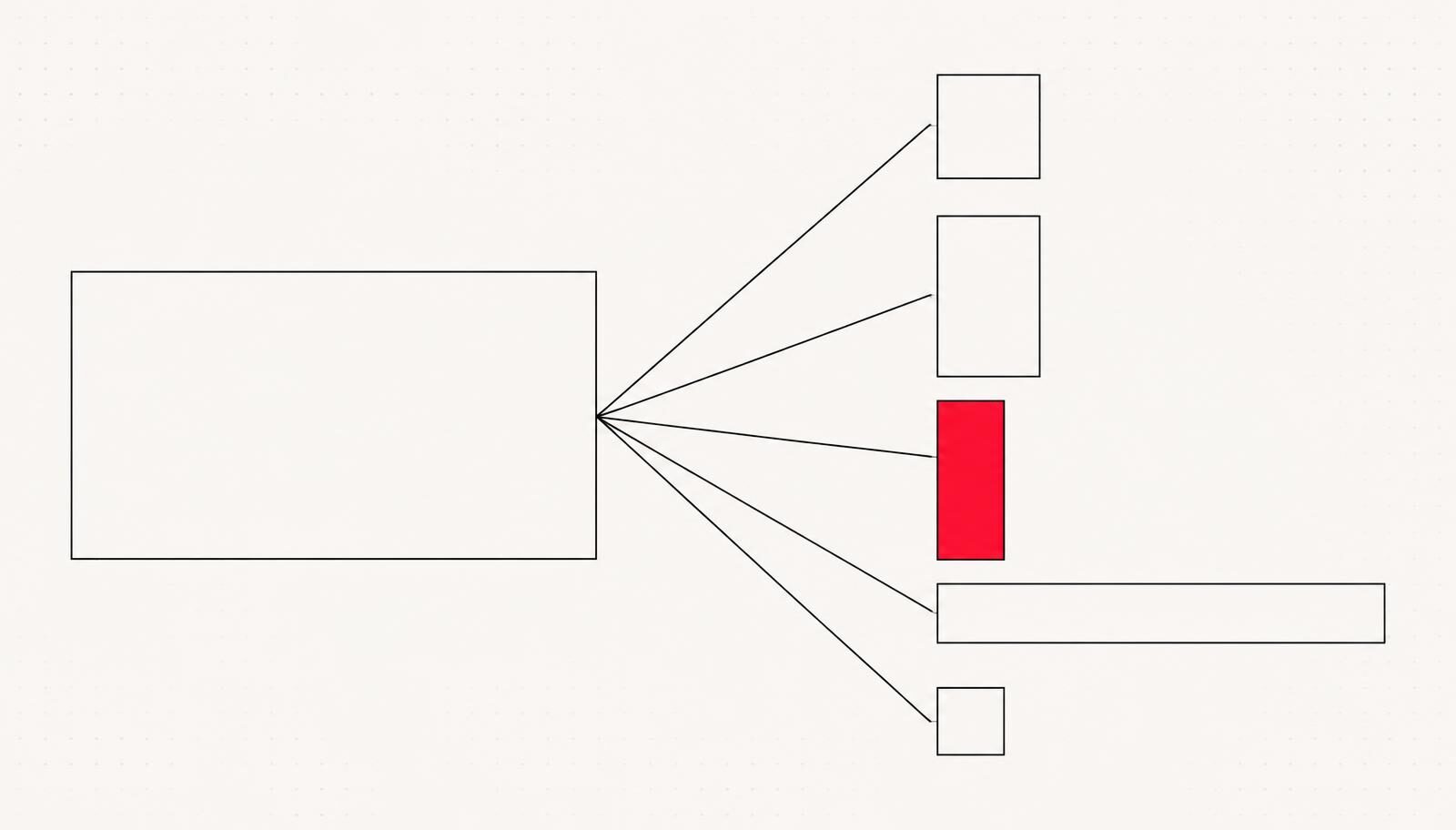
| Format | Aspect ratio | Length | Where it runs |
|---|---|---|---|
| Master | 16:9 | 60–120 Sek. | Website, trade fair, presentation |
| Feed cut | 1:1 or 4:5 | 30–45 Sek. | LinkedIn, Instagram feed |
| Story/Reel | 9:16 | 15–30 Sek. | Instagram, TikTok, LinkedIn mobile |
| Teaser | 16:9 | 6–10 Sek. | Ads, pre-roll, email signature |
| Statement | 1:1 | 20–40 Sek. | Sales, recruitment, newsletter |
The order matters. If you order the formats only after the master has been approved, you pay for them as an additional service. If you include them in the brief, they become part of post-production, often for a 15 to 25 per cent surcharge on editing rather than a separate commission.
The first three seconds
In the feed, you have no lead-in time. A master often opens with a drone shot over the company premises. That works in a cinema, but kills engagement in the feed. The feed version starts with the strongest image or the most specific statement.
Three openings that deliver measurable results:
- A face, speaking. People stop for people. An employee speaking in the first second beats any wide shot.
- An unusual action. Something viewers cannot immediately identify buys you that extra half-second you need.
- A number or a contradiction. On screen, not spoken. The sound is off.
Subtitles are not an optional extra. According to LinkedIn, the vast majority of feed videos start playing without sound.[1] A film without subtitles in the feed is a silent film without intertitles.
Where the film can work for you
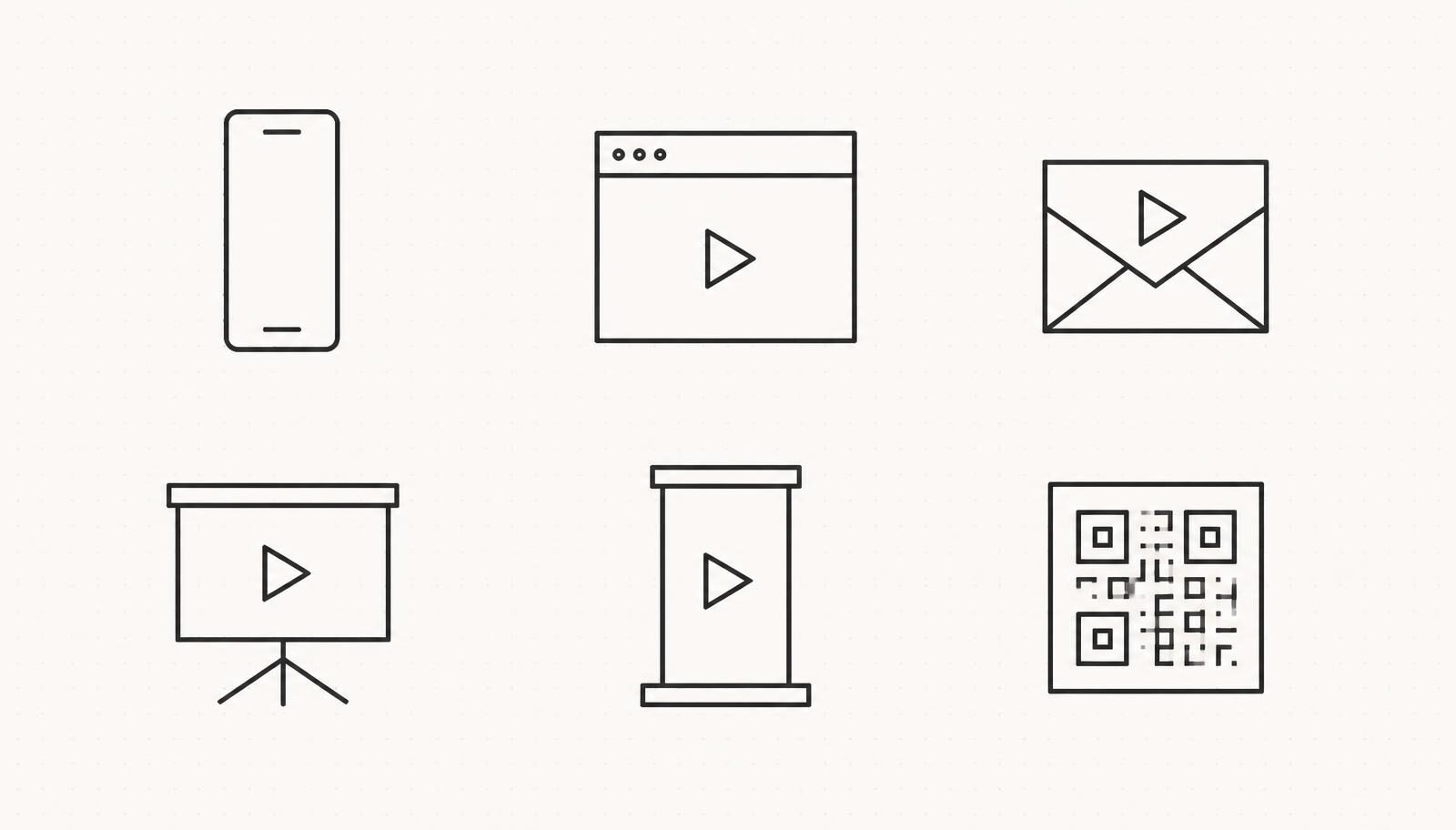
- Website: Master on the homepage, statement cuts on service pages
- LinkedIn: Feed cut at launch, then a statement every two weeks
- Recruitment: Statement cuts directly in the job advert, embedded rather than linked
- Sales: Teaser in the email signature and as a QR code in the proposal PDF
- Trade fair: Master on a silent loop, with burnt-in subtitles
- Internal communications: Raw footage compilation for onboarding
Practical example: MAD About Brands
For MAD About Brands, we produced not just a film, but a package of footage. The retail client needed video for its brand presence, retail partners and social media at the same time, with a budget that covered only one shoot day.
The solution lay in the shooting schedule: from the outset, we thought in formats rather than scenes. Every shot was framed to work both in landscape and cropped to portrait, with space at the top and bottom of the frame. Statements were recorded twice, once in full and once in a version under 20 seconds.
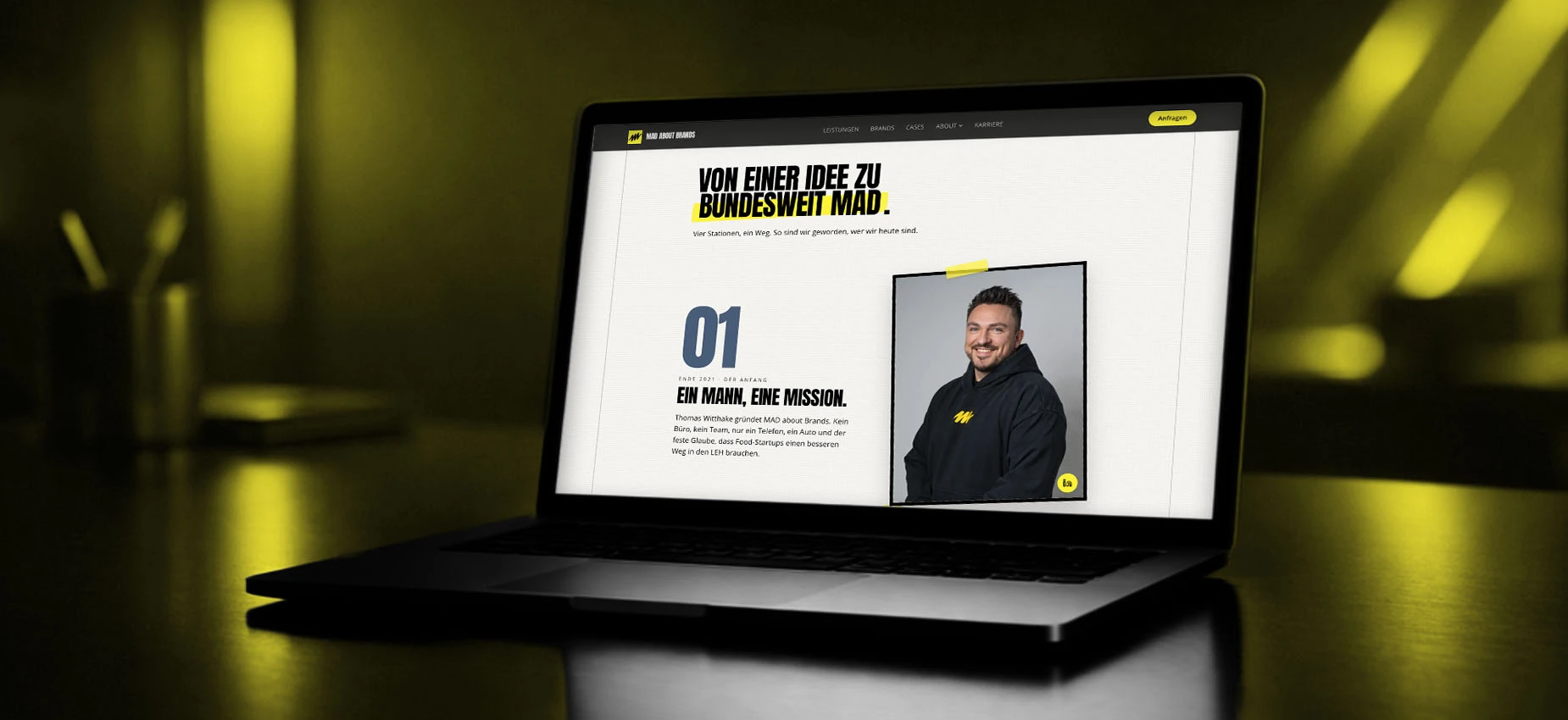
View the full case study: MAD About Brands →
We plan the crop before the camera is set up. If you only realise during editing that someone's head is cut off in portrait, no software can save you. It costs nothing extra, just discipline on set.
Content calendar: twelve weeks from one shoot
The most common mistake is not having too little footage, but posting everything at once. A sensible schedule:
| Week | Content | Format |
|---|---|---|
| 1 | Master for launch | 16:9, website and LinkedIn |
| 2 | Management statement | 1:1, 30 Sek. |
| 4 | Behind the scenes | 9:16, 20 Sek. |
| 6 | Department statement | 1:1, 30 Sek. |
| 8 | Product or process detail | 4:5, 25 Sek. |
| 10 | Recruitment statement | 9:16, 20 Sek. |
| 12 | Best-of recap | 16:9, 45 Sek. |
Seven posts from one shoot day, spread across a quarter. Not one requires new production.
Five mistakes we see time and again
- The master is simply switched to portrait without re-editing. The result: cropped heads and unreadable graphics.
- No subtitles. The film plays silently and nobody understands it.
- The logo at the start. Three seconds of intro means three seconds of viewers dropping off.
- Posting everything on the same day. The posts compete with each other for reach.
- No access to raw footage. If you do not receive the raw files, you cannot create anything new from them in two years' time. This belongs in the contract.
For rights and budgets, take a look at our article on corporate film costs. If you want to explore formats specifically for LinkedIn, you will find the details in LinkedIn video: formats, lengths and best practices. And if the occasion is an event, different rules apply, as we explain in our article on aftermovies.
What you should measure, and what you should not
Views are the least useful metric for video. On most platforms, a view counts after two to three seconds, which is precisely when someone has scrolled past. Three other metrics are more meaningful:
- View-through rate at 50 per cent: How many people stay until halfway. Below 20 per cent, the opening is not working.
- Time spent on the page with the embedded film: The only metric that shows whether the film sustains buying interest.
- Follow-up questions in sales conversations: If prospects quote content from the film, it is working. This does not appear on any dashboard, but it is the best indicator.
Sales is the most honest measure of success. If a client mentions a scene from the film in the first meeting, the film has done its job. That beats any reach figure.
It is important to look at the metrics for each format. A portrait cut with 8.000 views and a 12 per cent view-through rate is weaker than a feed cut with 1.200 views and 45 per cent. If you only look at the total, you will optimise in the wrong direction.
Content calendar: twelve weeks from one shoot day
Turning a bank of footage into real visibility requires a plan before the shoot. This schedule of two posts per week has proven effective:
| Week | Post 1 | Post 2 |
|---|---|---|
| 1 to 2 | Main film, 60 Sek. feed version | 15 Sek. teaser with key message |
| 3 to 4 | Management soundbite on positioning | Silent production detail shot, with text |
| 5 to 6 | Process clip “How we make …" | Employee perspective on day-to-day work |
| 7 to 8 | Customer benefits in 30 Sek. | Behind the scenes from the shoot day |
| 9 to 10 | Facts and figures as a text-over-image clip | Second soundbite, different perspective |
| 11 to 12 | 45 Sek. best-of edit | Call to action with a specific offer |
The plan only works if all the edits are created together during post-production. If you commission a new edit every week, you pay for setup time every time.
Platforms need different versions
The same scene has a completely different effect depending on the channel. The key differences:
- LinkedIn: 1:1 or 4:5, 30 to 90 seconds, factual opening, subtitles essential, key message in the first three seconds
- Instagram Reels: 9:16, 15 to 45 seconds, fast cuts, movement in the first frame
- YouTube: 16:9, long version, a meaningful title and thumbnail matter more than the film itself
- Website: 16:9, main film without autoplay sound, plus a static thumbnail for fast loading
- Job adverts and newsletters: Short version under 30 seconds plus an animated thumbnail
Subtitles are not an add-on here, but a basic requirement. A large proportion of videos play without sound, and on-screen text should remain short and easy to scan[2].
What it all costs when planned in advance
Repurposing is the least expensive part of production, provided it happens in the same editing round. As a guide: ten to twelve additional edits from existing footage cost between 1.500 and 3.000 Euro. If those same versions are commissioned individually six months later, simply getting familiar with the footage again accounts for a substantial part of that amount.
Conclusion
A corporate film is not an end product, but a bank of source material. If you plan the shoot as footage production from the outset, you get far greater visibility for the same budget. The difference is made in the brief, not in the edit.
You can find more on the overall strategy on our corporate film production page.
Frequently asked questions
How many formats should I create from a corporate film?+
Can an existing corporate film be cropped for social media afterwards?+
What does it cost to create additional formats?+
Do I really need subtitles for social media?+
How long should a corporate film on LinkedIn be?+
How often should I post clips from one shoot?+
Who owns the raw footage after production?+
Is a dedicated shoot just for social media worthwhile?+
Sources
- Video Best Practices für Unternehmensseiten, LinkedIn
- Video Usability, Nielsen Norman Group

Josef leads the strategic and creative development of brands at Maluure. For over a decade, he has guided medium-sized businesses from brand positioning to digital delivery.
Managing Director of Maluure GmbH, Cologne. Specialising in corporate design, brand strategy and digital brand experiences.
Weiterlesen
Corporate video scripts: storytelling that works in 90 seconds
The script determines whether your corporate video makes an impact or just looks good. Structure, narrative, common mistakes and a shot list that saves the shoot day.

Officially certified: Maluure is a Lovable Partner
Since 16. September 2026, Maluure has been an officially certified Lovable Partner, Expert Website Builder and Expert App Builder. What the certification involves and what it means for your project.
Corporate film or recruitment video: What your company really needs
Both films cost a similar amount but have very different effects. This comparison shows which format suits which goal and how to produce both in a single day of filming.
Explore more blog topics
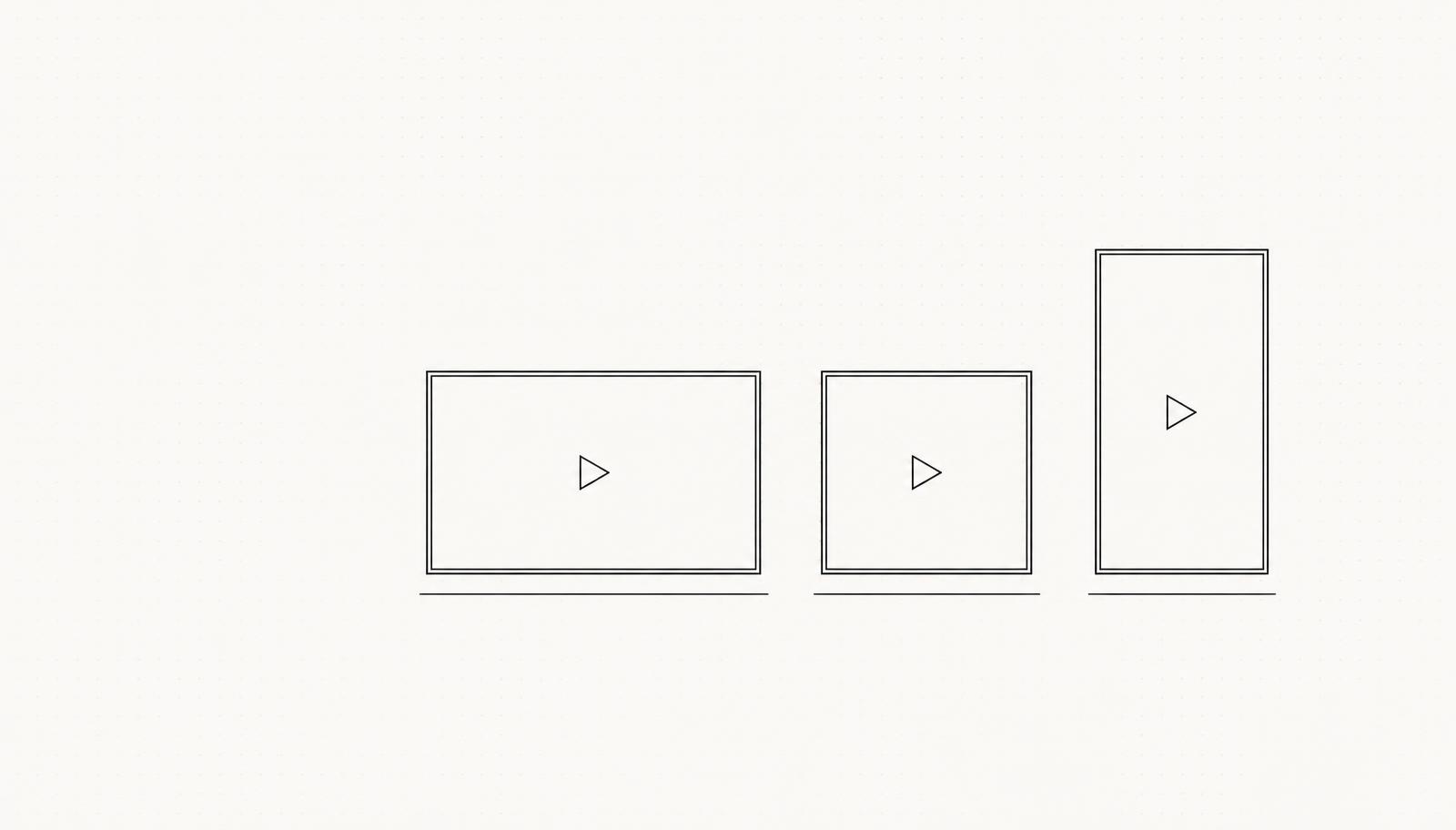
LinkedIn Video: Formats, Lengths and Best Practices for Businesses
What works for LinkedIn video: formats from 1:1 to 9:16, the right length for each objective, subtitles, hooks and upload strategy. A concise guide for businesses.
Recruitment video: showing employees as they really are
How a recruitment video shows real employees rather than glossy clichés, what it costs and why authenticity brings in more applications.
Video production in Cologne: corporate and event films from the Rhineland
What defines video production in Cologne, which filming locations the city offers and how to recognise a good film agency in the Rhineland.