Web designers for small businesses: what really matters
A web designer for your small business helps shape trust, visibility and revenue. We explain which criteria really matter, what fair pricing looks like and how to avoid common mistakes when choosing one.

Your website is usually someone's first impression of your business. For small businesses, this is particularly important: you rarely have a second budget for a relaunch after six months. The web designer you choose therefore helps shape trust, visibility and revenue for years to come.
This guide summarises what we focus on at Maluure when working with SMEs, and which criteria really matter when choosing a web designer.
Why professional web design has such an impact on small businesses
For a large corporation, first impressions are spread across branches, advertising, PR and sales. For a small business, almost everything happens through your website: services, references, contact and often the first sale too.
Professional web design does four things at once:
- Builds trust, because a calm, clear site feels credible.
- Makes your brand recognisable, through consistent colours, typography and imagery.
- Guides users, with intuitive navigation and clearly structured services.
- Creates visibility, because technical SEO is built in from the start.
The most important criteria when choosing a designer
When comparing quotes, it helps to look beyond price. The following criteria tell you much more about the quality you can expect.
1. Experience with SMEs, not just large corporations
A web designer who mainly works for DAX-listed corporations thinks in terms of departments and approval cycles. As the managing director of a small business, you are better served by a partner who makes pragmatic decisions, takes budgets seriously and knows how to prioritise.
2. An honest portfolio
Look at projects of a similar size. What matters is not just whether the sites look good, but whether they clearly communicate the brands behind them. A good portfolio shows range, but also a recognisable approach.
3. A clear process
A reputable web designer explains how they work before you start: briefing, strategy, concept, design, development, testing, launch and maintenance. If someone starts showing you visuals without discussing your goals, that is a warning sign. We explain what a well-structured approach looks like in our strategy process before design and code and our web design process from concept to screen design.
4. Technical expertise
Ask specific questions: which platform? What loading times can you expect? How will the site be optimised for Google and AI search engines such as ChatGPT and Perplexity? Anyone who struggles to answer probably lacks the necessary depth. You can find an honest comparison of common systems in our web design tech stack comparison.
5. Communication and availability
You will be working with this person or team for months. If replies already take days at the quotation stage, things are unlikely to improve during the project. A good web designer explains complex topics simply and makes clear decisions.
Most of the small business websites we replace are not badly built. They were simply created without a strategy, without a process and without considering the next three years. That is exactly what determines whether a website makes money or costs money.
Which services a web designer for small businesses should cover
For your website to deliver after launch, you need more than an attractive layout. A good web designer usually covers these services:
- Design that clearly expresses your brand, using colours, typography and imagery consistently.
- UX/UI and information architecture, so users can quickly find what they need.
- Responsive design, which works equally well on smartphones, tablets and desktops.
- Technical SEO, including a clear structure, fast loading times and structured data.
- Content management, so you can update text and images yourself.
- Security, with SSL, backups and regular updates.
- Maintenance and ongoing development, so the site does not start falling apart after 18 months.
If you are considering which of these elements you actually need, you can explore the options with our Maluure-Page™ price calculator. It shows you clearly how scope, templates and maintenance affect the price.
The typical web design process for small businesses
This is how a sound process usually works. The sequence matters more than many people think. Designing first and addressing strategy later often means doing the work twice.
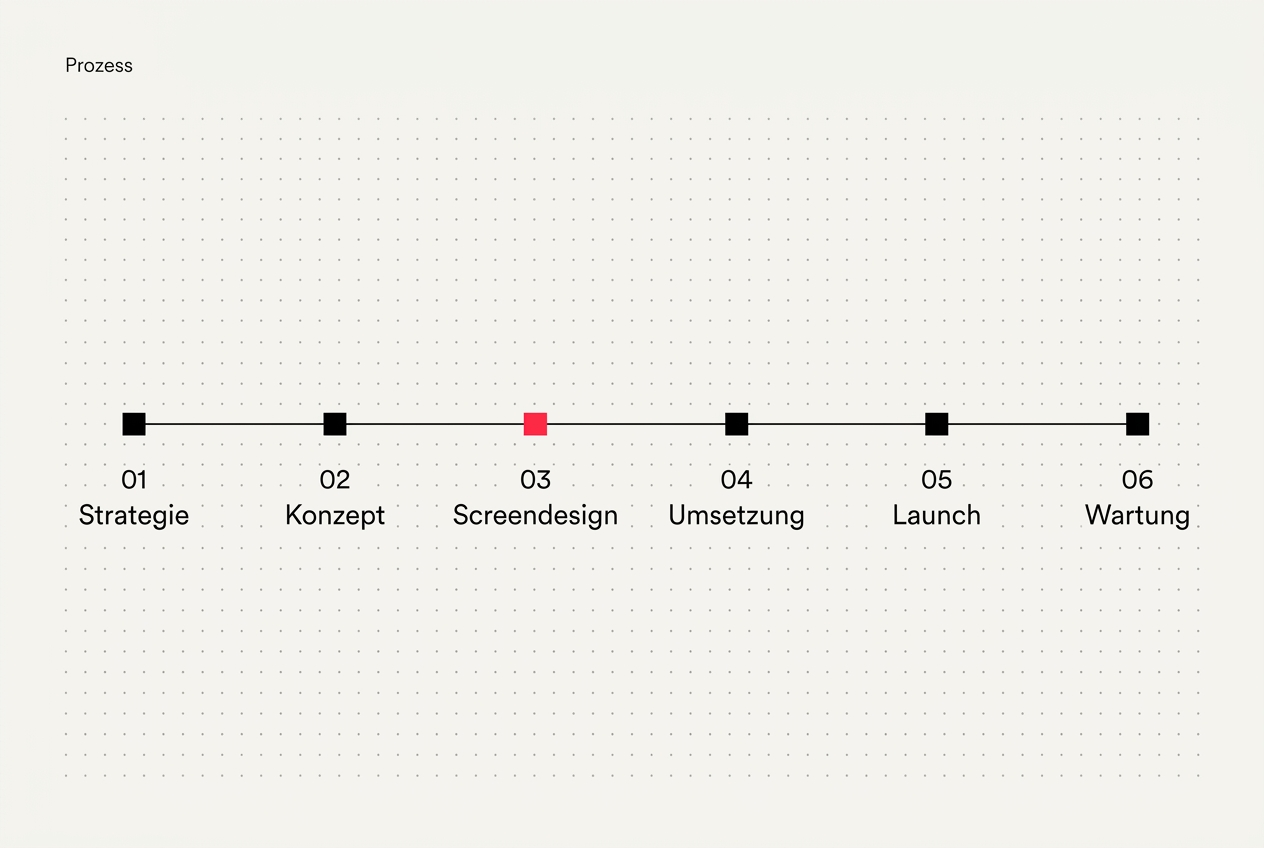
- Needs analysis and strategy. Goals, target audience, offering, competition.
- Concept and structure. Sitemap, wireframes, content priorities.
- Screen design. A visual concept that combines branding with user guidance.
- Development. Technical implementation, CMS integration, performance.
- Testing and launch. Browsers, devices, accessibility, analytics.
- Maintenance and optimisation. Updates, content maintenance, continuous improvement.
Modern requirements: mobile, SEO, security, AI
Some things are no longer negotiable. If a provider dismisses them, they are out of touch.
- Mobile first. More than half your visitors arrive via smartphone.
- Loading times under two seconds. Anything longer costs you Google rankings and conversions.
- Technical SEO and GEO. Alongside Google, visibility in AI searches such as ChatGPT, Perplexity and Claude now matters too.
- Security. SSL, secure forms, clearly defined roles and permissions, regular updates.
- Accessibility. Relevant under the BFSG, but simply good professional practice even without a legal requirement.
How much does a web designer for small businesses cost?
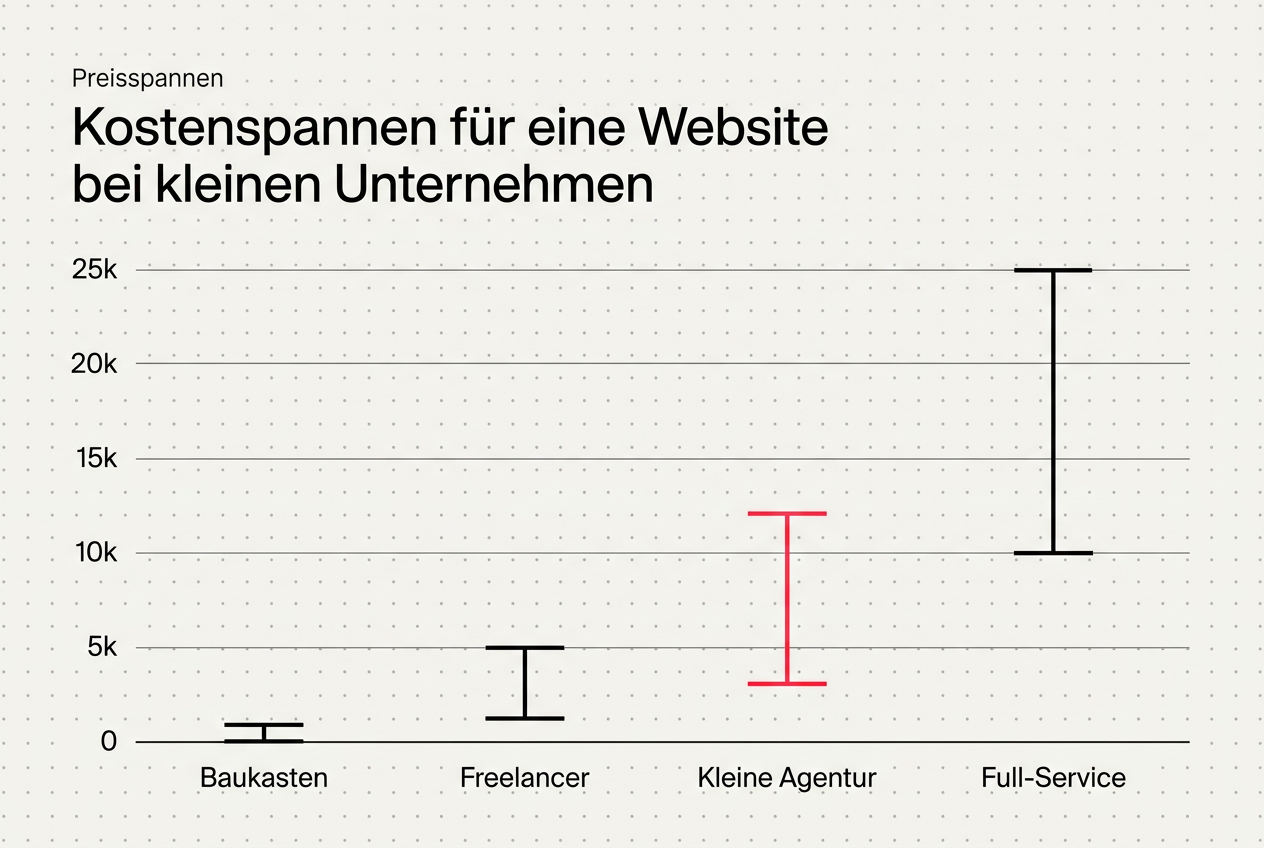
The short, honest answer: a professionally built SME website realistically starts at around 3.000 EUR, but can cost 10.000 to 25.000 EUR for more complex requirements. Anything below that usually means a website builder with little advice; anything above it should be clearly justified.
The biggest factors affecting price:
- Number and scope of pages and templates
- Degree of design customisation
- CMS and editorial workflow
- Integrations such as an online shop, booking system or CRM
- Maintenance, hosting and ongoing development after launch
You can find a detailed, honest breakdown in our article What does a website really cost. If you prefer to configure it yourself, our price calculator is the quickest route to a realistic estimate.
Common selection mistakes and how to avoid them
- Looking only at price. Include maintenance and running costs.
- Not checking the portfolio. Ask for examples of projects of a similar size.
- No strategy in the proposal. Anyone who starts designing immediately is working against your interests.
- Unclear roles. Agree in advance who provides text, images and SEO.
- No ongoing support after launch. Websites need maintenance, just like cars.
If you are looking in Cologne or the Rhineland, our guide Digital agency in Cologne: how to recognise a good agency can also help.
Web design and digital marketing go hand in hand
Good web design is not just decoration but the foundation of your digital marketing. Visitors only turn into revenue when design, content and campaigns work together.
A web designer who takes marketing into account focuses particularly on these points:
- Visual consistency across your website, social media, ads and print, so your brand remains recognisable everywhere.
- Clear calls to action in the right places, turning interest into enquiries, bookings or purchases.
- Landing pages for individual campaigns, audiences or channels, rather than directing everything to the homepage.
- Analytics integration with tools such as Google Analytics 4 or privacy-friendly alternatives, so you can see what actually works.
- Reliable conversion tracking, so ads, SEO and content are not running blind.
Checklist: how to find the right web designer
If you are comparing quotes, work through this checklist. It does not replace a conversation, but it helps separate strong providers from weak ones.
- Portfolio review. At least three projects of comparable size and quality.
- Experience with SMEs. Ideally in your industry or a related one too.
- An up-to-date tech stack. Does the web designer know modern platforms, rather than just one system from 2015.
- A clear process. In writing, with milestones, responsibilities and realistic timelines.
- Communication. Response times, clear language, honest questions rather than simply agreeing with everything.
- References and reviews. Speak briefly to one or two existing clients if possible.
- Fair value for money. Not the cheapest quote, but not the most expensive one without substance either.
- Reliability. Firm deadlines and openness about delays.
- Flexibility. Able to respond to changing requirements without writing a new quote every time.
- Maintenance and support. A clear agreement on what happens after launch and what it costs.
Conclusion
A good web designer for small businesses is less a service provider and more a partner. They understand your business, guide you through a clear process and build a website that will still deliver in three years.
Frequently asked questions
How much does a web designer for small businesses cost?+
How can I recognise a good web designer for my small business?+
How long does it take to create a website for a small business?+
Does my small business really need SEO?+
Isn't a website builder such as Wix or Squarespace cheaper than a web designer?+
Should I hire a web designer or a web design agency?+
What should I provide at the first meeting with a web designer?+
Who owns my website after launch?+
What happens after launch, and do I need maintenance?+
Is a local web designer from Cologne better than a remote provider?+

Josef leads the strategic and creative development of brands at Maluure. For over a decade, he has guided medium-sized businesses from brand positioning to digital delivery.
Managing Director of Maluure GmbH, Cologne. Specialising in corporate design, brand strategy and digital brand experiences.
Weiterlesen
Using a corporate film on social media: twelve weeks of content from one shoot day
A corporate film is not a one-off asset, but a bank of source material. How to turn one shoot into formats for LinkedIn, Instagram, your website and sales, with an editing plan, content calendar and practical example.
Corporate video scripts: storytelling that works in 90 seconds
The script determines whether your corporate video makes an impact or just looks good. Structure, narrative, common mistakes and a shot list that saves the shoot day.
Officially certified: Maluure is a Lovable Partner
Since 16. September 2026, Maluure has been an officially certified Lovable Partner, Expert Website Builder and Expert App Builder. What the certification involves and what it means for your project.
Explore more blog topics
Corporate film or recruitment video: What your company really needs
Both films cost a similar amount but have very different effects. This comparison shows which format suits which goal and how to produce both in a single day of filming.
LinkedIn Video: Formats, Lengths and Best Practices for Businesses
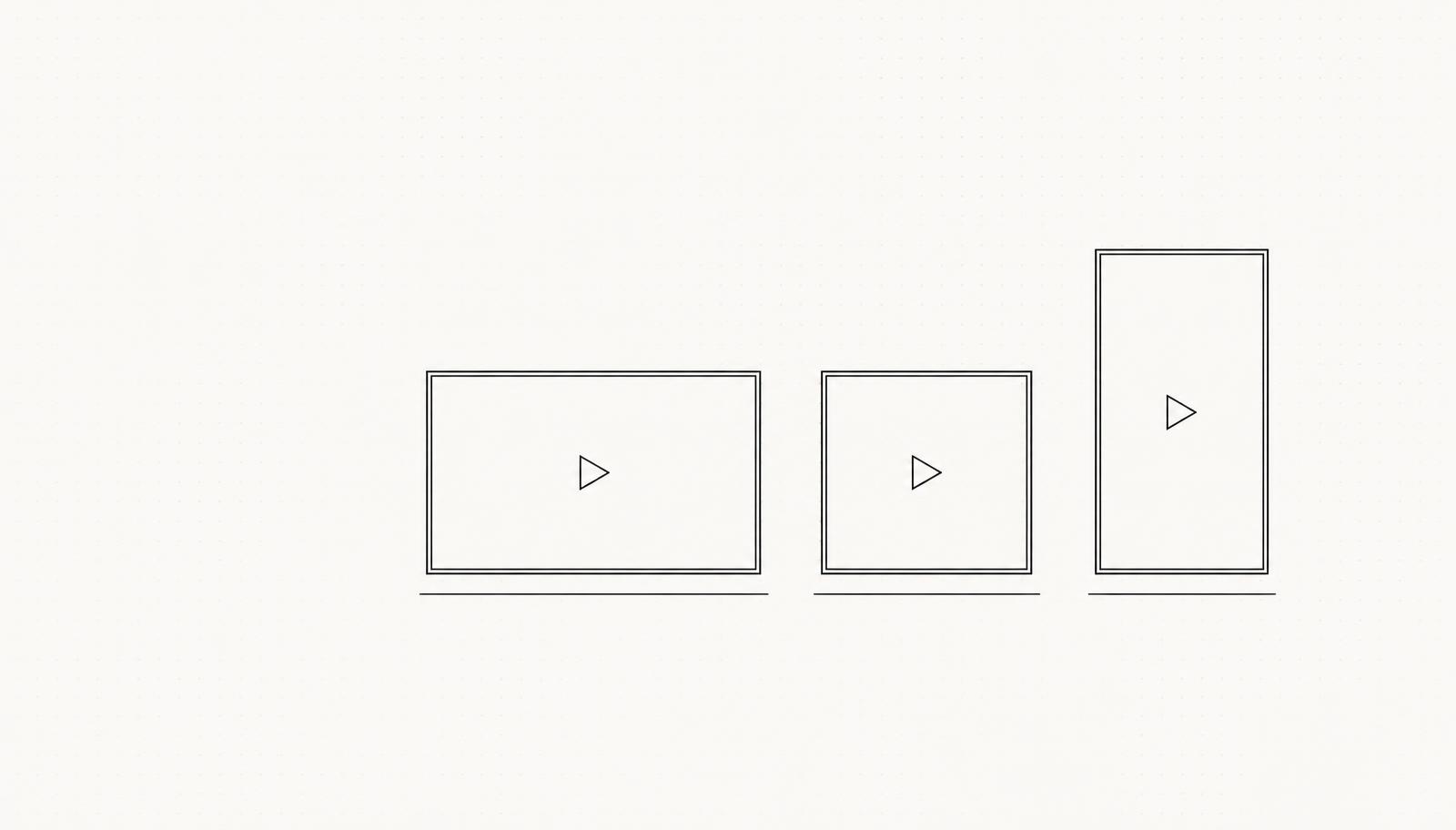
What works for LinkedIn video: formats from 1:1 to 9:16, the right length for each objective, subtitles, hooks and upload strategy. A concise guide for businesses.
Recruitment video: showing employees as they really are
How a recruitment video shows real employees rather than glossy clichés, what it costs and why authenticity brings in more applications.