Web design: What a good agency delivers, what it costs and what to look for in Cologne
Web design is more than colours and layouts. We explain what a good web design agency delivers, what costs to expect and what to look for in Cologne.
What does web design actually mean – and what does it not?
Web design is the visual and technical planning of websites that guide users quickly towards their goals and make a brand credible. It covers user experience, information architecture, visual design, responsive layouts, loading speed and technical search engine friendliness.
It does not include arbitrary decoration, filling in ready-made website builder templates or simply creating “pretty pictures" that serve no purpose. Good web design is the product of analysis, concept development and iterative refinement. This article deliberately focuses on the craft of web design – screen design, design systems, interaction and visual implementation. For choosing a full-service agency, we have a separate guide under Digital agency Cologne.
How do you recognise a good web design agency?
A professional web design agency works differently from a freelancer platform or a DIY tool. These six characteristics set it apart:
- Strategy before templates. The agency asks about your target audience, business model and positioning before creating a layout.
- UX methodology. Personas, sitemaps, wireframes and clickable prototypes are part of the standard process, not paid extras.
- Technical quality. Semantic HTML, optimised assets, accessibility and clean code are included.
- Responsive design. The website works equally well on smartphones, tablets and desktops.
- Measurable goals. A good agency defines KPIs with you, such as conversions, leads or time on site.
- Long-term support. Launch is the beginning, not the end. Maintenance, updates and ongoing development can be planned.
| Provider | Strength | Weakness | Suitable for |
|---|---|---|---|
| Website builder | Fast and affordable | Limited differentiation, technical constraints | Hobby projects, initial tests |
| Freelancer | Flexible and personal | Scalability, holiday cover, dependency | Small, straightforward tasks |
| Web design agency | Strategy, scalability, quality | Higher starting price | Businesses looking to grow |
What does professional web design cost in Cologne?
Web design prices in Cologne and NRW depend heavily on scope, functionality and depth of research. The following ranges are based on real project sizes and cover most enquiries:
| Scope | Price range | What is included |
|---|---|---|
| Single page or microsite | 3.000 – 6.000 € | Clear presentation, strategic structure, responsive layout |
| Website for a medium-sized business | 8.000 – 20.000 € | Multi-page website, CMS, SEO foundations, bespoke design |
| Complex website / web app | 20.000 – 50.000 € | Interactions, integrations, login, custom functionality |
These figures are guidelines, not fixed prices. Within our fixed-price product range, the Maluure-Page™ offers a clearly defined starting point, combining strategic planning and bespoke design in a transparent package. You can find a detailed breakdown of cost components and typical extras in our article What does a website really cost?.
What is bespoke web design – and why is it worth it?
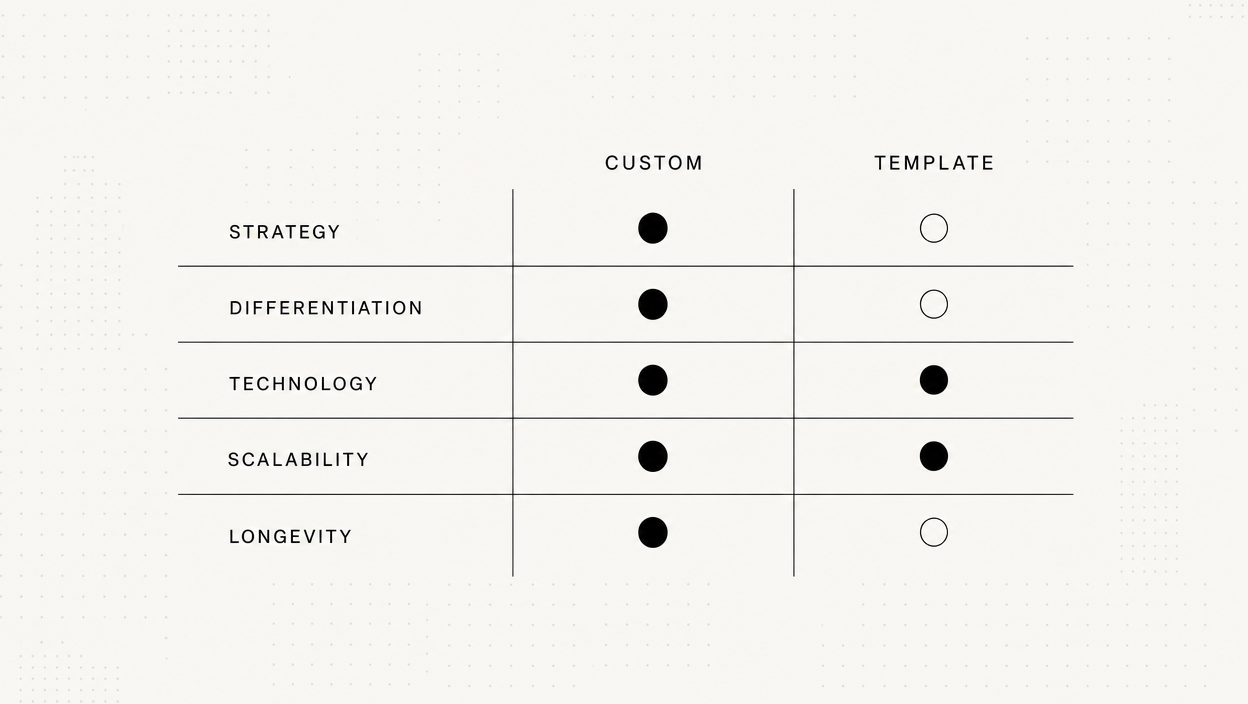
Bespoke web design means tailoring the layout, interactions, content and technical architecture to your offering and target audience. The opposite is a ready-made template that forces your brand into a predefined structure.
Benefits of bespoke web design:
- Distinct positioning. Your website does not look like your competitors'.
- Greater credibility. Thoughtfully designed, minimalist interfaces increase trust in a website. [1]
- Better conversion rates. User journeys, loading times and clear calls to action generate more enquiries and sales. [2]
- Technical future-readiness. Clean code can be extended, adapted and scaled.
Templates have their place for initial tests or small personal projects. But once your website becomes a core tool for sales or building trust, the template approach becomes a constraint: you wrestle with structure, imagery and custom requirements instead of working on positioning and conversions. Bespoke web design reverses this logic – the website follows your business model, not the other way round.
Web design begins where you stop thinking about templates. A website is a communication tool – and like any good tool, it must fit its purpose precisely.
Design system & UI kit: The real foundation of modern websites
What many clients underestimate: a professional web design agency ultimately delivers not just “a few pages", but a design system. A design system is a structured collection of reusable elements – colours, typography, spacing, buttons, forms, cards, navigation – with clear rules on when and how to use them.
Why this matters:
- Consistency across all pages. Every new landing page looks like part of your brand, not an outlier.
- Faster ongoing development. New campaigns or products can be implemented in days rather than weeks because the building blocks already exist.
- Clear handover to internal teams. Marketing can maintain pages independently without compromising visual quality.
- Scalability. A well-structured system will still support future versions of your website in two years, without you having to start from scratch.
A good design system covers at least these layers:
| Layer | What it contains | Examples |
|---|---|---|
| Design tokens | Colours, font sizes, radii, shadows | Primary, Accent, Type-Scale, Border-Radius |
| Components | Reusable UI building blocks | Buttons, inputs, cards, modals, navigation |
| Patterns | Combined interactions | Contact form, pricing table, hero section |
| Guidelines | Rules for use | When to use primary vs. secondary buttons, voice & tone |
If an agency only hands over PSD or Figma screens without this system, your website will become inconsistent over time. Design system thinking is what separates a one-off website from a digital brand that can keep growing.
Motion, micro-interactions & interaction design
Modern websites are no longer differentiated solely by layout and colour, but by their behaviour. How does a button respond on hover? How does the navigation outline move with the selection? How smoothly do sections fade in as you scroll? These details are not an end in themselves – they are a tool for directing attention and making quality tangible.
Good interaction design in web design follows three rules:
- Motion has a purpose. It indicates changes of state, guides the eye or provides feedback. Movement “for decoration" feels restless.
- Timing is a craft. 150 to 300 milliseconds feels precise. Anything longer feels sluggish; anything shorter goes unnoticed.
- Respect for users.
prefers-reduced-motionmust be respected – users with vestibular conditions need a calmer alternative.
Micro-interactions – a brief pulse on submission, a tick on success, a gently expanding mobile navigation – are what distinguish high-quality websites from generic website builder layouts. They cost little to implement when clearly defined in a design system, and they are one of the key reasons why a bespoke web design agency creates a different impression from a template provider.
Accessible design – a design perspective on the BFSG
From June 2025, Germany's Barrierefreiheitsstärkungsgesetz (BFSG) requires many businesses to make their digital offerings accessible. [3] For web design, this means accessibility is not a legal question at the end of the project, but a design question from the outset.
In practical design terms, this means:
- Effective contrast. WCAG AA ratios (at least 4,5:1 for body text) are a requirement, not a recommendation.
- Font sizes and line heights for comfortable reading. 16 px base size, 1,5 line height, clear hierarchies.
- Visible focus states. Keyboard users must always be able to see where they are.
- Icons with text. Symbols alone cannot be read by screen readers – labels or
aria-labelare essential. - Never rely on colour alone. Error states, status indicators and charts also need shapes or text.
For the legal aspects and the relaunch process, see our Website relaunch checklist. From a design perspective, the message is simple: accessibility does not make websites uglier, but clearer – for everyone.
What services are part of a professional web design process?
A complete web design project typically goes through these phases:
- Discovery & strategy. Analyse goals, target audiences, competitors and positioning.
- Concept & sitemap. Define the structure, pages and user journeys.
- UX design & wireframes. Layouts without colour, focused solely on function and hierarchy.
- Screen design & design system. Visual design, typography, colours, components.
- Technical implementation. HTML/CSS, CMS integration, animations, performance.
- Testing, launch & optimisation. Device testing, SEO checks, accessibility, go-live.
We explain how these phases fit together in practice – with examples from real projects – in Web design process: From concept to screen design. For the fundamental technology decision (Webflow vs. WordPress vs. custom development), we recommend our Tech stack comparison.
Web design agency Cologne: What matters locally?
Cologne is a significant market for web design. It is home to agencies with different specialisms: traditional advertising agencies, UX-focused studios, SEO-led web design providers and technology-focused developers. The right choice depends on your project.
If you are looking locally in Cologne or NRW, focus on:
- Real project references. Not just screenshots, but case studies showing the challenge and the outcome.
- Process transparency. You should know what you will receive at each stage.
- Technical expertise. Ask about performance, CMS, accessibility and hosting.
- Cultural fit. A web design agency is a long-term partner, not just a service provider.
We keep seeing the same pattern among Cologne businesses: what is missing is not the budget, but an agency that genuinely brings design, technology and brand together. That is exactly where our process starts.
Practical example: Chaerry GmbH, bespoke web design with character
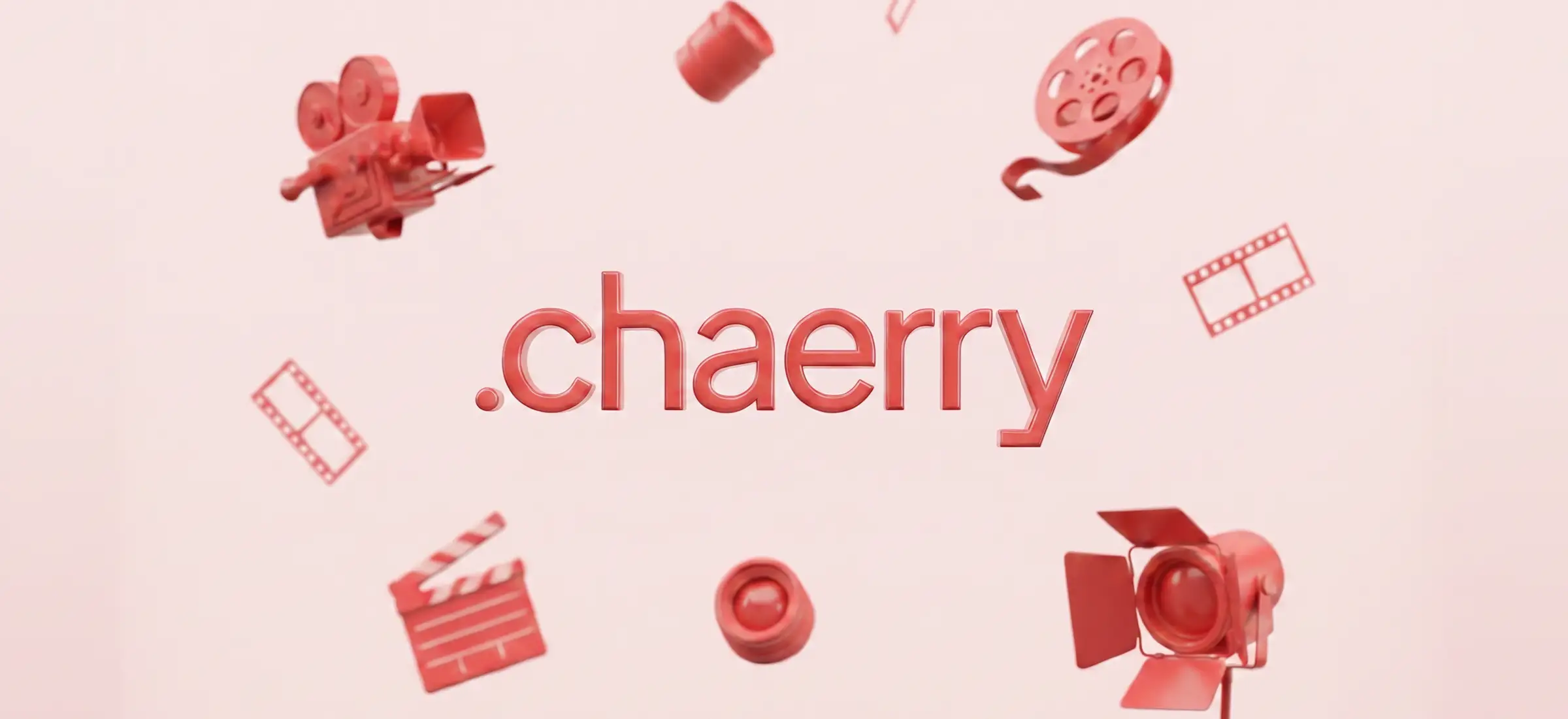
Our project for Chaerry GmbH shows what bespoke web design looks like in practice. For the agency, we developed a distinctive website with a UX/UI concept, screen design and subtle animations – without a template, with clear visual language and interaction behaviour that communicates its positioning. It is precisely this level of individuality that sets a professional web design process apart from a website builder.
View the full case study: Chaerry GmbH →
Practical example: BxC Security, rebranding and lighter web design
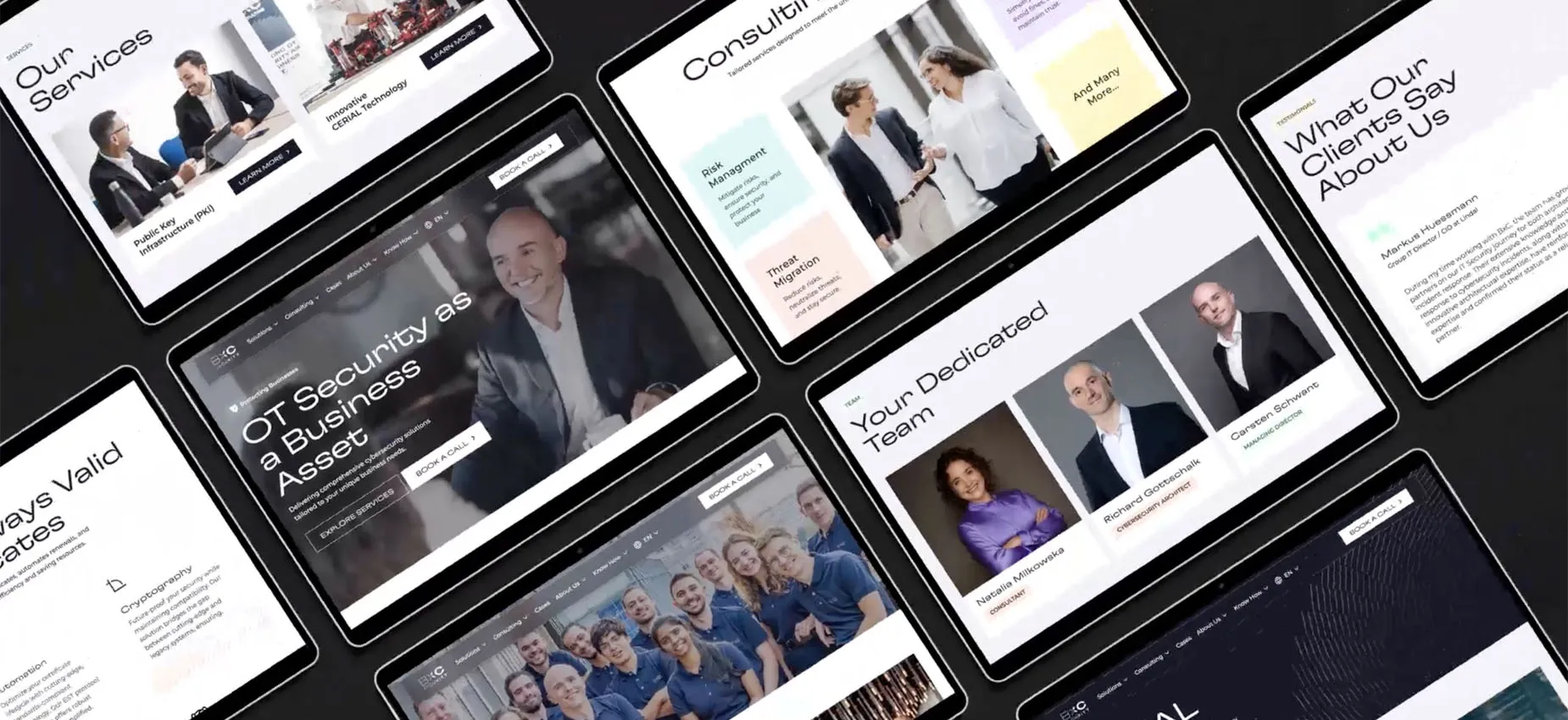
A second example from a completely different sector: BxC Security, a cyber security company, approached us during its rebranding process. Its existing website had grown over time and could no longer convey the new, clearer corporate identity – it was too heavy, too busy and not focused enough on the core messages.
Together, we developed a lighter, calmer web design that puts three things first: a pared-back visual language matching the new corporate identity, a clear design system for all service pages and interaction design that conveys professionalism rather than chasing effects. For a cyber security company, precisely this sense of calm signals trustworthiness – and it is a good example of why web design must always start with the business model, not a trend.
View the full case study: BxC Security →
Conclusion: How to find the right web design provider
Web design is a strategic investment, not simply a design commission. Whether you are looking for a web design agency in Cologne, a web designer for a new project or an experienced provider for a complex corporate website – the deciding factor is not price alone, but the process behind it.
Choose agencies that bring together strategy, UX, a design system and long-term support. Compare project references, ask about methodology and have them explain the concept before the design. An agency that can do this delivers not just a website, but a digital tool for growth.
Frequently asked questions
What is web design?+
What does web design cost in Cologne?+
What is the difference between a web designer and a web design agency?+
What is bespoke web design?+
What does a web design agency deliver?+
How long does a web design project take?+
What is responsive web design?+
Does using a website builder for web design make sense?+
Which is more important: design or SEO?+
How do I recognise a good web design agency?+
What is a design system and why is it important?+
What is accessible web design?+
What are micro-interactions in web design?+
What makes web design in Cologne distinctive?+
Sources
- Nielsen Norman Group – Aesthetic and Minimalist Design, Nielsen Norman Group (2024)
- Forrester – The ROI of UX, Forrester (2023)
- BITV 2.0 – Barrierefreie Informationstechnik, Bundesregierung (2025)

Josef leads the strategic and creative development of brands at Maluure. For over a decade, he has guided medium-sized businesses from brand positioning to digital delivery.
Managing Director of Maluure GmbH, Cologne. Specialising in corporate design, brand strategy and digital brand experiences.
Weiterlesen
Using a corporate film on social media: twelve weeks of content from one shoot day
A corporate film is not a one-off asset, but a bank of source material. How to turn one shoot into formats for LinkedIn, Instagram, your website and sales, with an editing plan, content calendar and practical example.
Corporate video scripts: storytelling that works in 90 seconds
The script determines whether your corporate video makes an impact or just looks good. Structure, narrative, common mistakes and a shot list that saves the shoot day.
Officially certified: Maluure is a Lovable Partner
Since 16. September 2026, Maluure has been an officially certified Lovable Partner, Expert Website Builder and Expert App Builder. What the certification involves and what it means for your project.
Explore more blog topics
Corporate film or recruitment video: What your company really needs
Both films cost a similar amount but have very different effects. This comparison shows which format suits which goal and how to produce both in a single day of filming.
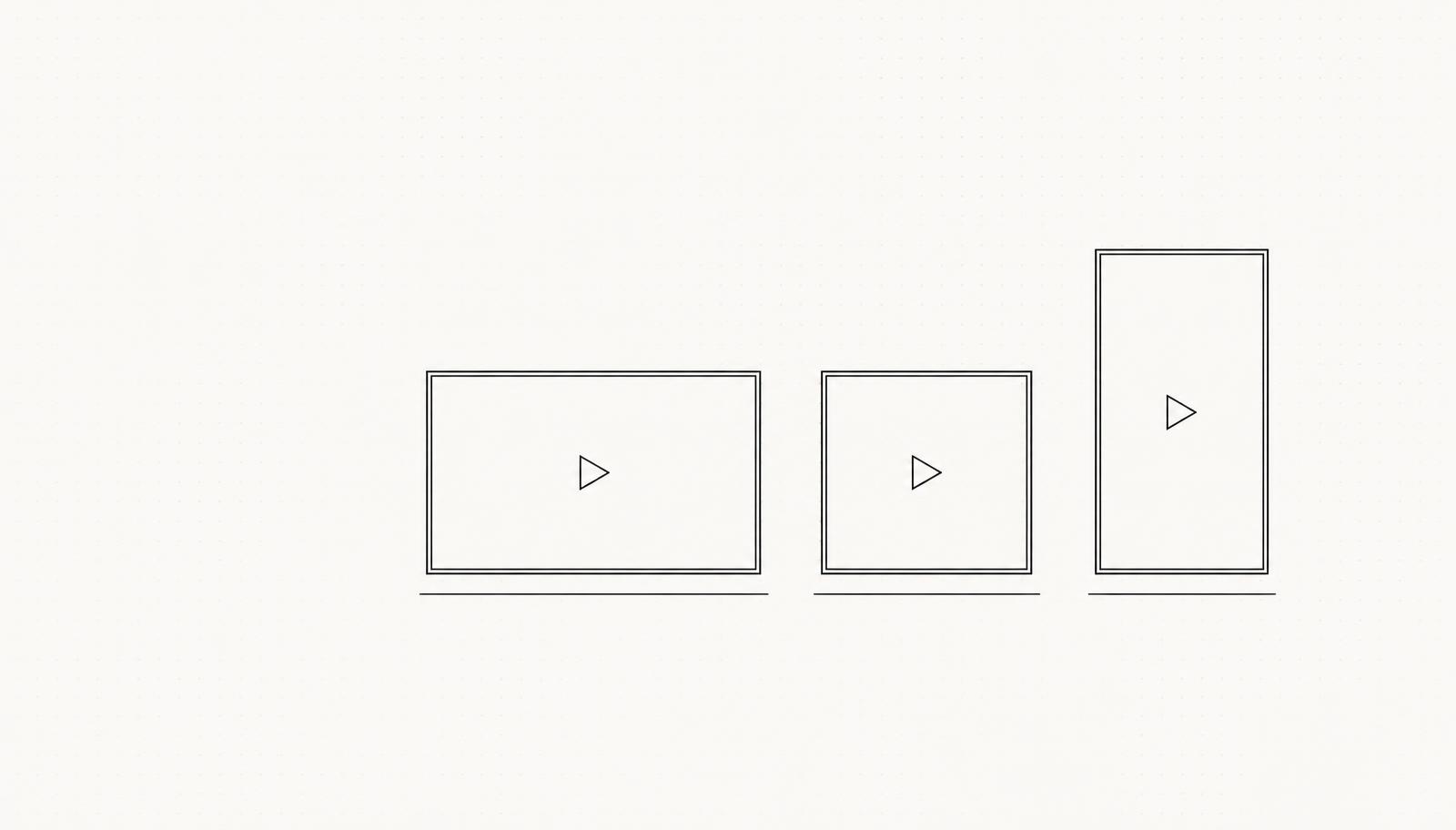
LinkedIn Video: Formats, Lengths and Best Practices for Businesses
What works for LinkedIn video: formats from 1:1 to 9:16, the right length for each objective, subtitles, hooks and upload strategy. A concise guide for businesses.
Recruitment video: showing employees as they really are
How a recruitment video shows real employees rather than glossy clichés, what it costs and why authenticity brings in more applications.