Corporate film or recruitment video: What your company really needs
Both films cost a similar amount but have very different effects. This comparison shows which format suits which goal and how to produce both in a single day of filming.
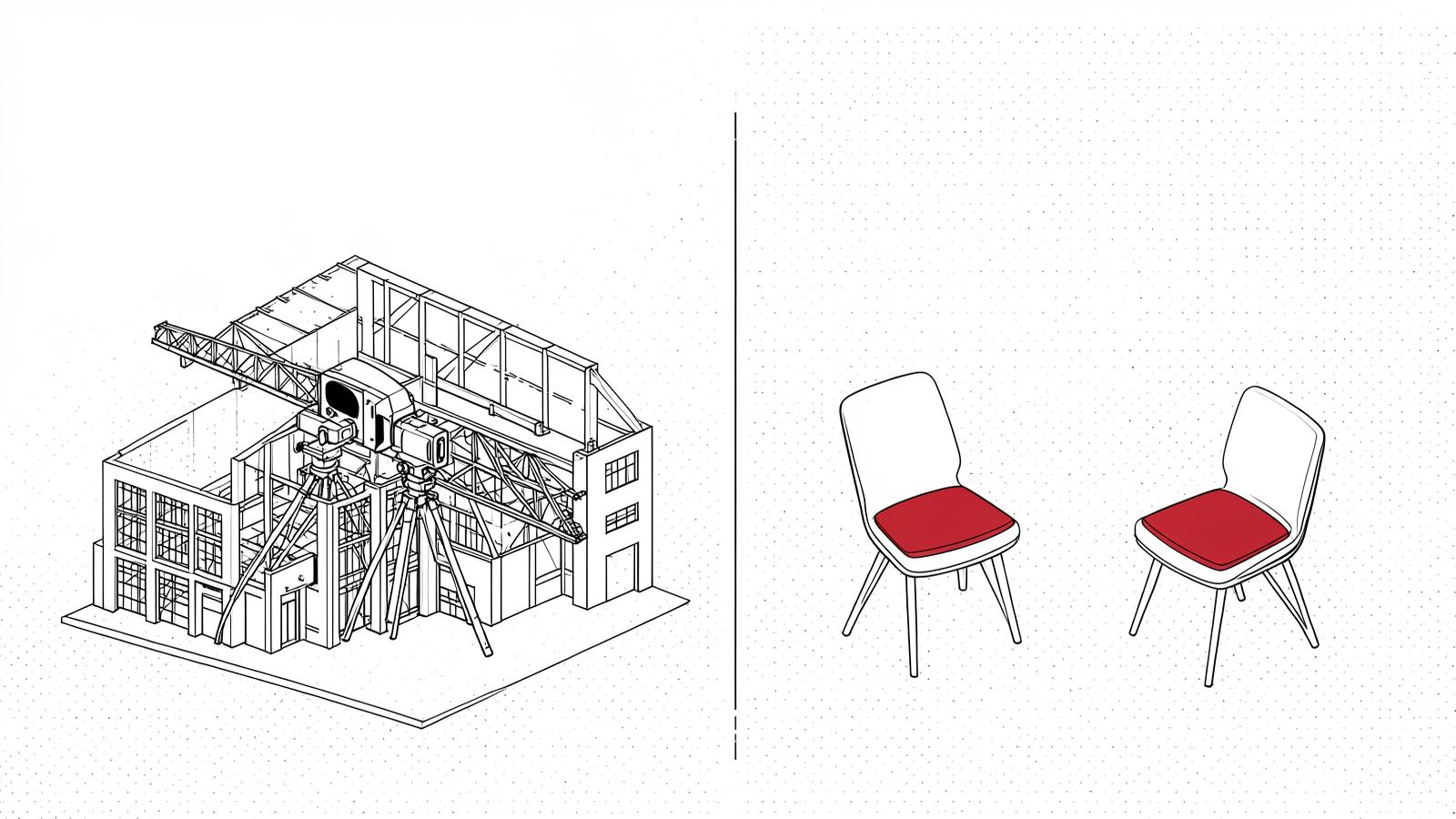
Two films, two very different jobs
The question comes up in almost every initial meeting: We need a video, but what kind? Usually, there are two goals on the table. Sales wants something that convinces customers. HR wants something that attracts applicants. And because both cost money, there is a temptation to cover everything in a single film.
That is exactly where things usually go wrong. A corporate film and a recruitment video have different audiences, different questions to answer and different criteria for success. Mixing the two produces a film that offends no one and moves no one.
The direct comparison
| Criterion | Corporate film | Recruitment video |
|---|---|---|
| Target audience | Customers, partners, investors | Applicants, apprentices, skilled professionals |
| Viewer's key question | Can I trust them? | Do I want to work there? |
| Tone | assured, precise, polished | honest, approachable, unvarnished |
| Length | 60 to 120 seconds | 45 to 90 seconds |
| Main focus | Capabilities, product, process | People and everyday working life |
| Where it is used | Homepage, sales, trade shows | Careers page, job adverts, LinkedIn |
| Price range | 6.000 to 15.000 Euro | 4.000 to 10.000 Euro |
| Lifespan | three to five years | two to three years |
The last row is often overlooked. A corporate film generally shows capabilities, facilities and values, which change slowly. A recruitment video shows people, and teams change faster. A film featuring six people, half of whom have left after two years, looks uncomfortably dated.
How to tell which format you need first
Producing both at once is possible, but there is almost always a more urgent problem. These questions help you assess your priorities:
- Do vacancies stay open for longer than three months? Then you lack visibility as an employer, not as a supplier. Recruitment video first.
- Do prospects drop out after the initial meeting? Then they lack confidence in your expertise and scale. Corporate film first.
- Does your sales team explain the same things in every meeting? A corporate film can then save measurable time by covering the basics in advance.
- Do applicants keep asking the same questions in interviews? Those are exactly the questions your recruitment video should answer.
- Is a trade show or careers fair coming up? The date determines the order, because both formats need eight weeks of lead time.
The trick: one day of filming, both films
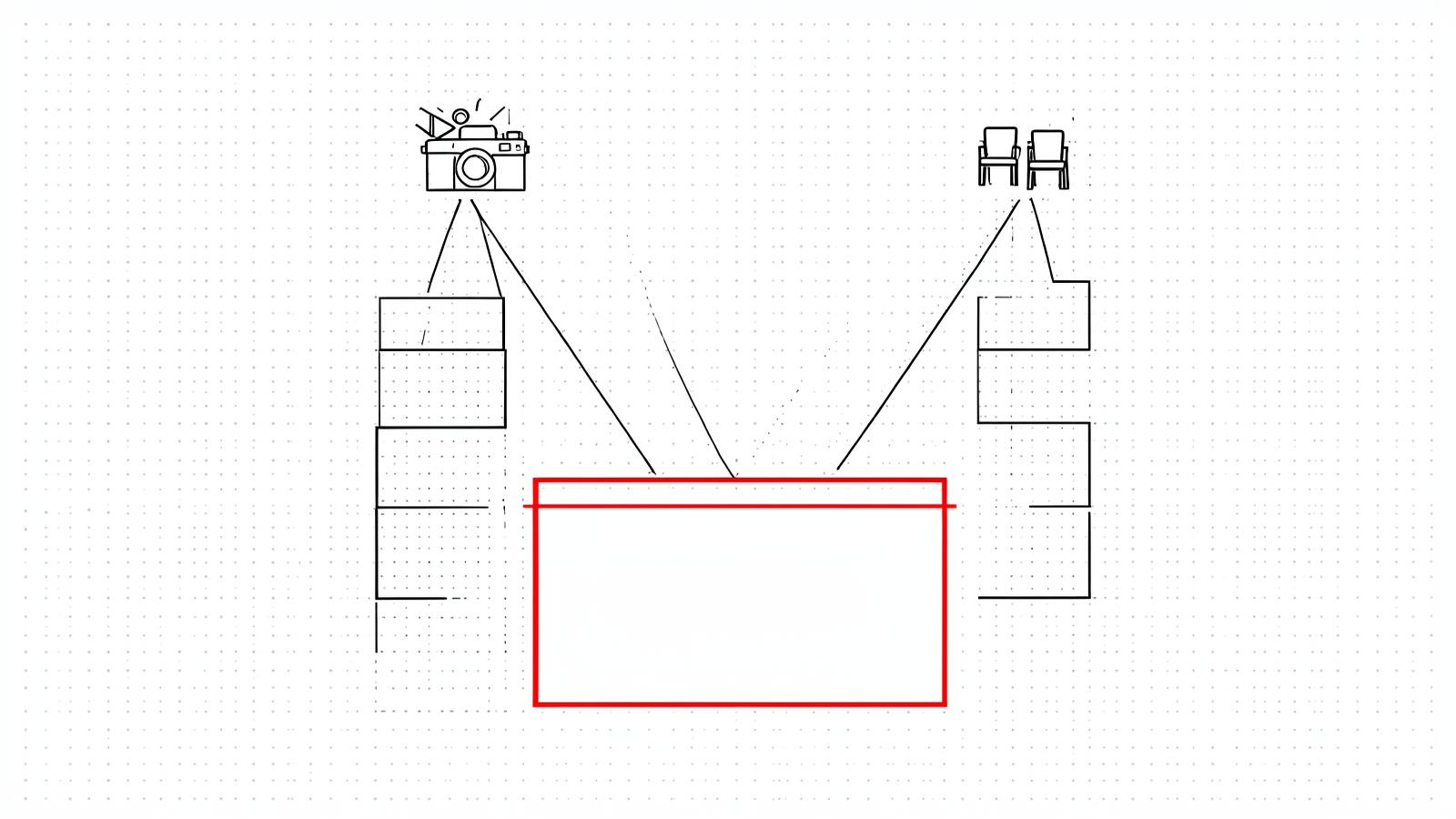
The most expensive mistake is to schedule the two productions separately. Much of a filming day is spent setting up and packing down, arranging lighting, coordinating and moving between locations. Shooting the second film six months later means paying for that work twice.
With a shared shot list, a filming day looks like this:
- Morning: Production, equipment, processes, detail shots. This is the foundation for the corporate film.
- Midday: Interviews with management on positioning and quality standards, usable in both films.
- Afternoon: Interviews with four to six employees about everyday work, the team and getting started. The foundation for the recruitment video.
- Late afternoon: Atmospheric footage of breaks, collaboration and the site. Supporting footage for both edits.
That day produces two main films, several short clips for social media and stills for the website and job adverts. In our experience, the saving compared with two separate productions is 30 to 40 per cent.
When a client says they have the budget for one film, I first ask which two problems they want to solve. In nine out of ten cases, it is sales and recruitment. We then plan a filming day that produces both films, rather than a compromise that helps no one.
What is different about a recruitment video
The biggest difference is not the equipment, but how people are directed on set. For a corporate film, we work with a voiceover script and planned shots. A recruitment video needs people to speak naturally, and that calls for different conditions.
What works well: a small crew, no large lights, a conversation rather than a question-and-answer session. We ask open questions and cut the question out later, leaving just the answer. It is also important to establish beforehand who actually wants to be on camera. If someone is forced to take part, it shows immediately.
Legally, everyone filmed must give written consent for their image to be used, and that consent can be withdrawn. If someone has a central role in the film, you should bear this in mind, or you could lose your main character when they leave the company.

Practical example: NSB Polymers
For NSB Polymers, a company in the plastics industry, we completely rethought its brand presence. The starting point was typical of a mid-sized technical business: a strong product and extensive in-house manufacturing capabilities, but little external visibility among either new customers or skilled professionals. The concept of “Connections" runs through the entire visual language, making both the technical expertise and the people behind it tangible.

View the full case study: NSB Polymers →
At NSB, we noticed how different the same production hall feels depending on where you point the camera. For customers, you show precision and scale. For applicants, you show someone explaining their work and looking relaxed while doing it. The same building, two completely different films.
Common mistakes when choosing
- Both target audiences in one film. This leads to a film that neither sells nor inspires.
- A recruitment video with a high-gloss look. Applicants immediately recognise staged satisfaction and distrust it.
- A corporate film without specific capabilities. Beautiful images without a message do not stick.
- Planning only one format when both are needed. The second filming day will cost full price later.
- Not planning short versions. Without social media edits, the film sits unused on the website.
Allocating the budget realistically
Once the format has been chosen, the most common question is how to split the budget. If an annual video budget has been set, this allocation has proved effective:
| Item | Share of budget | What it covers |
|---|---|---|
| Concept and script | 15 to 20 per cent | Briefing, story, shot list, interview guide |
| Filming day | 35 to 40 per cent | Crew, equipment, lighting, sound, travel |
| Post-production | 30 to 35 per cent | Editing, colour, sound, graphics, subtitles |
| Repurposing | 10 to 15 per cent | Short versions, vertical formats, thumbnails |
The last item is almost always cut, and that is the most expensive false economy. Without short versions, the film sits on the homepage and is never seen again. With six to ten edits, you have a quarter's worth of material for job adverts, social media and newsletters.
How to measure success
Both formats can be measured, but not using the same metrics. For a corporate film, what matters is watch time on the homepage, the page's bounce rate compared with before the film was added, and feedback from sales on whether initial meetings are becoming shorter. For a recruitment video, what matters is the number of applications per vacancy, the quality of applications as assessed by HR, and time to hire.
The baseline is important. Measure the figures four weeks before launch, otherwise you will have nothing to compare them with afterwards. For open positions, time to hire is the most meaningful metric, because shortages in many technical occupations are structural and not caused by the video[2].
Legal points to clarify before filming
For recruitment videos, the right to one's own image is the issue that can cause problems later. As a general rule, images of a person may only be distributed with their consent[1]. In practice, this means:
- Written consent before filming, not afterwards
- Specify the purpose and channels, such as the website, social media and trade shows
- Agree what happens if the person leaves the company
- For apprentices under 18 years of age, also obtain consent from their parents or legal guardians
- If someone has a particularly central role, plan an alternative edit without that person
This takes half an hour beforehand and could save you from having to redo the entire production.
Timeline: eight weeks from idea to film
- Week 1 to 2: Briefing, refining target audiences, choosing the format, quotation
- Week 3 to 4: Script, interview guide, shot list, selecting the people who will appear on camera
- Week 5: Filming day, one full day rather than two half-days for two formats
- Week 6 to 7: Editing, first cut, one round of revisions, colour and sound
- Week 8: Short versions, subtitles, export in all formats, integration into the website and careers page
If you want to move faster, you can bring the filming day forward, but you lose precisely the preparation time that makes the difference.
Your next steps
Write two sentences describing what a customer should think after watching the film, and two sentences describing what an applicant should think. If the sentences differ significantly, you need two films. If they sound almost the same, your positioning is not yet clear enough, and that is something we work on before filming.
You can find specific price ranges, cost drivers and a sample calculation in the article Corporate film costs. The article Recruitment video explains how employee interviews work in practice. For an overview of all services, visit Commission a corporate film.
Frequently asked questions
What is the difference between a corporate film and a recruitment video?+
Can one film serve both purposes?+
How much does a recruitment video cost compared with a corporate film?+
Is it worth producing both formats at the same time?+
Which format should you produce first?+
How long should the two formats be?+
Do employees have to appear in the recruitment video?+
Where are the two films used?+
Sources
- § 22 Kunsturhebergesetz, Recht am eigenen Bild, Bundesministerium der Justiz
- Fachkräfteengpassanalyse, Bundesagentur für Arbeit

Josef leads the strategic and creative development of brands at Maluure. For over a decade, he has guided medium-sized businesses from brand positioning to digital delivery.
Managing Director of Maluure GmbH, Cologne. Specialising in corporate design, brand strategy and digital brand experiences.
Weiterlesen

Using a corporate film on social media: twelve weeks of content from one shoot day
A corporate film is not a one-off asset, but a bank of source material. How to turn one shoot into formats for LinkedIn, Instagram, your website and sales, with an editing plan, content calendar and practical example.

Corporate video scripts: storytelling that works in 90 seconds
The script determines whether your corporate video makes an impact or just looks good. Structure, narrative, common mistakes and a shot list that saves the shoot day.

Officially certified: Maluure is a Lovable Partner
Since 16. September 2026, Maluure has been an officially certified Lovable Partner, Expert Website Builder and Expert App Builder. What the certification involves and what it means for your project.
Explore more blog topics

LinkedIn Video: Formats, Lengths and Best Practices for Businesses
What works for LinkedIn video: formats from 1:1 to 9:16, the right length for each objective, subtitles, hooks and upload strategy. A concise guide for businesses.

Recruitment video: showing employees as they really are
How a recruitment video shows real employees rather than glossy clichés, what it costs and why authenticity brings in more applications.

Video production in Cologne: corporate and event films from the Rhineland
What defines video production in Cologne, which filming locations the city offers and how to recognise a good film agency in the Rhineland.