Accessible websites: what the BFSG requires from 2025
Who is affected by Germany’s Accessibility Strengthening Act, what do market surveillance authorities check, and what does retrofitting cost? A guide with a 10-point self-test.
What the BFSG actually is
Germany’s Accessibility Strengthening Act (BFSG) implements the European Accessibility Act in German law.[1] It has applied since 28. Juni 2025 and, for the first time, requires private-sector businesses to make certain digital products and services accessible. Until then, online accessibility requirements mainly applied to public bodies.
The principle is simple: if you sell something to consumers online or deliver a service digitally, people with disabilities must be able to use it. Without assistance, with a screen reader, using a keyboard, with enlarged text.
Who is affected, and who is not
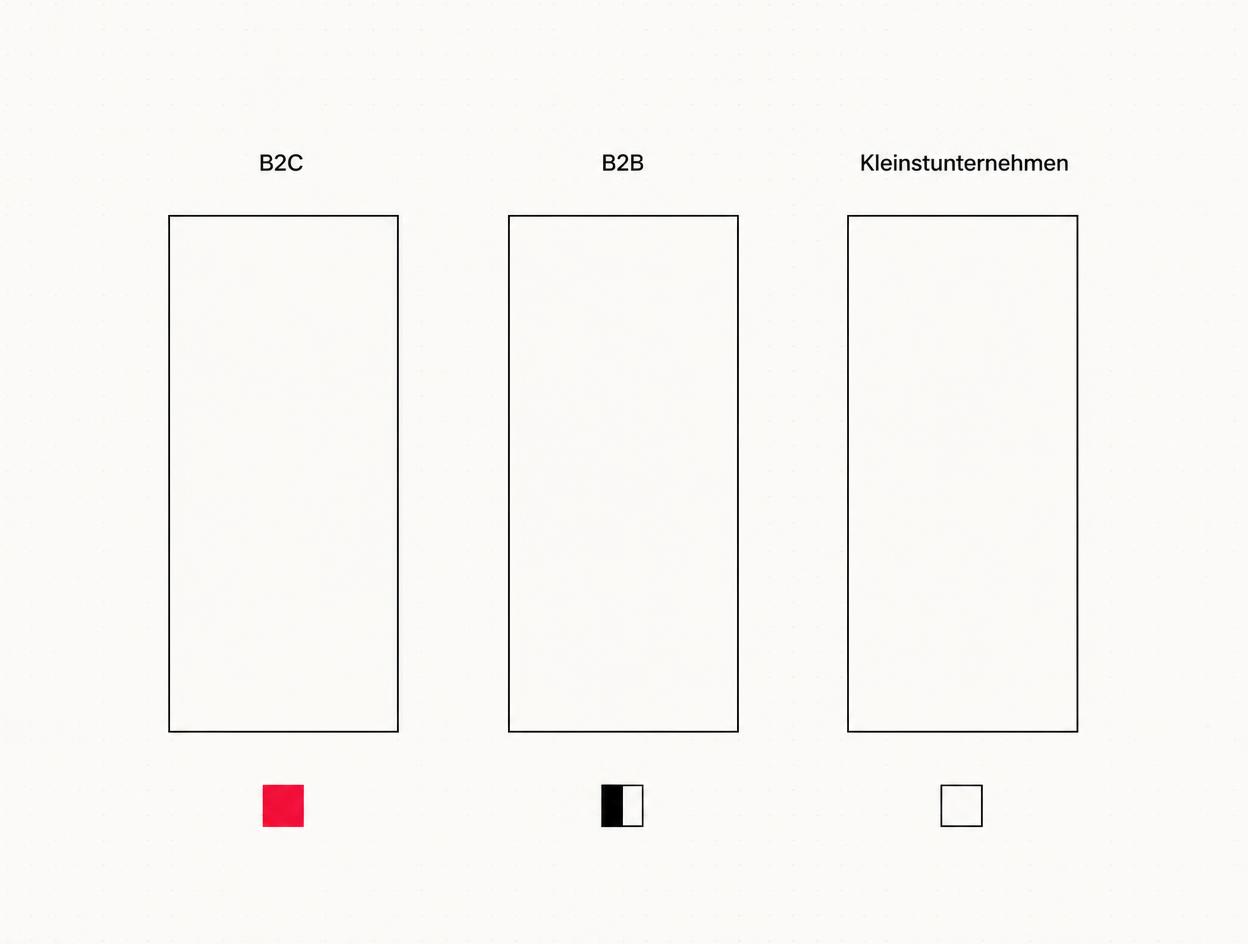
The distinction comes down to two questions.
Question 1: Is your offering aimed at consumers? The BFSG applies to consumer services. Online shops, appointment booking systems, customer portals, ticket sales, banking access, e-books, telephony and messaging services, passenger transport. Purely B2B offerings are not covered. This is particularly relevant for law firms and financial service providers, as discussed in Websites for tax advisers, law firms and financial service providers.
Question 2: Are you a microenterprise? Businesses with fewer than 10 employees and annual turnover or an annual balance sheet total of no more than 2 Mio. Euro are exempt from the requirements for services. This exemption does not apply to products.
| Scenario | BFSG requirement | Note |
|---|---|---|
| Online shop for consumers | Yes | Typical use case, including checkout |
| Appointment booking for practices, studios, law firms | Yes | Consumer service |
| Purely informational company website with no transactions | No | Note: adding bookings or a shop changes this |
| B2B portal, supplier platform | No | No consumer business |
| Microenterprise with a shop | Yes | Exemption applies only to services, not products |
| Public body | Yes | Already regulated under BITV 2.0 |
Our practical advice: do not rely on the exemption. As soon as a business grows or adds a booking tool, its status can change. And even where there is no legal obligation, an unusable website loses revenue.
The technical benchmark: EN 301 549 and WCAG 2.1 AA
The law itself does not specify CSS values. It refers to harmonised standards, specifically the European standard EN 301 549, which adopts WCAG 2.1 Level AA for web content.[2] So when you read “WCAG 2.1 AA", that is the assessment benchmark that determines compliance.
The four underlying principles:
- Perceivable – content must be visible or audible: contrast, alternative text, captions.
- Operable – everything accessible by keyboard, enough time, no flashing effects.
- Understandable – clear language, predictable navigation, helpful error messages.
- Robust – clean HTML that screen readers and assistive tools interpret correctly.
Most websites do not fail on obscure issues, but on four things: insufficient contrast, invisible keyboard focus, form fields without proper labels and buttons that are actually divs. These can be fixed in a single sprint if addressed early.
Accessibility costs least when it is part of the design and development process from the outset. See The web design process: from screen design to implementation.
What an authority checks
The market surveillance authorities of Germany’s federal states are responsible. They will not crawl every website, but will act in response to specific triggers: a consumer complaint, a report from an association or spot checks.
The typical process:
- A complaint is received or a spot check is initiated.
- The authority requests documentation, usually the accessibility statement and technical information.
- The function in question is then assessed, usually with assistive technology and automated tools.
- If shortcomings are found, a request for remediation is issued with a deadline.
- If the business does not respond, enforcement orders, including a prohibition on providing the service, and fines are possible.
An often overlooked point: the requirements include a publicly available accessibility statement. It explains how the offering meets the requirements, which parts are not yet accessible and how users can report barriers. If this statement is missing, the first check has already failed – regardless of how technically sound the website is.
A 10-point self-test for your website
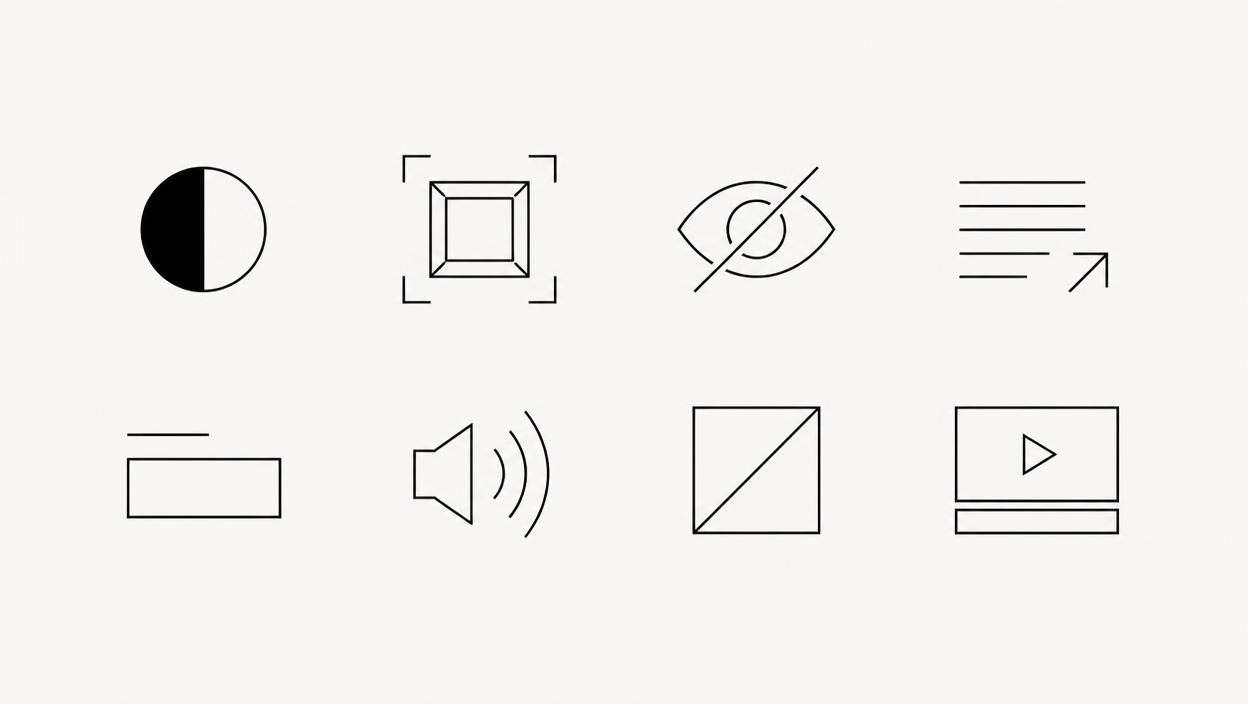
You can work through this test yourself in about an hour. It does not replace an audit, but reliably indicates whether you have a problem.
- Keyboard only. Navigate the most important journey – homepage, product, basket, submission – using only Tab, Shift+Tab and Enter. Can you reach everything and get back out again?
- Visible focus. Is it clear where you are at every Tab step? Removing the focus outline with
outline: noneis the most common individual error. - Contrast. Text against its background must have a contrast ratio of at least 4,5:1, or at least 3:1 for large text from 24 px. Grey help text and pale buttons almost always fail.
- Zoom to 200 %. Does all content remain readable and usable without horizontal scrolling?
- Form fields. Does every field have a proper label element? Placeholders alone are not enough.
- Error messages. Are errors described in text and associated with the relevant field, rather than just indicated by a red border?
- Alternative text. Do images that convey information have meaningful alt attributes? Decorative images should have empty ones.
- Heading structure. Exactly one H1 per page, followed by a clear hierarchy with no skipped levels.
- Media. Do videos have captions? Does anything start playing sound automatically?
- Language declaration. Is the page language set in the HTML so that screen readers pronounce content correctly?
An automated scan with Lighthouse or axe DevTools is a useful addition. Important to know: depending on the study, automated tests find only around a third of actual accessibility barriers. The rest requires manual testing.
If you are already planning a major rebuild, include this test in your preparation. Our Website relaunch checklist explains how it fits into the wider process.
Practical example: Caona Health App
We developed the interface and brand identity for the Caona Health App. Healthcare in particular serves a broad user base: older people, people with impaired vision and people using the app under stress. That is why we worked with clearly defined contrast ratios, large click targets and clearly visible focus states from the outset, rather than adding accessibility at the end.
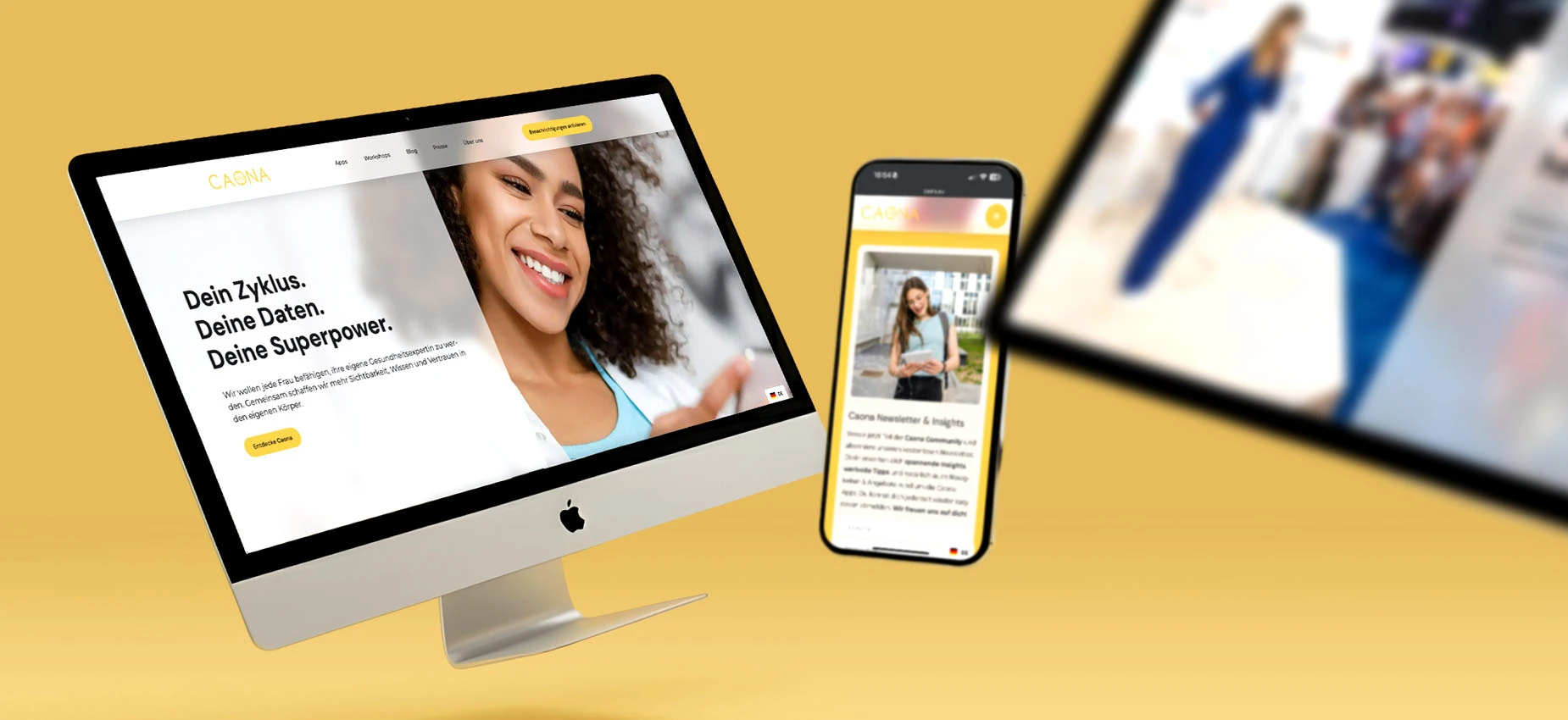
View the full case study: Caona Health App →
The lesson applies to websites too: contrast and focus are design decisions, not repairs. Make those decisions during screen design and they cost nothing extra. Enforce them retrospectively and you will have to rework the colour palette and components.
What retrofitting costs
The honest answer: it depends on the state of the frontend, not the number of pages.
| Starting point | Typical effort | Approximate cost |
|---|---|---|
| Modern website, clean components, only contrast and focus fixes needed | 2–4 days | 2.000–4.000 € |
| Medium-sized website with forms and booking, some custom components | 1–2 weeks | 5.000–9.000 € |
| Shop that has grown over time, many plugins, old templates | 3–6 weeks | 10.000–15.000 € |
| New development with accessibility built in from the start | included in the project | no additional charge |
There is also the cost of assessment: a structured audit with a report and prioritised findings typically costs a low four-figure sum. Our Accessibility audit (BFSG) is designed for exactly this.
The most important commercial point is often overlooked: between a third and half of the fixes also improve conversion. Larger click targets, clearer error messages, more readable typography – these benefit every user, not just those using a screen reader.
The order to follow
- Establish whether you are affected. Consumer business or not, microenterprise or not. Record the outcome in writing.
- Carry out the self-test. Work through the ten points above and document them with screenshots.
- Publish an accessibility statement. Be honest, list known gaps and provide a feedback address.
- Fix critical journeys first. Everything that leads to completion: forms, basket, checkout, booking.
- Commission an audit. A detailed assessment is only worthwhile once the obvious errors have been removed.
- Plan for maintenance. Every new page or plugin can introduce barriers. An annual check is usually enough.
Frequently asked questions
When does the requirement for accessible websites apply?+
Who must have an accessible website?+
Are microenterprises exempt from the BFSG?+
What does WCAG 2.1 AA mean in practice?+
How do I check whether my website is accessible?+
What are the consequences of breaching the BFSG?+
Do I need an accessibility statement?+
What does it cost to make an existing website accessible?+
Is an accessibility overlay or widget enough?+
Sources
- Barrierefreiheitsstärkungsgesetz (BFSG), Bundesministerium der Justiz (2021-07-16)
- EN 301 549 – Accessibility requirements for ICT products and services, ETSI (2021-03-01)

Josef leads the strategic and creative development of brands at Maluure. For over a decade, he has guided medium-sized businesses from brand positioning to digital delivery.
Managing Director of Maluure GmbH, Cologne. Specialising in corporate design, brand strategy and digital brand experiences.
Weiterlesen

Using a corporate film on social media: twelve weeks of content from one shoot day
A corporate film is not a one-off asset, but a bank of source material. How to turn one shoot into formats for LinkedIn, Instagram, your website and sales, with an editing plan, content calendar and practical example.
Corporate video scripts: storytelling that works in 90 seconds
The script determines whether your corporate video makes an impact or just looks good. Structure, narrative, common mistakes and a shot list that saves the shoot day.

Officially certified: Maluure is a Lovable Partner
Since 16. September 2026, Maluure has been an officially certified Lovable Partner, Expert Website Builder and Expert App Builder. What the certification involves and what it means for your project.
Explore more blog topics
Corporate film or recruitment video: What your company really needs
Both films cost a similar amount but have very different effects. This comparison shows which format suits which goal and how to produce both in a single day of filming.
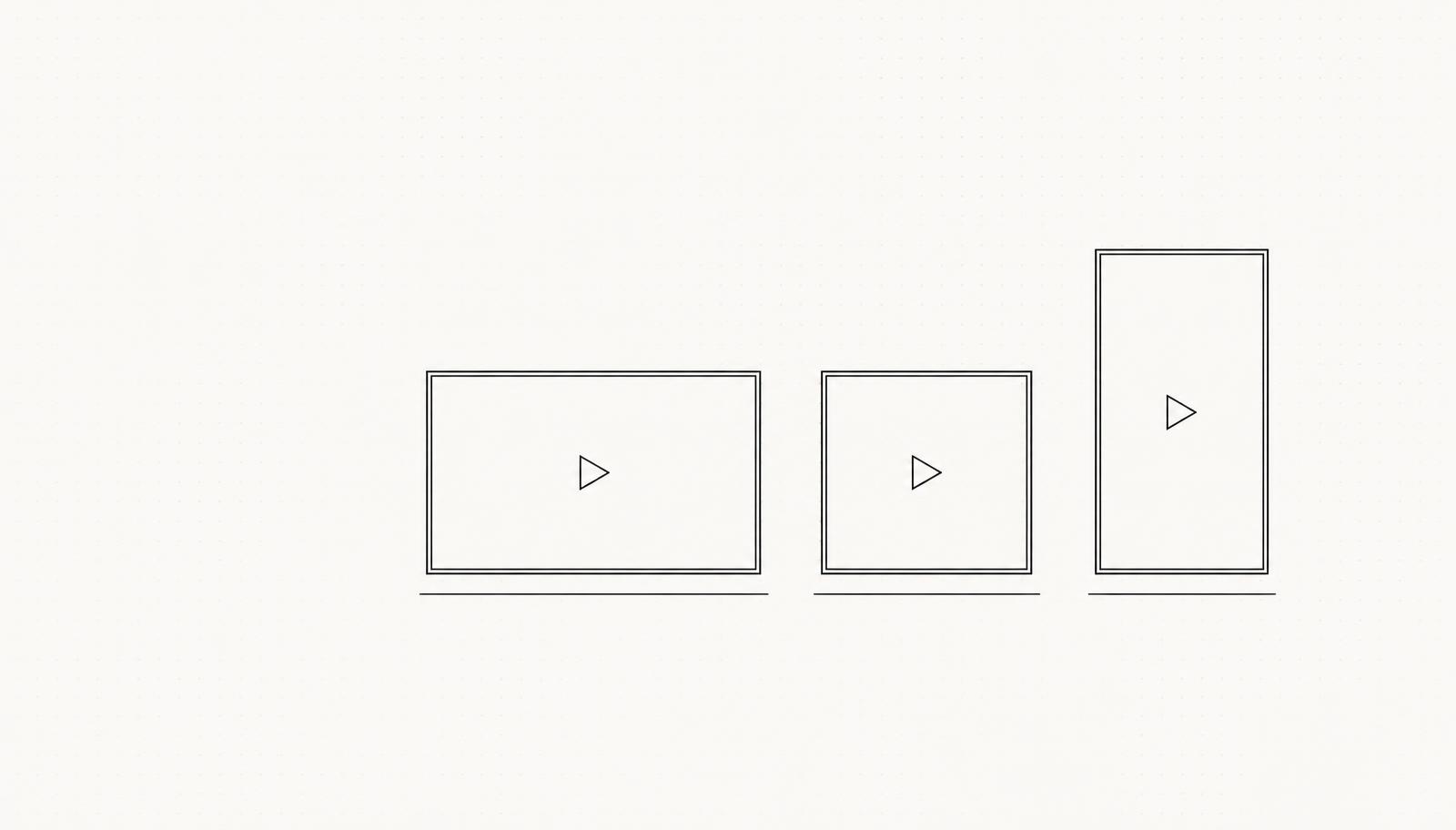
LinkedIn Video: Formats, Lengths and Best Practices for Businesses
What works for LinkedIn video: formats from 1:1 to 9:16, the right length for each objective, subtitles, hooks and upload strategy. A concise guide for businesses.
Recruitment video: showing employees as they really are
How a recruitment video shows real employees rather than glossy clichés, what it costs and why authenticity brings in more applications.