Websites for tax advisers, law firms & financial services providers: What 100 % care requires
For tax advisers, law firms and financial services providers, a website is not just about looks, but trust, precision and legal compliance. We outline the key areas that need careful attention.

Why websites for tax advisers and law firms work differently from those in other sectors
For websites serving advisory clients, less is often more. A restrained layout, precise wording and clear responsibilities beat any animated hero section.
Why professional service providers do not need standard templates
What 100 % care actually means on an advisory firm's website
- Legal notice and professional regulations at a glance. Tax advisers, lawyers and auditors must provide certain information, not hidden in the footer, but clearly accessible. This also applies to their statutory professional title and the relevant professional body.
- No prohibited advertising. For lawyers, the German Federal Lawyers' Act sets out what is and is not permitted. Superlatives such as “the best tax adviser" or “maximum savings" are problematic [1].
- Data protection as a foundation for trust. Clients share sensitive data. The privacy notice must be complete, understandable and easy to find, not buried in a PDF.
- Accessibility is mandatory. Since the introduction of the BFSG, many business websites must be accessible. For law firms and consultancies, this means clear contrast, keyboard navigation and understandable error messages [2].
- Loading speed and stability. A slow website looks unprofessional. Technical reliability is part of your professional reputation.
The most important trust signals for tax advisers, law firms and financial services providers
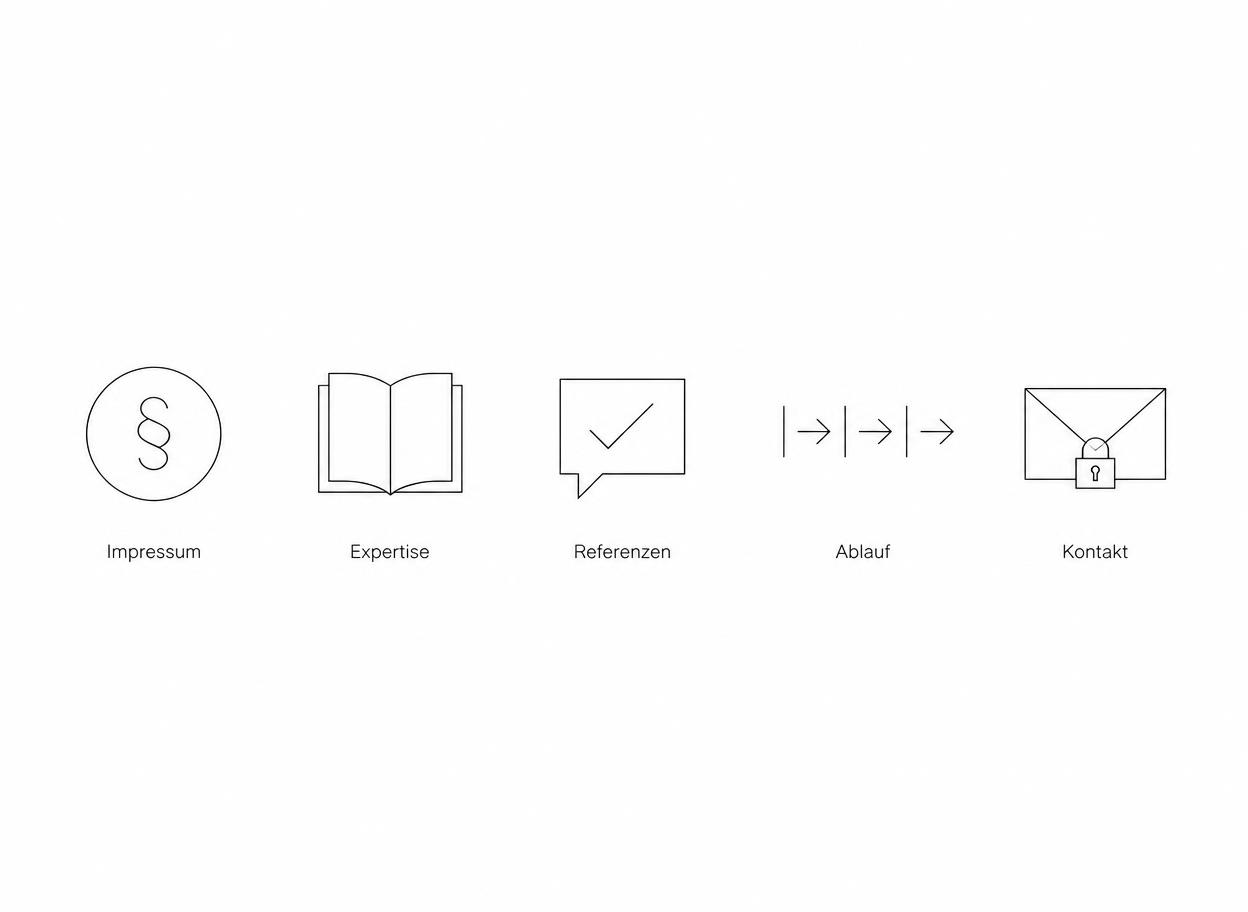
| Signal | Why it matters | Implementation |
|---|---|---|
| Clear responsibility | Clients want to know who runs the website | Complete legal notice with professional title |
| Verifiable expertise | Expertise needs to be tangible | Case studies, expert articles, publications |
| Genuine references | Social proof reduces uncertainty | Client logos, testimonials, case studies |
| Transparent processes | Advisory services are abstract | Step-by-step explanation of the approach |
| Secure contact options | Sensitive data requires protected channels | Encrypted forms, no exposed email links |
What matters legally: Professional regulations, advertising and data protection
- Information required by professional regulations belongs in the legal notice: name, address, professional body, professional title and, where applicable, insurance.
- Caution around advertising law applies to lawyers. The BRAO prohibits misleading or comparative advertising. Claims such as “leading" or “best success rate" are off limits [1].
- Data protection is mandatory from the very first interaction. Contact forms, cookies and tracking must be implemented in compliance with the law.
- Fee transparency is becoming increasingly important. Even where publishing prices is not mandatory, a clear process helps clients estimate costs.
The biggest mistakes that cost trust
- Unfocused messaging. Addressing private customers, businesses and advisory clients all at once means connecting with no one. Each audience needs its own starting point.
- Missing evidence. Claims without case studies or publications quickly lose credibility.
- Overloaded homepages. Too many animations, pop-ups and chat widgets look unprofessional.
- Outdated content. A team photo from 2019 or a service offering that is no longer available does more harm than good.
- Unclear next steps. Visitors should know how to get in touch without having to search.
Practical examples: How we have helped professional service providers establish themselves online
MRD Legal – A law firm website with clear responsibilities
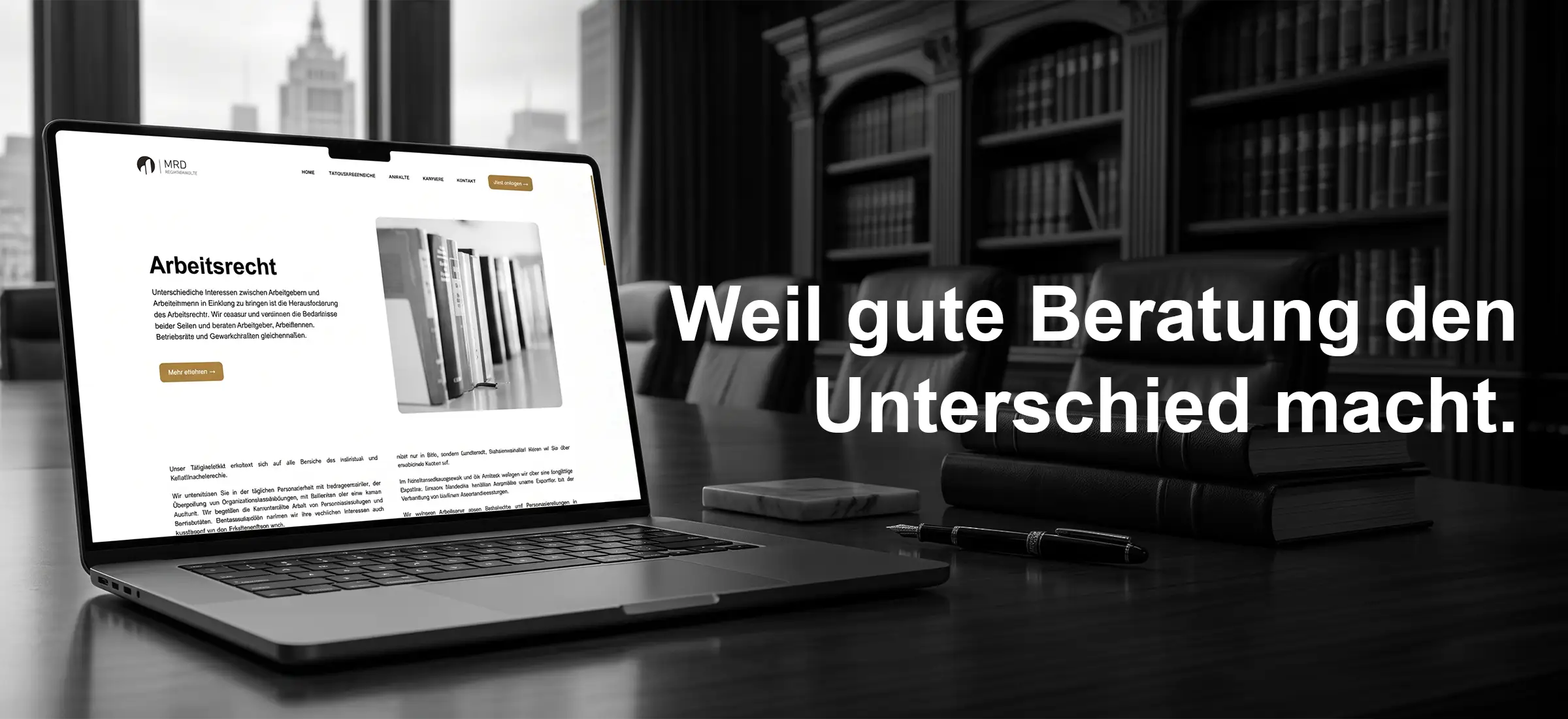
Sourisseaux / Partners – Consultancy with substance

Design and content strategy: Less is more, but not less care
- One colour palette, not ten. Restrained colours signal stability. Red and green should only be used where they convey meaning.
- Typography with purpose. Large, legible type conveys confidence. Small, grey body text, by contrast, looks hidden away.
- Carefully chosen images. Genuine team photos, office scenes or abstract architectural details are more appropriate than stock photos of smiling people shaking hands.
- Substance rather than clichés. Instead of “We are your strong partner", try: “We help medium-sized businesses optimise their tax position." Specific, verifiable, honest.
How the launch process works at Maluure
- Strategy workshop. We clarify the target audience, professional regulations, competition and core message.
- Content structure. Together, we develop the site hierarchy, copy approach and mandatory legal information.
- Design concept. We create a restrained, on-brand design without unnecessary flourishes, but with a clear stance.
- Technical implementation. Accessibility, data protection and performance are built in from the start.
- Review and approval. You and relevant specialists review the content before the website goes live.
- Launch and upkeep. After launch, we handle maintenance, updates and ongoing optimisation.
Technology, maintenance and ongoing care
- Regular content reviews. The legal notice, privacy notice and team page should be checked at least quarterly.
- Security updates. Outdated plugins or frameworks pose a risk that can affect client data.
- Backup strategy. If enquiries are collected through forms, that data must be protected and recoverable.
- Performance monitoring. Loading times, mobile-friendliness and Core Web Vitals should be measured continuously.
Conclusion
Frequently asked questions
What must the legal notice on a tax adviser's website include?+
Can a law firm website carry advertising?+
Is accessibility mandatory for law firms?+
Which images work well for a professional advisory website?+
How much does a website for tax advisers or law firms cost?+
How often should an advisory firm's website be reviewed?+
What is the difference between a law firm website and a standard business website?+
Should prices be displayed on the website?+
How important is local SEO for tax advisers and law firms?+
What happens if the website contains incorrect legal information?+
Sources
- BRAO § 43b – Werbung für Rechtsanwälte, Bundesrechtsanwaltsordnung
- BFSG – Barrierefreiheitsstärkungsgesetz, Bundesgesetzblatt (2021)
- Stanford Web Credibility Guidelines, Stanford Persuasive Technology Lab

Josef leads the strategic and creative development of brands at Maluure. For over a decade, he has guided medium-sized businesses from brand positioning to digital delivery.
Managing Director of Maluure GmbH, Cologne. Specialising in corporate design, brand strategy and digital brand experiences.
Weiterlesen

Website Maintenance: Costs, Services and Why It Pays Off
Updates, backups, security: what website maintenance costs, what should be included, and when you can handle it yourself.

WordPress Agency Cologne: When WordPress Fits and When It Doesn't
We support WordPress websites in Cologne, but we don't always recommend WordPress. Here's an honest look at when it fits and when other systems are better.

Packaging Design Agency: What to Look for When Choosing One
From die-cut to print approval: how to recognize a good packaging design agency and what you should budget for in terms of price.
Explore more blog topics

Getting an Online Shop Built: Costs, Systems, and Process
From Shopify to Webflow: which systems exist, what a professional online shop costs, and how to get from concept to first sale.

3D Animation for Businesses: Uses, Process, and Costs
3D animation shows what cameras can't: internal workings, processes, prototypes. What it costs, when it pays off, and how production works.

Getting a Landing Page Built: Costs, Structure, and What Matters
One page, one goal: what makes a good landing page, what it costs, and how it works together with Google Ads and SEO.