UX & Design
    Fundamentals

    Jakob's Law: Why users expect familiar patterns

    Your visitors know hundreds of other websites. Jakob's Law explains why familiar patterns are understood faster than original ones.

    of Josef Kujawski3 min read
    Jakob's Law: Why users expect familiar patterns
    Short answer
    Jakob's Law, coined by Jakob Nielsen, says users spend most of their time on other websites and therefore expect yours to work like the ones they already know. Logo top left, navigation at the top, cart top right, forms from top to bottom. Breaking these expectations forces visitors to relearn, and you lose them in the process. Originality belongs in content, imagery and tone, not in how the site is operated.

    The problem: original often means unusable

    An agency presents a bold concept: navigation at the bottom, logo in the centre, menu items as floating words. In the pitch it impresses. In everyday use visitors look for the way to contact and cannot find it. They leave before they have even seen the content.
    Why this happens so often is described by a simple principle: Jakob's Law.

    The principle: your visitors come from elsewhere
    Usability expert Jakob Nielsen put it this way in 2000: users spend most of their time on other websites. [1] They bring ready-made expectations of how a website works. Every site they visit trains those expectations further.
    This means your website is not judged on its own but against everything your visitors know. What is standard there feels intuitive. What deviates has to be learned first. [2]
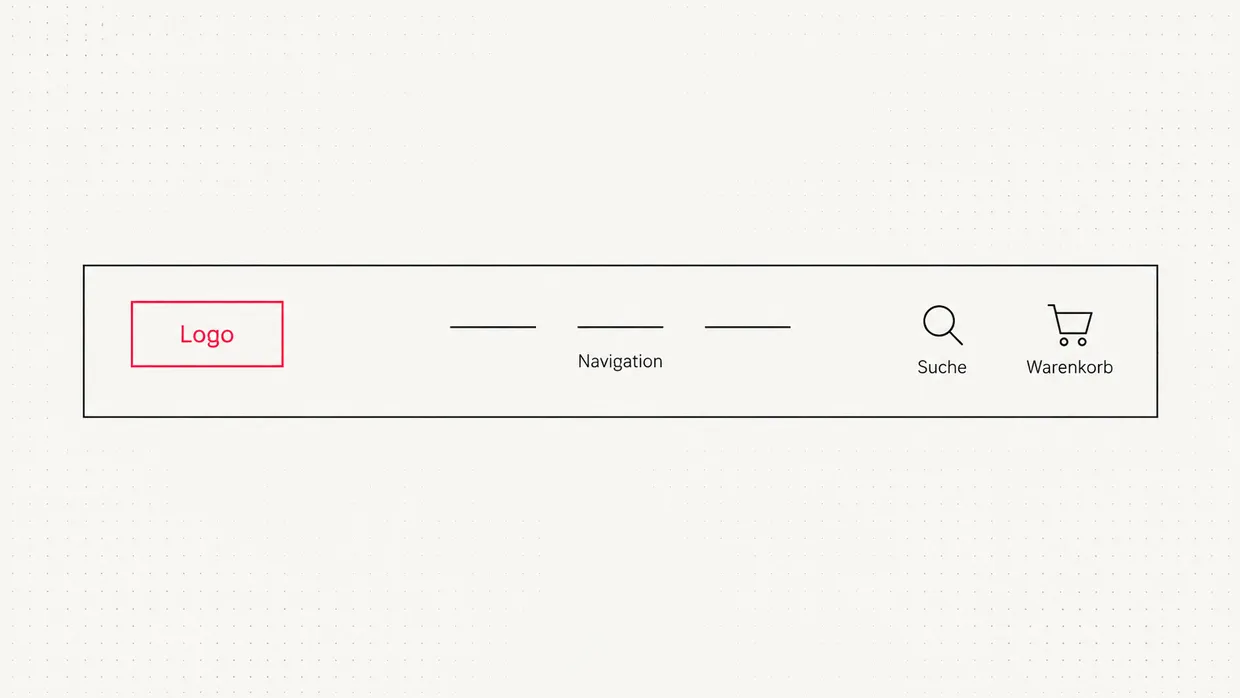
    Wireframe of a typical header with logo on the left, navigation in the middle and search and cart on the right
    Learned positions: this is where visitors look first.
    Kernaussage
    Intuitive means familiar. Operation that works as expected costs no mental effort and leaves room for your actual content.

    Conventions you should know

    ElementExpected position or functionWhat happens if you deviate
    LogoTop left, links to homepageVisitors cannot find their way back
    Main navigationTop, horizontal or as menu iconContent stays undiscovered
    Search, cartTop rightAbandoned purchases, search frustration
    LinksColoured or underlinedLinks get overlooked
    Contact, legal noticeIn the footer, contact also in navigationEnquiries get lost
    FormsFields stacked, submit at the bottomErrors and drop-offs

    Where originality belongs

    Jakob's Law is not a plea for boring websites. It separates two levels:
    1. Operation: navigation, forms, buttons, flows. Familiarity wins here.
    2. Expression: imagery, typography, copy, animation, attitude. Here a brand may and should be distinctive.
    The best websites combine both. They feel unmistakable, yet nobody has to think about where to go next. [3]
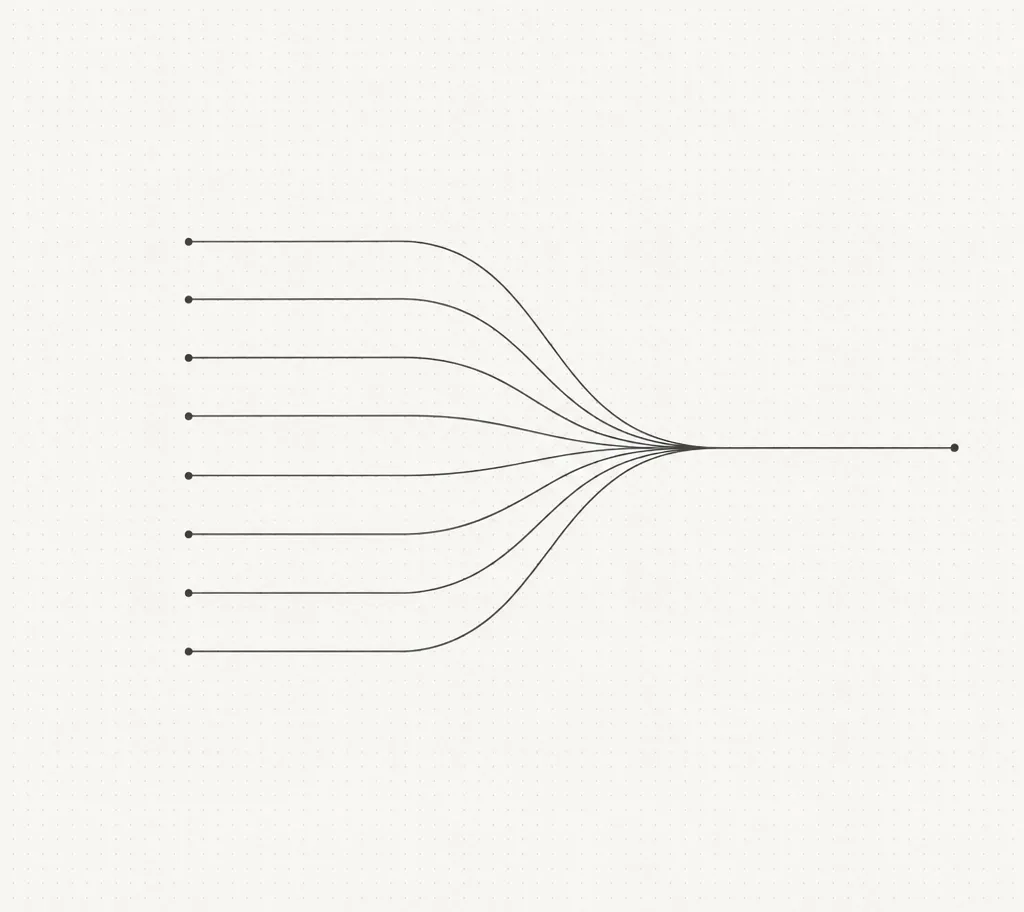
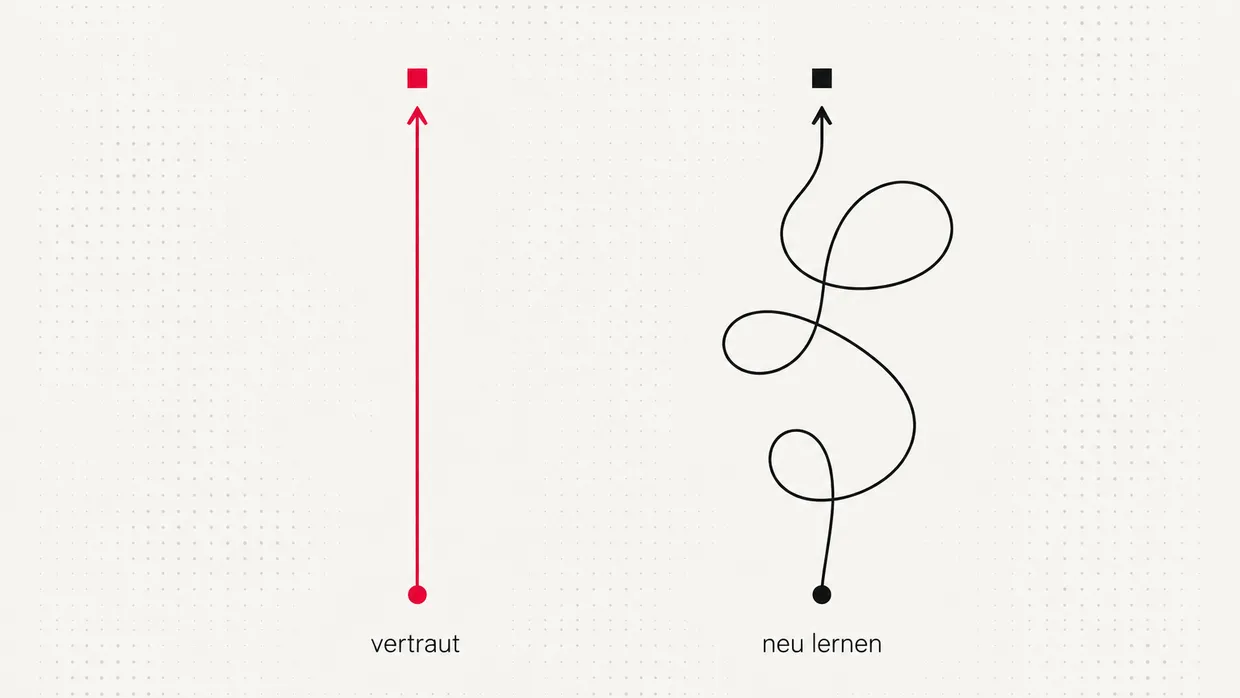
    Diagram: a straight path labelled familiar next to a winding path labelled relearning
    Familiar patterns are the shortest path to the goal.

    Jakob's Law in a relaunch

    An often forgotten aspect: your own old website has shaped expectations too. Regular customers know where the price list is or how login works. In a relaunch you should therefore:
    • keep important paths and terms where they worked
    • briefly explain major changes, for example with a subtle notice
    • redirect old URLs properly so bookmarks keep working
    Kernaussage
    Only deviate from conventions if the new pattern is clearly better and you have tested it with real users.
    Jakob's Law explains why familiar things are understood quickly. How long people hesitate when facing many options is described by Hick's Law, how easily a target can be reached by Fitts' Law. And why a homepage should not say everything at once is covered in our practice article Homepage: everything at once.
    We see conventions as a foundation, not a limit. When operation feels natural, people really start to notice the design.
    – Josef Kujawski, Managing Director Maluure GmbH

    Quick check

    • Does your logo top left link to the homepage?
    • Is contact reachable with one click from the navigation?
    • Are links clearly recognisable as links?
    • Does your form work top to bottom without surprises?
    With a Maluure-Page™ or a Webflow website we build on proven patterns and put the distinctiveness where it has impact.

    Frequently asked questions

    What does Jakob's Law say?+
    Users spend most of their time on other websites. They therefore expect your website to work like the sites they already know.
    Who formulated Jakob's Law?+
    Usability expert Jakob Nielsen, co-founder of the Nielsen Norman Group. He described the principle in 2000.
    Which web design conventions matter most?+
    Logo top left linking to the homepage, main navigation at the top, search and cart top right, clearly marked links, and contact and legal notice in the footer.
    Is Jakob's Law an argument against creative web design?+
    No. Creativity belongs in content, imagery, typography and tone. Operation itself should stay familiar so the creativity can actually be noticed.
    When is it okay to break conventions?+
    When the new pattern is measurably better and stays clearly recognisable. Ideally you test deviations with real users before going live.
    What does Jakob's Law mean for a relaunch?+
    Existing visitors have learned how your old site works. Change structure and operation carefully and explain major changes so regular users are not lost.
    Does Jakob's Law apply to apps and online shops?+
    Yes, especially there. In online shops users expect established flows for product page, cart and checkout. Every unfamiliar step increases drop-off.

    Sources

    1. End of Web Design (Jakob's Law of the Internet User Experience), Nielsen Norman Group (2000)
    2. Jakob's Law of Internet User Experience, Nielsen Norman Group (2017)
    3. Laws of UX: Jakob's Law, Jon Yablonski, Laws of UX (2024)

    #UX#Usability#Navigation#Conventions
    Josef Kujawski
    Author
    Josef Kujawski
    Managing Director & Creative Director at Maluure

    Josef leads the strategic and creative development of brands at Maluure. For over a decade, he has guided medium-sized businesses from brand positioning to digital delivery.

    Managing Director of Maluure GmbH, Cologne. Specialising in corporate design, brand strategy and digital brand experiences.

    Newsletter

    New articles straight to your inbox.

    A newsletter when we genuinely have something new to share. No noise.