Doherty Threshold: Why everything feels fluid under 400 milliseconds
From around 400 milliseconds of waiting, flow breaks. What the Doherty Threshold reveals about fast websites and good feedback.
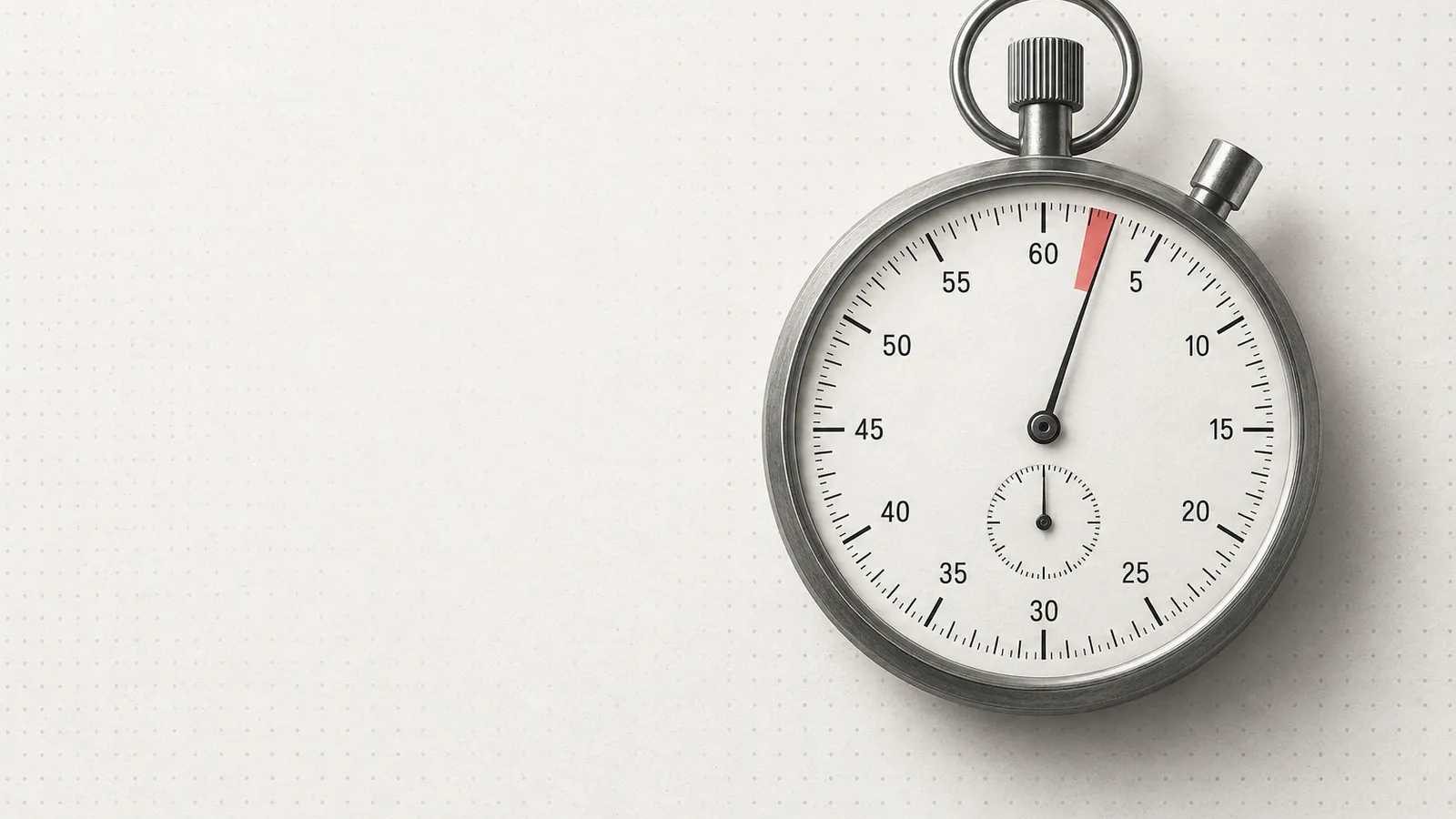
The problem: the second you drift off
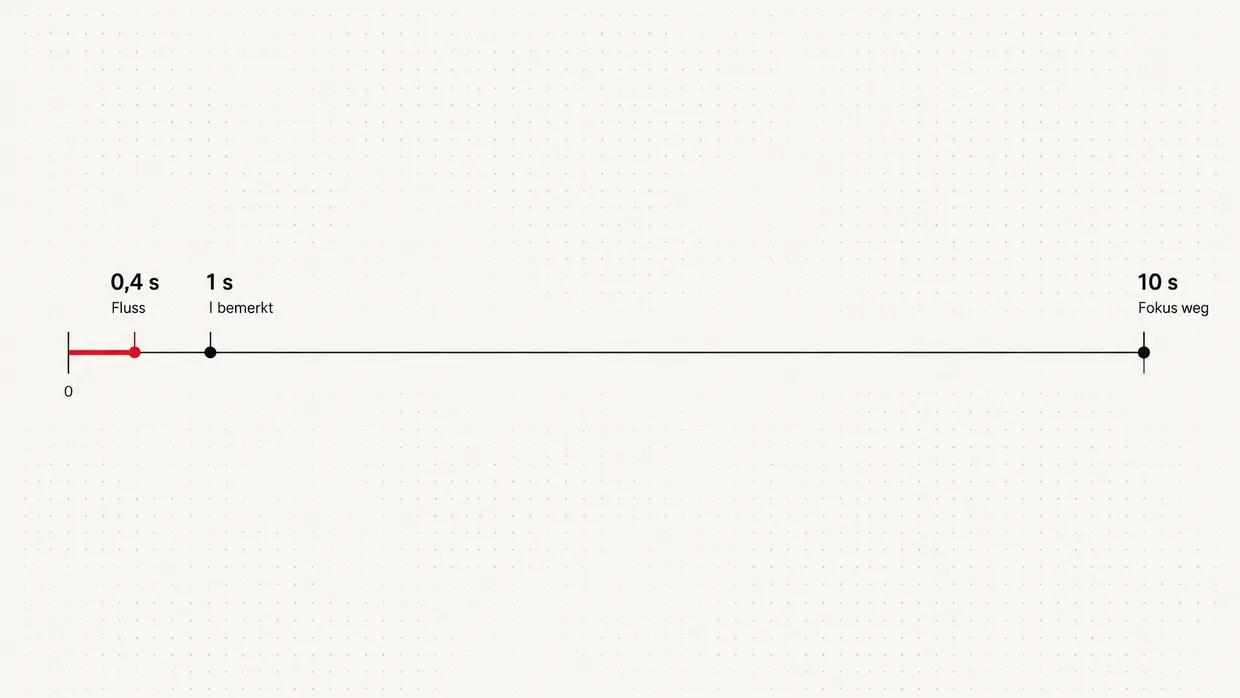
The principle: 400 milliseconds
| Response time | Perception |
|---|---|
| up to 0.1 seconds | Feels instant, like direct manipulation |
| up to 0.4 seconds | Flow is preserved (Doherty Threshold) |
| up to 1 second | Delay is noticed, train of thought holds |
| up to 10 seconds | Attention slips, feedback essential |
| over 10 seconds | Users turn to something else |
What this means for websites
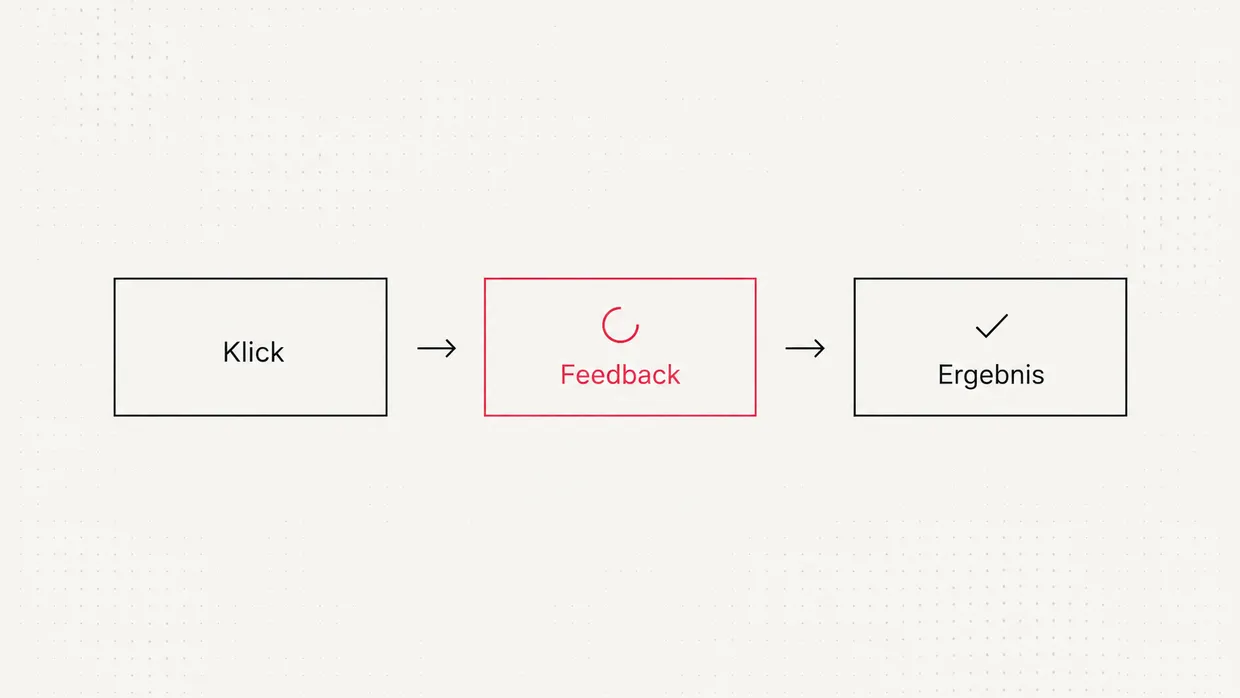
- Immediate feedback. The button visibly changes on click, for example with a loading state.
- Placeholders instead of emptiness. Skeleton elements show where content will appear.
- Optimistic interface. If an action almost always succeeds, the page shows the result immediately and syncs in the background.
- Fast foundation. Lightweight pages, optimised images and a fast server make much of it fluid on their own.
Doherty and the Core Web Vitals
Related principles
When it comes to performance, many think of load times first. Just as important is that every click gets an immediately visible response. Then visitors forgive a second of waiting.
Quick check
- Does every button change visibly the moment it is clicked?
- Do forms show a loading state on submit?
- Do placeholders appear while loading instead of empty areas?
- Is your INP value in Search Console in the green?
Frequently asked questions
What is the Doherty Threshold?+
Where does the Doherty Threshold come from?+
What happens with waits over 400 milliseconds?+
How does the Doherty Threshold relate to Core Web Vitals?+
What if an action takes longer than 400 milliseconds?+
Should websites ever be artificially slowed down?+
How do I measure my website's response time?+
Sources
- The Economic Value of Rapid Response Time, IBM, W. J. Doherty und A. J. Thadani (1982)
- Response Times: The 3 Important Limits, Nielsen Norman Group (1993)
- Interaction to Next Paint (INP), Google, web.dev (2024)

Josef leads the strategic and creative development of brands at Maluure. For over a decade, he has guided medium-sized businesses from brand positioning to digital delivery.
Managing Director of Maluure GmbH, Cologne. Specialising in corporate design, brand strategy and digital brand experiences.
Related articles

Fitts' Law: Why important buttons need to be big and close
The bigger and closer a target, the faster you hit it. Fitts' Law explains why small, distant buttons cost clicks.

Core Web Vitals: What Google Measures on Your Website and Why It Costs Revenue
Core Web Vitals are Google's yardstick for loading speed, responsiveness, and stability of a website. What LCP, INP, and CLS mean, which thresholds apply, and how to improve the scores concretely.

The Peak-End Rule: What Visitors Really Remember About Your Website
The peak-end rule explains why people judge experiences by their peak and their ending, not by the average. With Kahneman's experiments and concrete rules for checkout flows, contact forms, and farewell pages.